Newsletter Subscribe
Enter your email address below and subscribe to our newsletter


Raised Bed Gardening Made Simple
Category: Raised Bed Guides
Suggested URL: /what-to-put-on-bottom-of-raised-garden-bed/
Primary Keyword: What to Put on the Bottom of a Raised Garden Bed
SEO Title: What to Put on the Bottom of a Raised Garden Bed
Meta Description: Wondering what to put on the bottom of a raised garden bed? Compare cardboard, hardware cloth, landscape fabric and other options for grass, soil and hard surfaces.
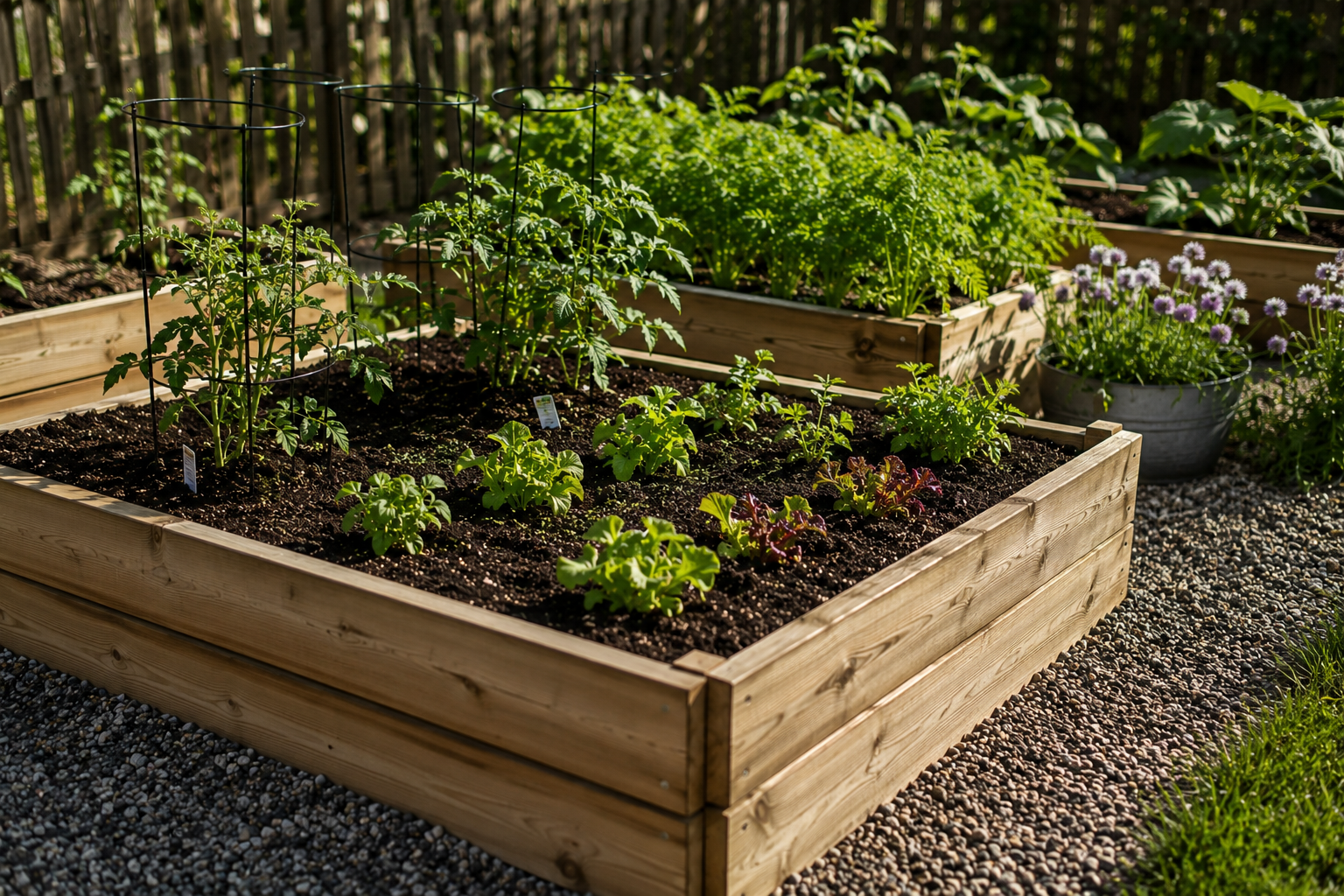
Before adding soil to a new raised garden bed, there is one question worth answering: What should go underneath it?
Some gardeners add cardboard. Others install hardware cloth, landscape fabric, or nothing at all. You’ll even find recommendations for gravel, plastic, logs, and newspaper.
The best choice depends largely on where your raised bed is installed and what problem you’re trying to solve.
A bed placed over healthy garden soil has very different requirements from one sitting on an old lawn, a weed-filled area, or a concrete patio.
Here’s how to choose the right bottom for your raised garden bed.
Not necessarily.
Traditional raised beds installed directly over soil are often designed with an open bottom.
This allows excess water to move into the ground and gives worms and other soil organisms access to the bed. Plants with deeper root systems may also eventually extend beyond the imported growing soil.
If you’re installing a bed over clean, healthy soil without serious weed or pest problems, you may not need to add a barrier at all.
However, certain backyard conditions make a bottom layer useful.
If you’re converting part of a lawn into a vegetable garden, plain cardboard can provide a convenient temporary barrier.
Lay overlapping sheets directly over short grass before filling the bed.
The cardboard blocks light from reaching the vegetation underneath, helping suppress grass during the early stages of the garden.
Before using cardboard:
Wet the cardboard after installation so it begins settling against the ground.
Unlike permanent synthetic barriers, plain cardboard eventually breaks down.
That means plant roots can later access the soil beneath the bed.
Some gardeners aren’t worried about weeds—they’re worried about animals coming from below.
If burrowing rodents are a persistent problem in your area, metal hardware cloth attached across the bottom of the frame may provide additional protection.
The mesh allows water to pass through while creating a physical barrier.
Choose a durable product appropriate for outdoor use and secure it carefully around the edges. Gaps can reduce its effectiveness.
Hardware cloth isn’t necessary in every garden, so consider it a problem-solving tool rather than a required part of raised-bed construction.
Landscape fabric is sometimes installed beneath raised beds to control weeds.
However, think about your long-term goal before using a permanent or slow-degrading synthetic barrier.
If the bed is open to natural soil, you may eventually want plant roots and soil organisms to move freely between the raised bed and the ground.
A synthetic layer can interfere with that connection.
For temporary grass suppression, biodegradable cardboard is often a simpler option.
Landscape fabric may make more sense around the outside of the bed, depending on your pathway design and weed-control strategy.
For a typical open-bottom vegetable bed installed over soil, completely covering the bottom with solid plastic is generally not a good idea.
The biggest concern is drainage.
Water needs somewhere to go.
A waterproof barrier can potentially trap excess moisture inside the growing area if drainage hasn’t been properly designed.
Plastic may be used in specialized planter designs, but those systems need appropriate drainage holes or another way for excess water to escape.
Don’t turn an open raised bed into a sealed container accidentally.
Newspaper has traditionally been used as a biodegradable weed-suppression layer.
Several sheets can create a temporary barrier similar in purpose to cardboard.
However, cardboard is often easier to handle because larger pieces cover more ground with fewer gaps.
If you already have suitable plain paper available, it can still be useful. Avoid glossy inserts and plastic-coated materials.
Whichever biodegradable option you choose, remember that it isn’t intended to remain permanent.
Its job is to help suppress existing vegetation while the new garden becomes established.
Adding a thick layer of gravel is one of the most common raised-bed recommendations—and often one of the least necessary.
For an open-bottom bed sitting over naturally draining ground, gravel usually isn’t required.
It also takes up space that could otherwise be available to soil and plant roots.
If your garden has serious drainage problems, simply adding rocks to the bottom may not address the underlying issue.
Instead, investigate why water is accumulating.
You may need to change the bed location, improve surrounding drainage, or modify the soil structure.
Logs, branches, and woody debris are sometimes used in very deep beds.
This is different from creating a bottom barrier.
Wood can occupy volume and gradually decompose, which may be useful in certain tall-bed systems.
However, avoid treated, painted, stained, or unknown lumber.
Also remember that woody material decomposes over time, so the soil level above it may gradually sink and require topping up.
For shallow vegetable beds, preserving space for actual growing soil is generally more useful.
A raised bed installed on concrete, paving stones, or a rooftop needs different planning.
There is no natural soil underneath to absorb excess water.
Drainage therefore becomes especially important.
Make sure water can leave the planter without damaging the surrounding surface.
A suitable protective layer may also help prevent soil from washing out through large drainage openings.
Because roots cannot grow into the ground underneath, make sure the bed provides enough actual growing depth for your crops.
For many homeowners, the simplest setup is:
Step 1: Mow or cut the grass very short.
Step 2: Remove persistent perennial weeds where practical.
Step 3: Position the raised-bed frame.
Step 4: Cover the ground with overlapping plain cardboard.
Step 5: Wet the cardboard.
Step 6: Add your growing medium.
If burrowing pests are a known problem, hardware cloth can be incorporated before filling.
This approach lets you create a new garden without digging out an entire section of lawn.
Be selective about anything that will sit underneath edible plants.
Avoid using unknown materials simply because they’re available for free.
Problematic choices can include:
Treated or painted scrap wood with an uncertain history.
Solid plastic without drainage planning.
Construction debris that may contain unwanted substances.
Carpet scraps containing synthetic fibers and adhesives.
Unknown industrial materials not intended for gardening.
When in doubt, keep the setup simple.
So, what should you put on the bottom of a raised garden bed?
For a bed sitting over healthy natural soil, you may need nothing at all.
For a bed installed over grass, plain overlapping cardboard can help suppress existing vegetation while gradually decomposing.
If burrowing animals are a genuine problem, hardware cloth may provide useful protection.
And if your raised bed sits on concrete or another hard surface, prioritize drainage and sufficient growing depth rather than simply copying an in-ground setup.
The best bottom layer isn’t the one with the most materials. It’s the one that solves a specific problem without unnecessarily restricting drainage, root growth, or the natural connection between your raised bed and the soil below.