Newsletter Subscribe
Enter your email address below and subscribe to our newsletter
Raised Bed Gardening Made Simple
Category: Grow Your Own
Suggested URL: /how-to-grow-tomatoes-in-raised-garden-bed/
Primary Keyword: How to Grow Tomatoes in a Raised Garden Bed
SEO Title: How to Grow Tomatoes in a Raised Garden Bed
Meta Description: Learn how to grow tomatoes in a raised garden bed, including variety selection, spacing, planting, watering, feeding, support, pruning, and harvesting tips.
Few crops are more satisfying to grow at home than tomatoes. A healthy tomato plant can produce fruit for weeks, and raised garden beds provide an excellent environment for managing these vigorous plants.
The key is giving tomatoes what they need from the beginning: plenty of sunlight, enough room, consistent moisture, reliable support, and appropriate nutrition.
Instead of simply planting seedlings and hoping for the best, use the following steps to build a productive raised-bed tomato garden.
Start by deciding between determinate and indeterminate tomatoes.
Determinate varieties grow to a more predictable size and tend to produce much of their crop within a concentrated period. Their relatively compact growth can make them useful for smaller raised beds.
Indeterminate tomatoes continue growing and producing throughout favorable weather. They can become tall vines and generally require substantial support.
You can also choose according to how you plan to use your harvest.
Cherry tomatoes are convenient for salads and snacking, while larger slicing tomatoes work well for sandwiches. Paste varieties are often selected for sauces and cooking.
Tomatoes are sun-loving plants.
Choose a raised bed that receives approximately six to eight or more hours of direct sunlight on most growing days.
More importantly, consider what surrounds the bed.
A nearby fence, shed, tree, or tall crop may cast shadows during part of the day. Tomatoes planted in excessive shade can become stretched and may produce fewer fruits.
If you’re growing multiple crops in one bed, position tall tomato plants where they won’t block sunlight from shorter vegetables.
Don’t rush tomatoes outdoors simply because you’ve had one warm afternoon.
Tomatoes are warm-season plants and are sensitive to frost.
Transplant seedlings after the danger of frost has passed and outdoor conditions have become suitable for tomatoes in your region.
Seedlings started indoors should also be hardened off before permanent planting.
Gradually exposing young plants to outdoor sunlight, wind, and temperature changes can help reduce transplant stress.
Small tomato seedlings can make an empty raised bed look enormous.
That changes quickly.
Crowded mature tomato plants compete for light and make it difficult for air to move through the foliage.
Exact spacing depends on the variety and training method, but many tomatoes benefit from roughly 18–24 inches or more between plants.
Check the recommendations for the specific cultivar you’re growing.
Resist the temptation to squeeze in additional seedlings simply because there’s empty soil early in the season.
Tomatoes have an interesting characteristic: buried portions of healthy stems can develop additional roots.
When transplanting a tall seedling, gardeners often remove some of the lower leaves and plant the tomato deeper than it grew in its original container.
Another technique is to place part of the stem horizontally in a shallow trench while keeping the growing tip above ground.
Handle stems carefully and avoid damaging the main plant.
After transplanting, gently firm the surrounding soil and water the root zone.
Don’t wait until tomato plants are falling over before thinking about support.
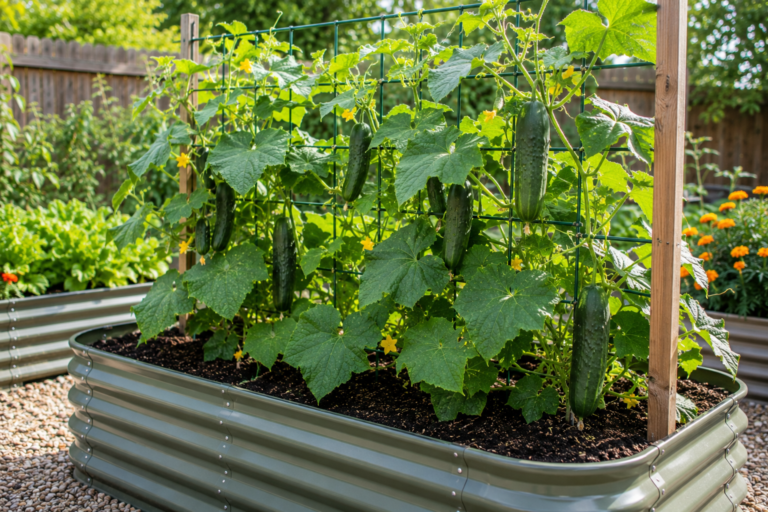
Install cages, stakes, trellises, or another support system while plants are still young.
This reduces the risk of damaging established roots later.
Indeterminate tomatoes generally need taller and stronger support than compact determinate varieties.
Check ties periodically as plants grow. Any material used to secure stems should hold the plant without cutting tightly into expanding tissue.
Tomatoes perform best when soil moisture is relatively consistent.
Large swings between very dry and very wet conditions can stress plants and may contribute to fruit-quality problems.
Water near the base rather than unnecessarily soaking the foliage.
Deep watering encourages moisture to reach more of the root zone.
How often you need to irrigate depends on temperature, rainfall, plant size, soil characteristics, and the season. Instead of following a rigid calendar, check the soil regularly.
During hot summer weather, raised beds may require particularly close attention.
Once the soil has warmed and plants are established, mulch can be useful around tomatoes.
A layer of suitable organic mulch can help slow evaporation and reduce soil splashing onto lower leaves during watering or rain.
Materials may include clean straw, shredded leaves, or another garden-appropriate organic mulch.
Keep mulch from being packed tightly against the tomato stem.
The goal is to cover exposed soil, not bury the base of the plant.
Tomatoes are productive plants, but more fertilizer doesn’t automatically produce more fruit.
Excessive nitrogen can encourage large amounts of leafy growth without delivering the harvest you expected.
Begin with healthy garden soil and use fertilizer according to the needs of your plants and the instructions for the product you’re using.
If tomatoes repeatedly struggle despite appropriate sunlight and watering, soil testing can help identify potential nutrient or pH issues instead of relying on guesswork.
Pruning depends partly on the type of tomato you’re growing.
Indeterminate tomatoes are often trained by removing selected suckers—the shoots that develop between the main stem and leaf branches.
Moderate pruning can help keep vigorous plants manageable and improve access through dense foliage.
However, avoid aggressively removing healthy leaves.
Leaves are responsible for photosynthesis and can also help shade developing fruit from intense sunlight.
Determinate varieties generally require less pruning because their growth habit is naturally more compact.
Inspect your tomato plants regularly rather than waiting until damage becomes severe.
Look at both sides of the leaves and check developing fruit.
Watch for:
Not every yellow leaf means the same thing.
Watering problems, disease, pests, nutrient issues, and natural aging can produce similar symptoms, so identify the likely cause before applying treatments.
Harvest time depends on the variety.
For many tomatoes, color is an obvious clue, but texture also matters. Mature fruit generally begins to soften slightly compared with hard, immature tomatoes.
Check plants frequently during peak production.
Cherry tomatoes can ripen surprisingly quickly, while larger varieties may develop more gradually.
Regular harvesting also makes it easier to notice damaged fruit before it deteriorates on the plant.
You don’t necessarily need to dedicate the entire raised bed to tomatoes.
Smaller plants can make use of open areas, especially early in the season.
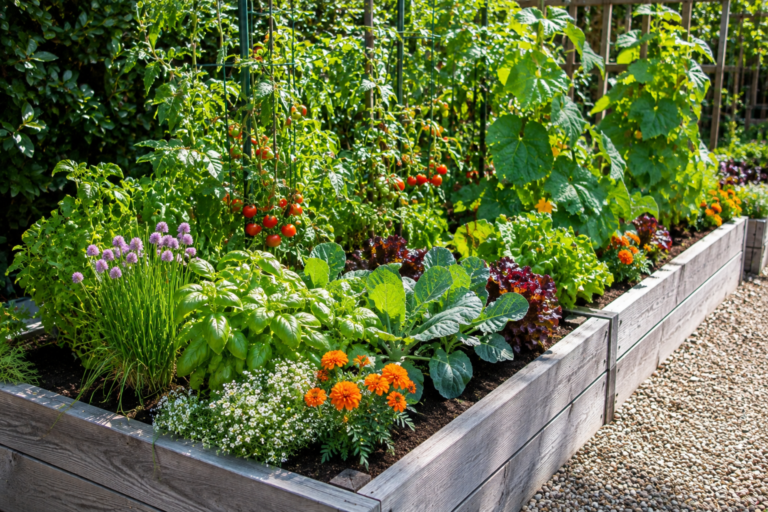
Basil, green onions, lettuce, and certain herbs can fit around tomatoes when spacing and sunlight remain adequate.
The important thing is not to overcrowd the bed.
Remember that a tomato seedling occupying only a few inches in spring may become one of the largest plants in your garden by midsummer.
Growing tomatoes successfully in a raised garden bed is mostly about managing their vigorous growth.
Choose a variety suited to your space, plant after frost danger has passed, provide adequate spacing, and install strong supports early.
Then focus on consistent watering, sensible feeding, good airflow, and regular observation.
Don’t judge your garden by how full the raised bed looks immediately after planting. Give tomatoes enough room to develop into mature plants.
With the right setup and regular care, a few well-managed tomato plants can provide a generous harvest of fresh fruit throughout the growing season—and become one of the most productive parts of your raised-bed garden.