Newsletter Subscribe
Enter your email address below and subscribe to our newsletter


Raised Bed Gardening Made Simple
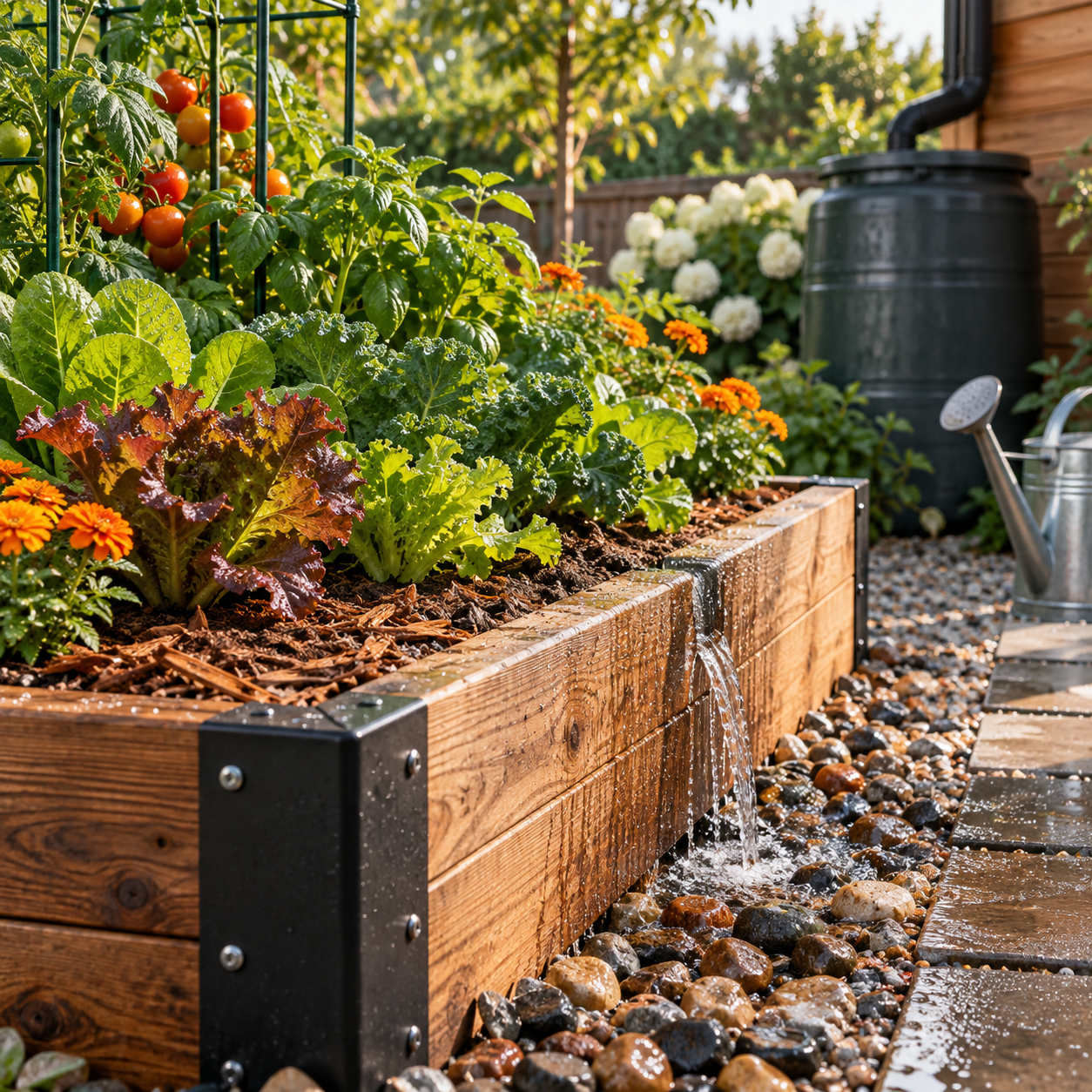
Raised garden beds are designed to hold soil in place, but heavy rain, excessive watering, poor drainage, structural gaps, and exposed soil can still cause valuable growing mix to wash away.
You may notice soil collecting around the outside of the bed, muddy water running onto pathways, or the soil level gradually dropping near the edges. While some settling is normal, repeated soil loss is worth addressing.
The best solution is usually not to block water completely. Raised beds need drainage. Instead, the goal is to let excess water escape while keeping soil particles inside.
Before making changes, identify where the soil is leaving the bed.
Common problem areas include:
After heavy rain or watering, inspect the outside of the bed. Small trails of sediment can often show exactly where the problem begins.
Framed raised beds are intended to contain growing soil and can help reduce runoff and erosion when properly constructed.
A raised bed filled completely to its upper edge has little room to contain displaced soil during heavy rain.
Leave approximately 1–2 inches (2.5–5 cm) between the finished soil surface and the top of the bed where practical. This creates a small lip that helps contain mulch and loose soil.
Iowa State University Extension similarly recommends allowing space for about 1–2 inches of mulch at the top of a raised bed.
As soil settles over time, add new material when necessary rather than overfilling the bed all at once.
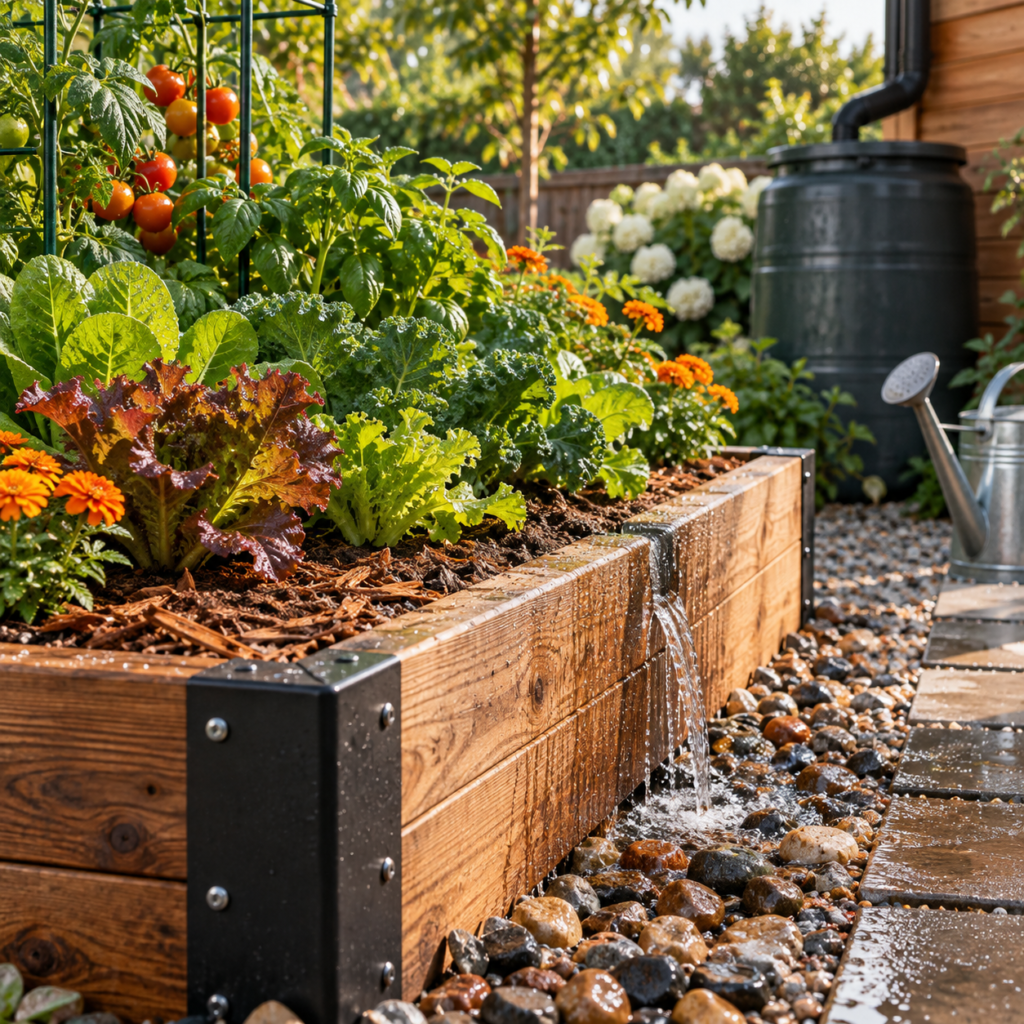
Bare soil takes the full impact of raindrops and overhead watering. Fine particles can loosen and move toward the edges of the bed.
Organic mulch provides a protective layer.
Useful options include:
A layer around 2–3 inches is appropriate in many vegetable beds, although the ideal depth depends on the material and crops.
Mulch also helps conserve moisture and protect soil structure. Keeping soil covered is an established soil-health principle because exposed soil is more susceptible to erosion.
Internal link: Add a link on “mulch a raised garden bed” to your article How to Mulch a Raised Garden Bed Properly.
If water cannot move through the bed efficiently, it may accumulate and eventually escape sideways, carrying soil with it.
Raised beds generally drain well, but drainage can suffer when soil becomes compacted or when the bed sits over poorly draining ground.
Use a well-structured growing mix containing quality soil and organic matter. Avoid creating an impermeable bottom simply to stop soil loss.
You want:
water to drain out + soil to stay in.
That distinction is important.
Internal link: Link “improve drainage in a raised garden bed” to your existing How to Improve Drainage in a Raised Garden Bed article.
Not every ground-level raised bed needs a liner.
However, elevated beds with wide gaps or slatted bottoms may need a permeable material to stop growing medium from falling through while still allowing water to escape.
Landscape fabric can serve this purpose in elevated beds. Extension guidance specifically recommends a permeable woven fabric for elevated planters with gaps between bottom slats because it allows drainage while retaining soil.
Avoid using solid plastic as a complete bottom liner unless the planter has a properly engineered drainage system.
A bed installed on a noticeable slope can concentrate water at the lower end.
That increases the chance of runoff, uneven moisture, and erosion.
When installing a new raised bed, level the foundation before filling it. Colorado State University Extension recommends reasonably level raised beds for easier irrigation.
Internal link: Link “level the ground for a raised garden bed” to your existing How to Level the Ground for a Raised Garden Bed article.
A strong stream from a hose can disturb the soil surface and push fine particles toward the sides.
Water more gently.
Drip irrigation and soaker hoses deliver water slowly, giving it more time to soak into the growing medium. Slow watering can also reduce surface disturbance compared with repeatedly blasting bare soil with a hose. University of Maryland Extension notes that drip or soaker irrigation can provide slow watering that soaks in effectively.
If hand watering, use a watering wand or shower-style nozzle rather than a concentrated jet.
Soil escaping through the sides may indicate a structural problem rather than a soil problem.
Check for:
Soil becomes heavy when wet, so raised bed walls need to withstand outward pressure. Secure construction and reinforced corners help prevent wall movement.
Repair structural gaps before adding more soil.
| Problem | Likely Cause | Practical Solution |
|---|---|---|
| Soil splashing over edges | Heavy rain on bare soil | Add mulch |
| Soil leaking through boards | Structural gaps | Repair or line problem areas |
| Muddy runoff after watering | Water applied too quickly | Use drip/soaker irrigation |
| Soil moving toward one end | Uneven bed | Level the bed |
| Soil falling through bottom | Large bottom openings | Add permeable liner |
| Soil level slowly dropping | Settling/decomposition | Top up soil periodically |
Preventing soil from washing out of a raised garden bed is mostly about managing water movement and soil exposure.
Keep the bed reasonably level, leave room below the top edge, cover exposed soil with mulch, maintain good drainage, water gently, and repair structural gaps before they become larger problems.
Some decline in soil level is normal because organic matter decomposes and growing media settles over time, so occasionally topping up a raised bed does not necessarily mean erosion is occurring.
For more information about soil mixes, compost, drainage, and maintaining healthy growing media, explore our Soil & Compost guides.