Newsletter Subscribe
Enter your email address below and subscribe to our newsletter


Raised Bed Gardening Made Simple
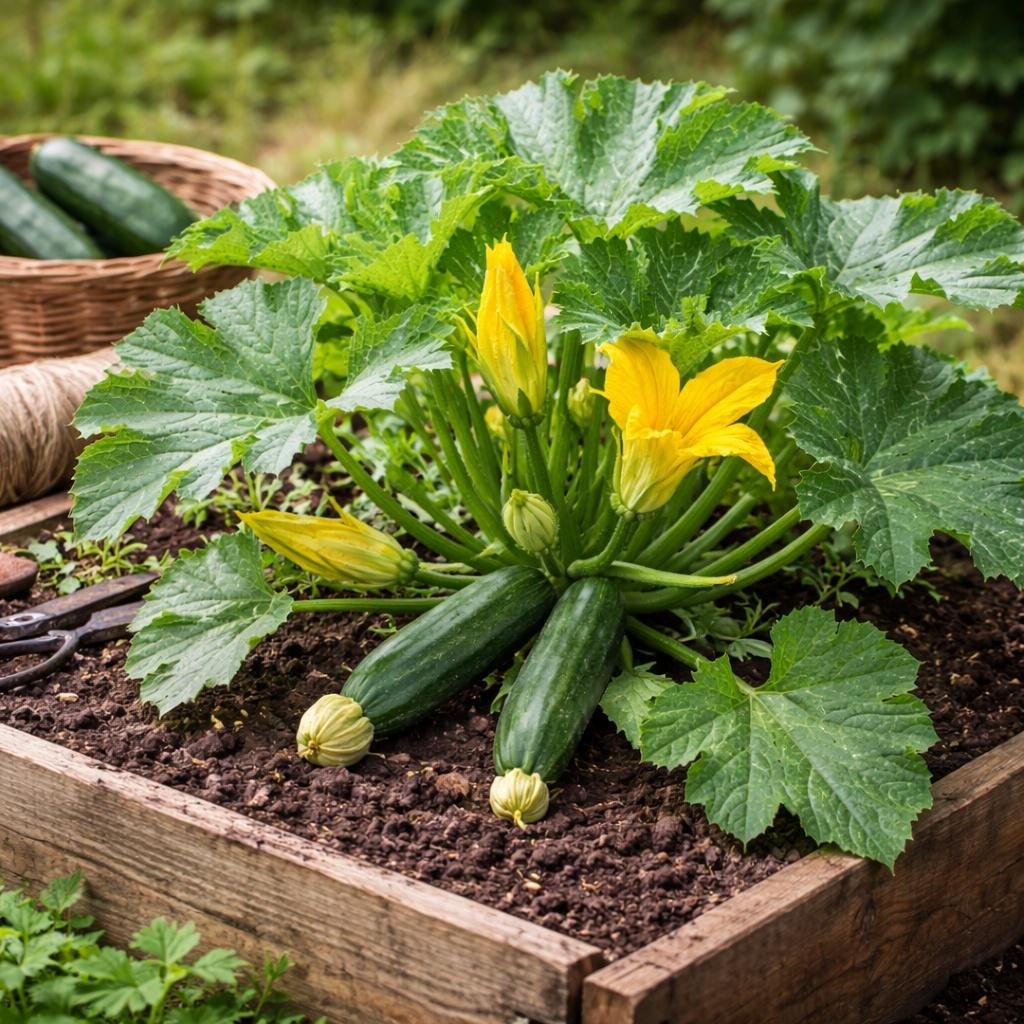
Zucchini is one of the most rewarding vegetables to grow in a backyard garden. A healthy plant can produce an impressive number of fruits throughout summer, but its large leaves and spreading growth habit can quickly overwhelm a small raised bed.
The secret to growing zucchini successfully isn’t squeezing in more plants. It’s choosing the right variety, providing enough room for mature foliage, and keeping plants healthy throughout the growing season.
Here’s how to grow zucchini in a raised garden bed without overcrowding your vegetables.
Not all zucchini plants grow the same way.
Traditional varieties often develop broad leaves and sprawling stems that occupy considerable space. Compact bush varieties generally have shorter internodes and a more manageable growth habit.
For smaller raised beds, look for varieties described as compact, bush-type, or suitable for container gardening.
Popular options include Black Beauty, Eight Ball, and certain compact hybrids, although mature dimensions vary by cultivar.
Always check the seed packet for expected plant spread before purchasing.
Zucchini seedlings look small when first planted, but mature plants can spread several feet across.
For many bush varieties, allowing approximately 24–36 inches between plants provides a practical starting point.
Larger or more vigorous varieties may require additional room.
In a 4 × 4-foot raised bed, one healthy zucchini plant may be a better choice than several crowded plants.
If growing zucchini near the edge, make sure expanding leaves won’t completely block nearby pathways.
For more planting arrangement ideas, read our guide on how to organize vegetables in a raised garden bed.
Zucchini grows best in fertile, well-drained soil that retains adequate moisture.
A slightly acidic soil pH around 6.0–6.5 is suitable for many summer squash varieties.
Before planting, remove weeds and incorporate mature compost if your soil needs additional organic matter.
Avoid excessive fertilizer applications without checking nutrient requirements.
Raised beds should allow excess water to drain while providing enough growing medium for healthy root development.
Zucchini is a warm-season vegetable that is sensitive to frost.
Wait until the danger of frost has passed and the soil has warmed before planting outdoors.
Sow seeds approximately ½–1 inch deep, following the variety’s instructions.
If starting plants indoors, use individual containers and transplant young seedlings carefully to minimize root disturbance.
Choose a location receiving at least six to eight hours of direct sunlight daily.
| Growing Factor | Recommended Starting Point | Why It Matters |
|---|---|---|
| Plant spacing | 24–36 inches for many bush types | Reduces crowding |
| Sunlight | 6–8+ hours daily | Supports flowering and fruiting |
| Soil pH | Approximately 6.0–6.5 | Suitable nutrient availability |
| Seed depth | ½–1 inch | Supports establishment |
| Soil moisture | Consistently moist, not saturated | Supports fruit development |
| Plant support | Optional for suitable varieties | May improve access |
| Harvest size | Often 6–8 inches long | Encourages tender fruit harvests |
These recommendations vary by variety, climate, and growing system. Follow cultivar-specific spacing guidance whenever available.
A zucchini plant can shade smaller crops as its leaves expand.
Avoid planting lettuce, peppers, or herbs directly beneath its expected mature canopy unless their growing periods are carefully planned.
One option is to grow zucchini at the end of a rectangular raised bed, allowing some foliage to extend outward where it won’t obstruct pathways.
Another approach is to dedicate a separate bed to zucchini and other suitable summer squash.
Plan around the mature plant, not the empty space visible during planting.
Some gardeners support compact zucchini plants with sturdy stakes to keep foliage more upright.
This may improve access for harvesting, but zucchini is not naturally a climbing vine like pole beans.
If you use supports, install them early and secure stems gently without damaging them.
Avoid forcing large plants into narrow trellises.
Vertical support may help manage the plant’s shape, but it does not eliminate the need for adequate spacing.
Zucchini needs reliable moisture, particularly during flowering and fruit development.
Water deeply when the root zone begins to dry, allowing excess water to drain.
Drip irrigation or soaker hoses can help deliver moisture near the roots while keeping leaves relatively dry.
Apply suitable organic mulch around established plants to conserve moisture and reduce weeds.
Keep mulch away from the main stem.
For additional watering advice, explore our article on how often you should water a raised garden bed.
Large zucchini leaves can make a raised bed look overcrowded.
However, removing too many healthy leaves can reduce the plant’s ability to produce energy through photosynthesis.
Remove badly damaged or diseased foliage when appropriate, using clean tools.
Avoid aggressive pruning simply to make the plant fit into an undersized bed.
Proper spacing is a better long-term solution than repeatedly cutting healthy leaves.
Zucchini plants produce separate male and female flowers.
Bees and other pollinating insects transfer pollen between them, allowing fruit to develop.
Poor pollination may cause young fruits to remain small, become misshapen, or rot before maturing.
Grow suitable flowering plants nearby and avoid insecticide applications that could harm pollinators.
If pollinator activity is limited, hand pollination may help.
Zucchini grows quickly once fruit production begins.
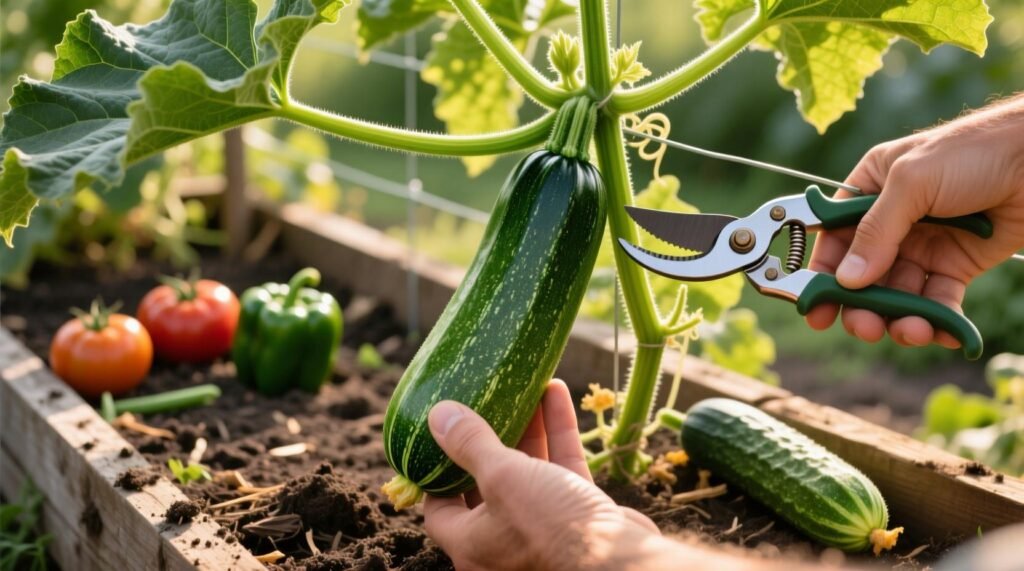
For many elongated varieties, harvesting fruits around 6–8 inches long provides tender vegetables suitable for cooking.
Check plants every day or two during peak production.
Use clean pruning shears or a knife to remove fruit without damaging the main stem.
Regular harvesting prevents oversized zucchini from occupying space and encourages continued production.
Growing zucchini in a raised garden bed without crowding starts with realistic expectations about plant size.
Choose compact varieties, provide adequate spacing, prepare healthy soil, and maintain consistent moisture.
Avoid planting too many seedlings simply because the bed looks empty in spring.
With enough sunlight, good airflow, and regular harvesting, even a small raised bed can produce an enjoyable zucchini harvest.
For more vegetable planting techniques, spacing advice, and seasonal growing tips, explore our Growing Guides.