Newsletter Subscribe
Enter your email address below and subscribe to our newsletter


Raised Bed Gardening Made Simple
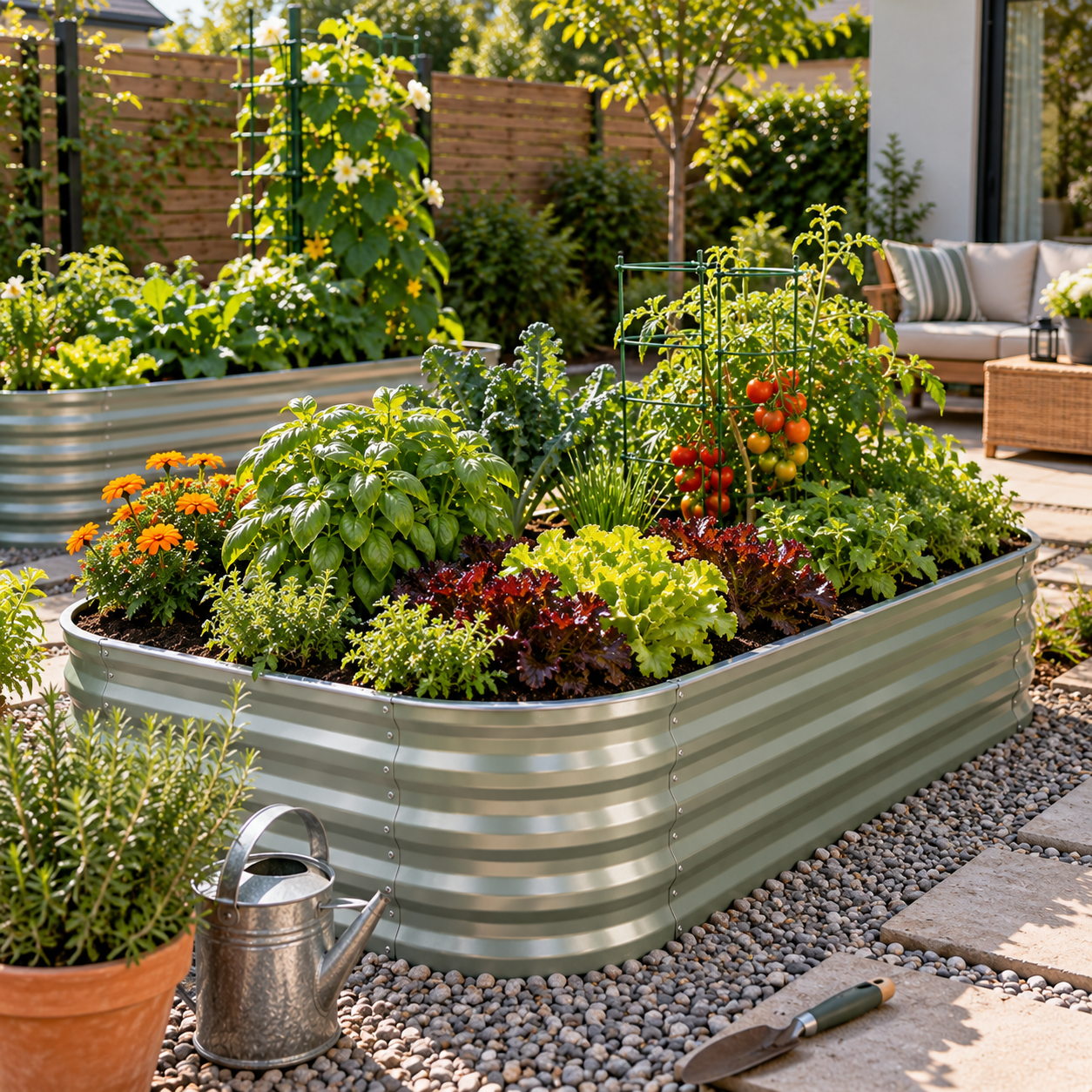
Starting a raised garden bed should make gardening easier, not more complicated. For beginners, the best design is usually one that is simple to assemble, easy to reach, affordable to fill, and large enough for the vegetables you actually want to grow.
There are dozens of raised bed shapes and materials available, but a complicated design does not necessarily produce a better garden. Before choosing one, think about available space, sunlight, access, soil volume, and the crops you plan to grow.
Here are some of the most practical raised garden bed designs for first-time gardeners.
A simple rectangular bed is one of the safest choices for beginners.
Common dimensions include:
If you can access the bed from both sides, keeping the width at 4 feet or less makes it easier to reach the center without stepping on the soil.
For a bed placed against a wall or fence, a narrower design of around 2 feet wide is usually more convenient.
Rectangular beds also work well with drip irrigation, row covers, trellises, and simple crop layouts.
Internal link: Link “raised garden bed sizes” to your article Best Raised Garden Bed Sizes for Small Backyards.
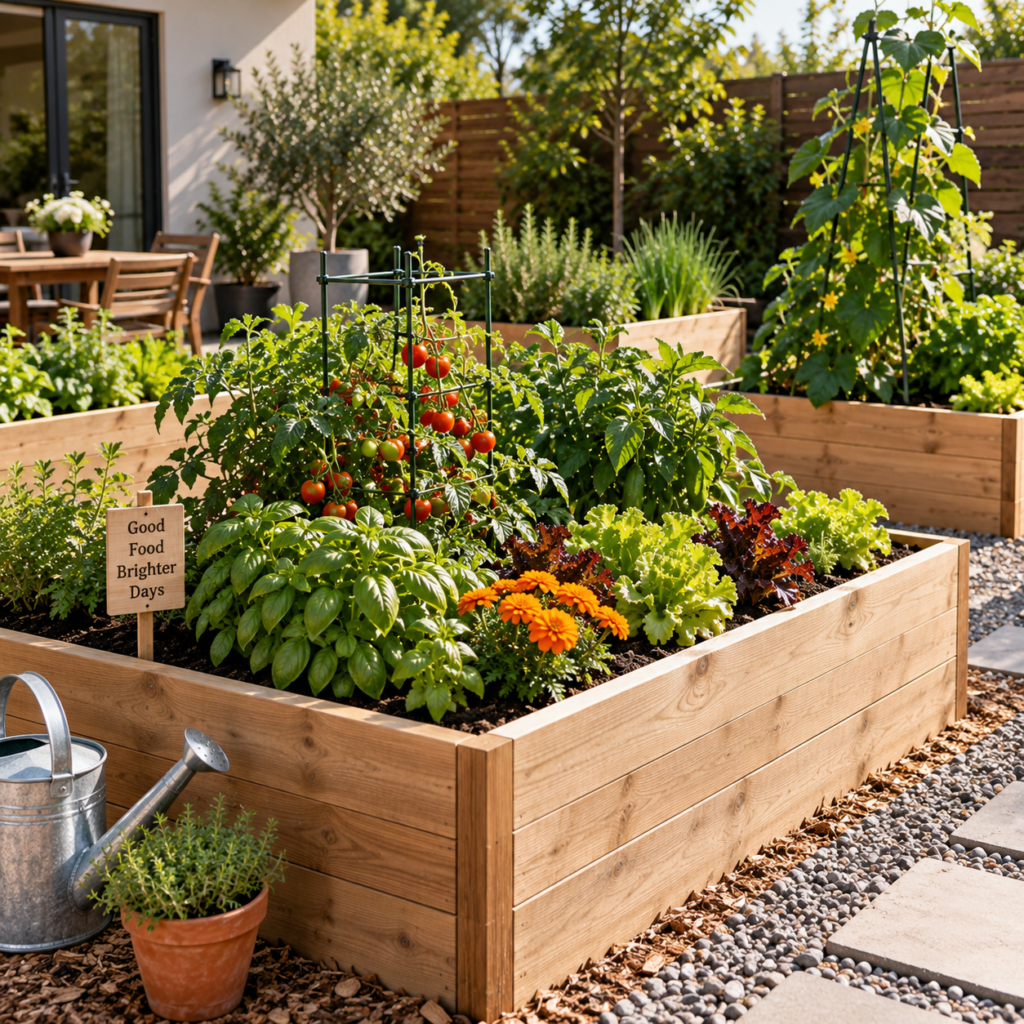
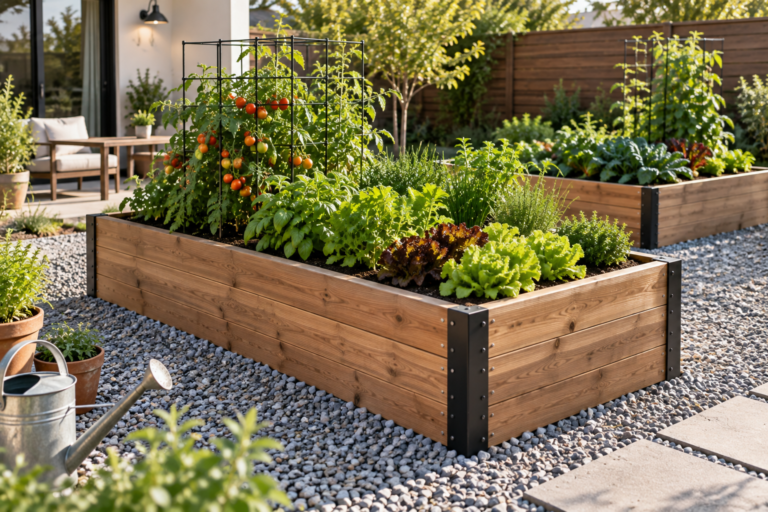
Wood is popular because it looks natural and is relatively easy to work with.
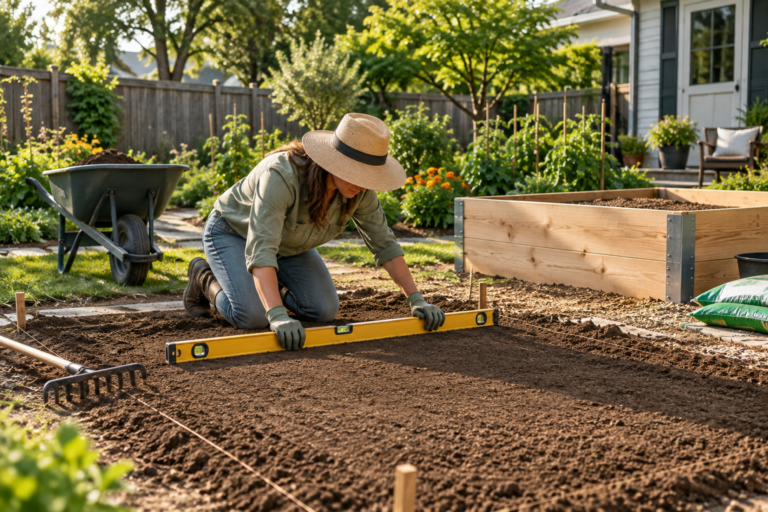
A beginner-friendly design can be as simple as four boards joined at the corners. You don’t need decorative trim, built-in benches, or complicated multi-level sections for your first garden.
Cedar and other naturally durable woods are often chosen for outdoor beds, although availability and cost vary.
The main drawback is that wood eventually deteriorates when repeatedly exposed to moisture and soil.
If longevity matters, choose suitable lumber and avoid designs that trap unnecessary moisture against the boards.
Internal link: Link “extend the life of a wooden raised garden bed” to your existing wooden-bed maintenance article.
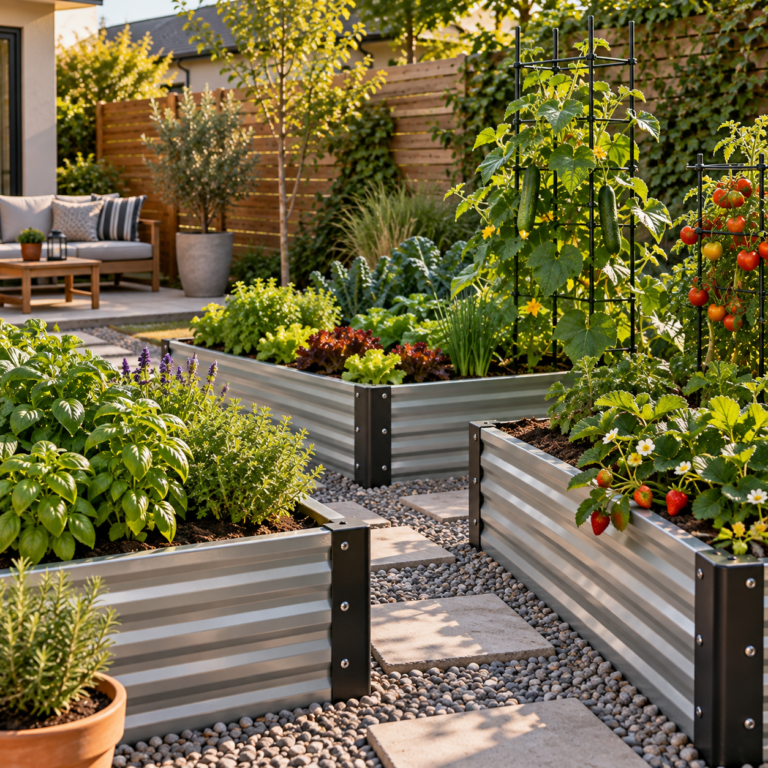
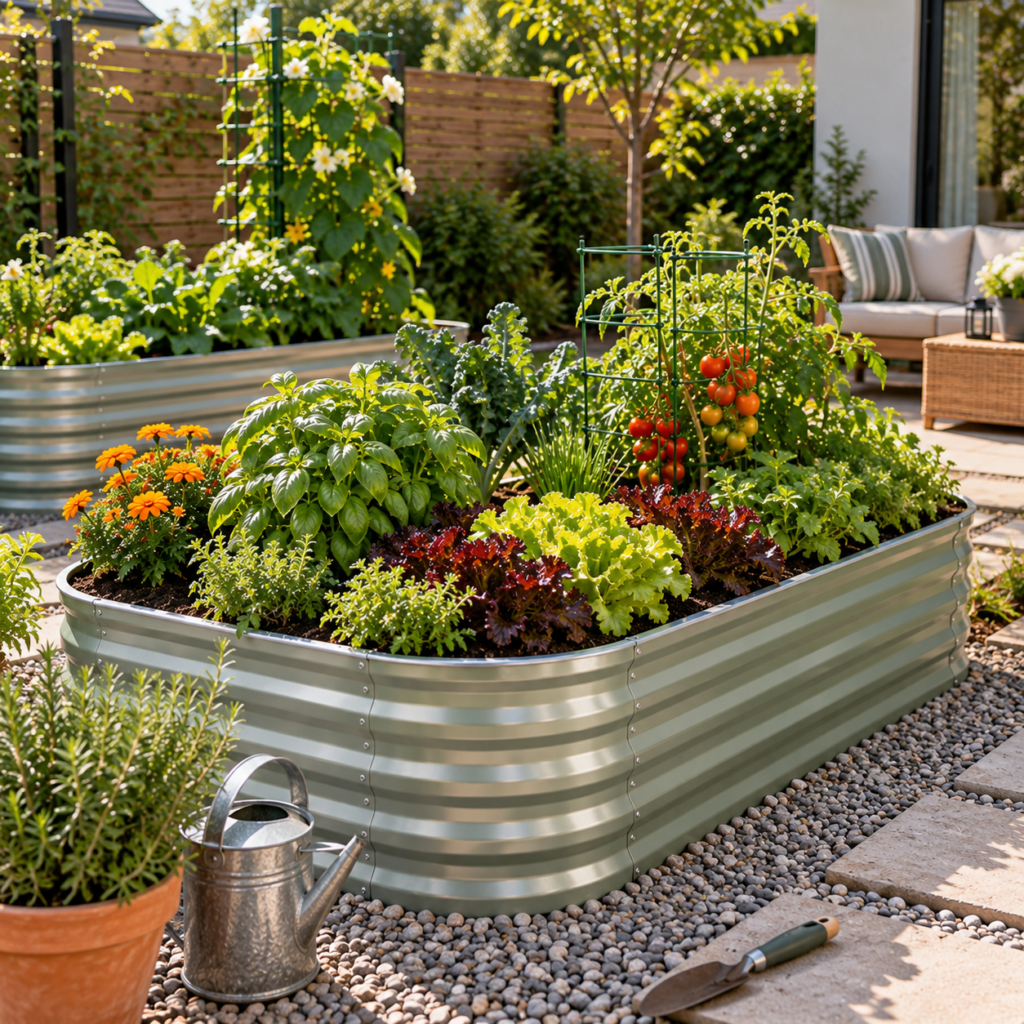
Prefabricated metal beds are another beginner-friendly option, especially if you don’t want to cut and assemble lumber.
Many kits use galvanized or coated metal panels connected with bolts. They are available in rectangular, oval, and modular configurations.
Metal beds can provide a clean appearance and generally require less structural maintenance than untreated wood.
However, check the panel thickness, edge protection, hardware, and overall stability before purchasing.
A simple rectangular or rounded metal bed is usually easier for a beginner than a large modular configuration with many sections.
Internal link: Link “metal raised garden beds” to your Best Metal Raised Garden Beds guide.
A 4 × 4 ft square bed can be particularly useful for beginners.
It provides enough room for several types of vegetables while keeping the layout easy to understand. You can mentally divide the bed into smaller sections and use each area for a different crop.
For example, one section might contain leafy greens, another herbs, and another compact vegetables.
The main rule is accessibility: make sure you can comfortably reach the center from the surrounding pathways.
Small yards, side yards, and patios often benefit from long, narrow beds.
A bed around 2 feet wide can fit along a fence while still allowing easy access from one side.
Narrow beds are useful for:
They also leave more usable pathway space than a large bed placed in the middle of a small backyard.
For beginners working with limited space, a narrow bed can be easier to manage than trying to fit the largest possible garden into the area.
An elevated planter places the growing area higher off the ground, often on legs or a supporting frame.
This design can reduce bending and may work well on patios, decks, or other areas where a traditional ground-level bed isn’t practical.
However, elevated beds usually hold less soil than large ground-level beds. Soil in smaller containers may also dry more quickly during hot weather.
For beginners, elevated beds are particularly suitable for herbs, leafy greens, strawberries, and other relatively compact crops.
If you want to grow climbing plants, adding a simple trellis can significantly increase the usefulness of a small bed.
Suitable crops may include:
Position taller trellised crops so they don’t unnecessarily shade shorter plants.
A trellis also lets you use vertical space rather than making the bed itself larger—useful when backyard space is limited.
Here’s a simple comparison:
| Design | Best For | Beginner Difficulty | Main Advantage |
|---|---|---|---|
| Rectangular bed | Most gardens | Easy | Simple and versatile |
| Wooden bed | Traditional backyards | Easy | Natural appearance |
| Metal bed | Low-maintenance setups | Easy | Durable and convenient |
| 4 × 4 square bed | First vegetable garden | Easy | Simple crop organization |
| Narrow bed | Small spaces/fences | Easy | Excellent accessibility |
| Elevated bed | Patios/easier access | Easy–Moderate | Less bending |
| Bed with trellis | Vertical crops | Moderate | Maximizes growing space |
One of the easiest mistakes for a new gardener is building too much garden at once.
A large multi-bed system requires more soil, compost, irrigation, plants, maintenance, and money. Starting with one or two manageable beds gives you time to understand watering, soil behavior, pest pressure, and how much produce your household actually needs.
You can always add another bed next season.
Bed height affects both cost and plant performance.
A deeper bed requires considerably more growing medium. If the native soil underneath is usable, you may not need an extremely deep structure for many vegetables.
If you’re gardening over concrete, compacted ground, or another difficult surface, depth becomes more important.
Internal link: Link “how deep should a raised garden bed be” to your existing raised bed depth guide.
For most beginners, a simple rectangular wooden or metal raised bed is the best place to start. Keep the width within comfortable reach, choose a manageable length, provide adequate soil depth, and leave enough space around the bed for watering and maintenance.
Avoid choosing a complicated design simply because it looks impressive. A well-positioned 3 × 6 ft or 4 × 4 ft bed can be more useful than a large garden that becomes difficult to maintain.
Once you understand how your first bed performs, you can add trellises, additional beds, irrigation systems, or more specialized layouts later.
For more help choosing materials, sizes, depths, and layouts, explore our Raised Beds guides.