Newsletter Subscribe
Enter your email address below and subscribe to our newsletter


Raised Bed Gardening Made Simple
Category: Buying Guides
Suggested URL: /metal-vs-wood-raised-garden-beds/
Primary Keyword: Metal vs Wood Raised Garden Beds
SEO Title: Metal vs Wood Raised Garden Beds: Which Is Better?
Meta Description: Compare metal vs wood raised garden beds to find the best option for your backyard. Learn about durability, cost, maintenance, appearance, heat, and growing performance.
Choosing a raised garden bed often comes down to one major decision: metal or wood?
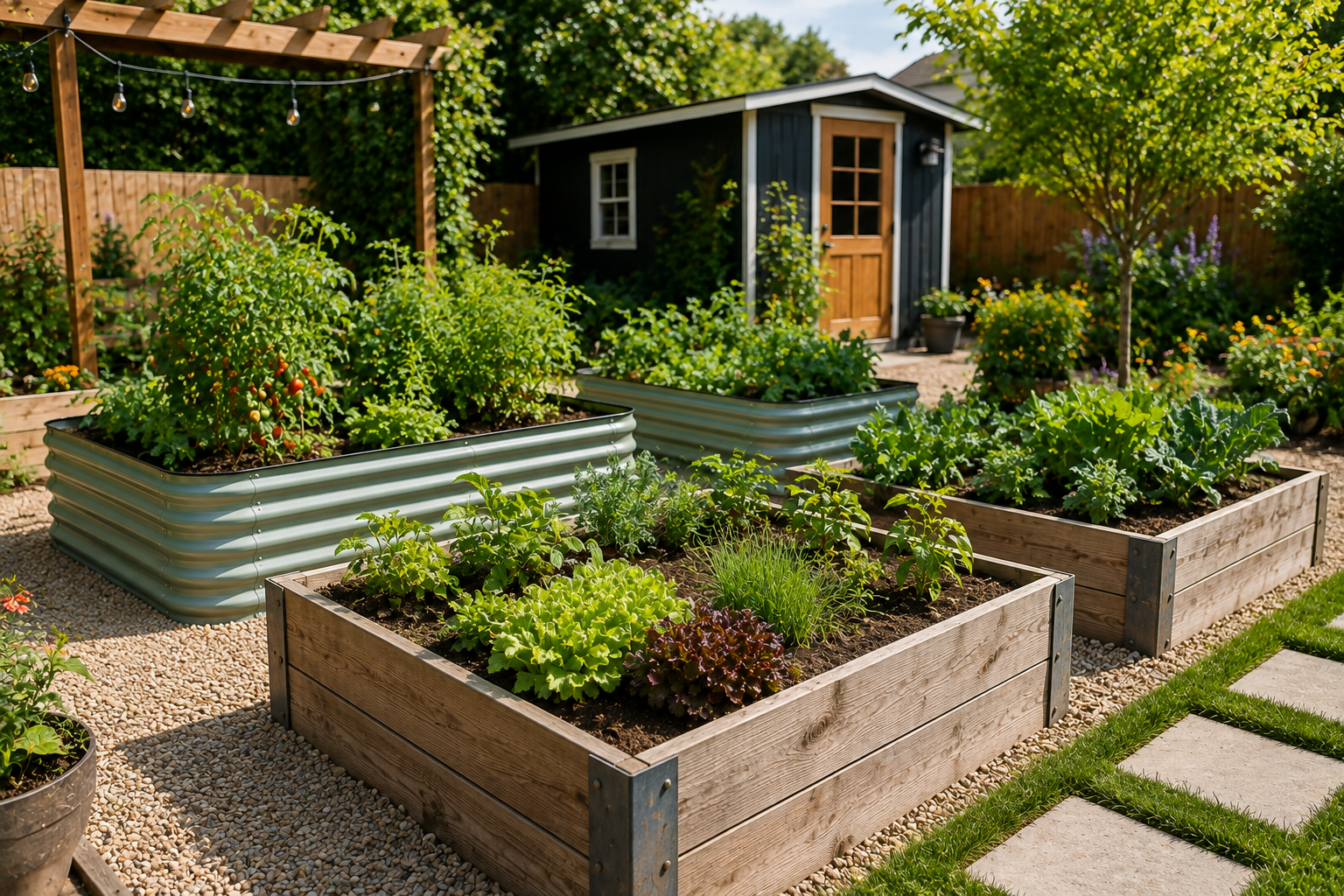
Both materials can create an attractive and productive vegetable garden, but they offer different advantages. Metal raised beds are popular for their durability and low maintenance, while wooden beds provide a natural appearance and excellent flexibility.
So, which one should you choose?
The answer depends on your budget, backyard style, climate, maintenance preferences, and what you plan to grow. Here’s how metal and wood raised garden beds compare.
Metal raised beds, especially those made from galvanized steel, have become increasingly common in modern backyard gardens.
Their biggest advantage is durability. Unlike wood, metal does not rot after prolonged contact with moist soil. A quality metal bed can also require relatively little maintenance once installed.
Many modern metal beds use modular panels, allowing gardeners to create different shapes and sizes.
Metal is an excellent option for gardeners who want a long-term structure without regularly maintaining wooden boards.
Wood remains a classic choice for raised-bed gardening.
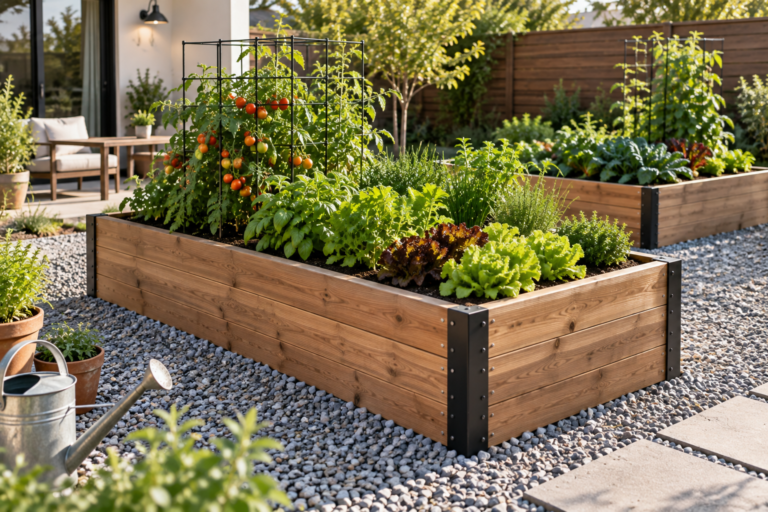
A wooden garden bed blends naturally with plants, lawns, fences, and other backyard landscaping. Cedar is particularly popular, while fir and pine provide more affordable alternatives.
Wood is also extremely easy to customize. If you have basic DIY skills, you can build a raised bed in almost any dimensions you want.
For gardeners who prioritize appearance and customization, wood remains difficult to beat.
When it comes to durability, metal generally has the advantage.
Galvanized steel is designed to resist corrosion, while wood naturally changes and deteriorates as it remains exposed to moisture.
However, not every metal bed is equally durable, and not every wooden bed has a short lifespan.
A thick, well-built cedar bed may outperform a poorly constructed metal bed.
Quality matters just as much as material.
Winner: Metal
This comes down to personal preference.
Wooden beds have a traditional, organic appearance that blends naturally into backyard gardens. Cedar in particular can look beautiful alongside gravel paths, lawns, flowers, and wooden fencing.
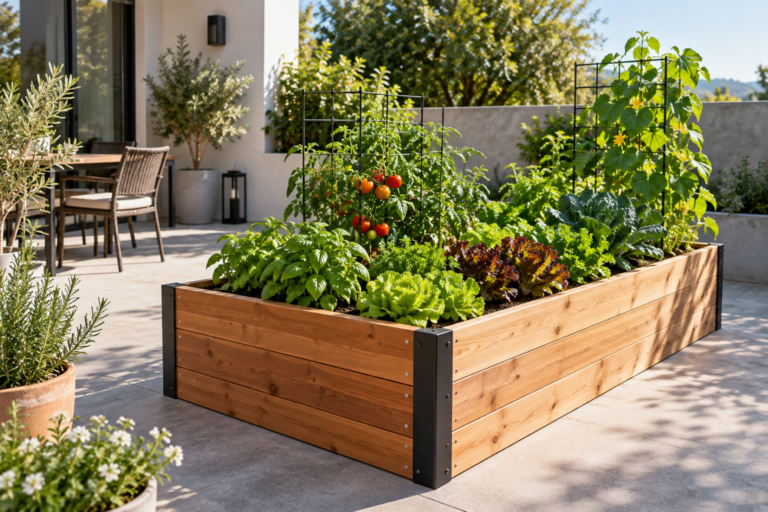
Metal offers a cleaner and more contemporary appearance.
It works especially well with modern landscaping, greenhouses, patios, and minimalist backyard designs.
Traditional Garden: Wood
Modern Garden: Metal
Metal raised beds generally require less maintenance.
Once assembled, a quality galvanized steel bed can usually remain outdoors without much attention beyond occasional cleaning and inspection.
Wood requires more monitoring because constant exposure to moisture can eventually affect boards and joints.
Some gardeners also choose to apply an appropriate wood treatment to help preserve the appearance of their beds.
Winner: Metal
Both.
Tomatoes don’t care whether they’re growing inside cedar boards or galvanized steel panels.
What matters much more is:
A properly prepared wooden bed can grow vegetables just as successfully as a metal one.
For a versatile vegetable garden, a depth of around 12–18 inches works well for many common crops, while deeper beds provide additional room for larger plants.
Winner: Tie
This is a common concern.
Metal panels exposed to direct summer sunlight can become warm, but that does not necessarily mean the entire soil volume becomes dangerously hot.
A larger concern during hot weather is keeping the soil adequately moist.
Adding organic mulch, watering deeply when necessary, and monitoring soil moisture can help protect plants during summer.
Wood does not conduct heat as readily as metal, so gardeners in extremely hot climates may still prefer its insulating properties.
The answer depends heavily on the material and construction.
Basic pine or fir beds can be inexpensive, particularly if you build them yourself. Premium cedar beds, however, can become quite expensive.
Metal raised beds also range from inexpensive basic models to premium modular systems.
Don’t compare only the purchase price.
Consider:
Initial cost + maintenance + expected lifespan + replacement cost
A more expensive bed may provide better long-term value if it lasts considerably longer.
Wood wins this category.
Wooden boards can be cut to almost any dimensions and easily modified with common tools.
You can also attach:
Metal modular beds provide some flexibility, but you’re generally limited to the manufacturer’s panel sizes and configurations.
Winner: Wood
| Feature | Metal | Wood |
|---|---|---|
| Durability | Excellent | Good |
| Rot Resistance | Excellent | Moderate |
| Maintenance | Low | Moderate |
| Natural Appearance | Good | Excellent |
| Modern Appearance | Excellent | Good |
| DIY Customization | Moderate | Excellent |
| Vegetable Growing | Excellent | Excellent |
| Modular Options | Excellent | Good |
Choose a metal raised garden bed if you want:
Choose a wooden raised garden bed if you want:
There is no universal winner in the metal vs wood raised garden bed debate.
For gardeners focused on durability and low maintenance, galvanized metal is probably the better choice. It doesn’t rot, works well in modern landscapes, and is available in many modular configurations.
For gardeners who value natural appearance and customization, wood—especially cedar—is an excellent choice.
Most importantly, don’t let the material become the biggest decision in your garden.
A well-positioned raised bed with healthy soil, adequate depth, sufficient sunlight, and consistent watering will outperform a poorly planned garden regardless of whether its walls are made from metal or wood.
Choose the material that fits your backyard, budget, and gardening style—and focus the rest of your energy on what really matters: growing healthy plants.