Newsletter Subscribe
Enter your email address below and subscribe to our newsletter


Raised Bed Gardening Made Simple
Category: Buying Guides
Suggested URL: /are-metal-raised-garden-beds-worth-it/
Primary Keyword: Are Metal Raised Garden Beds Worth It
SEO Title: Are Metal Raised Garden Beds Worth It? Pros, Cons & Costs
Meta Description: Are metal raised garden beds worth the investment? Explore their benefits, drawbacks, costs, lifespan, comfort, and everyday practicality before adding one to your backyard.
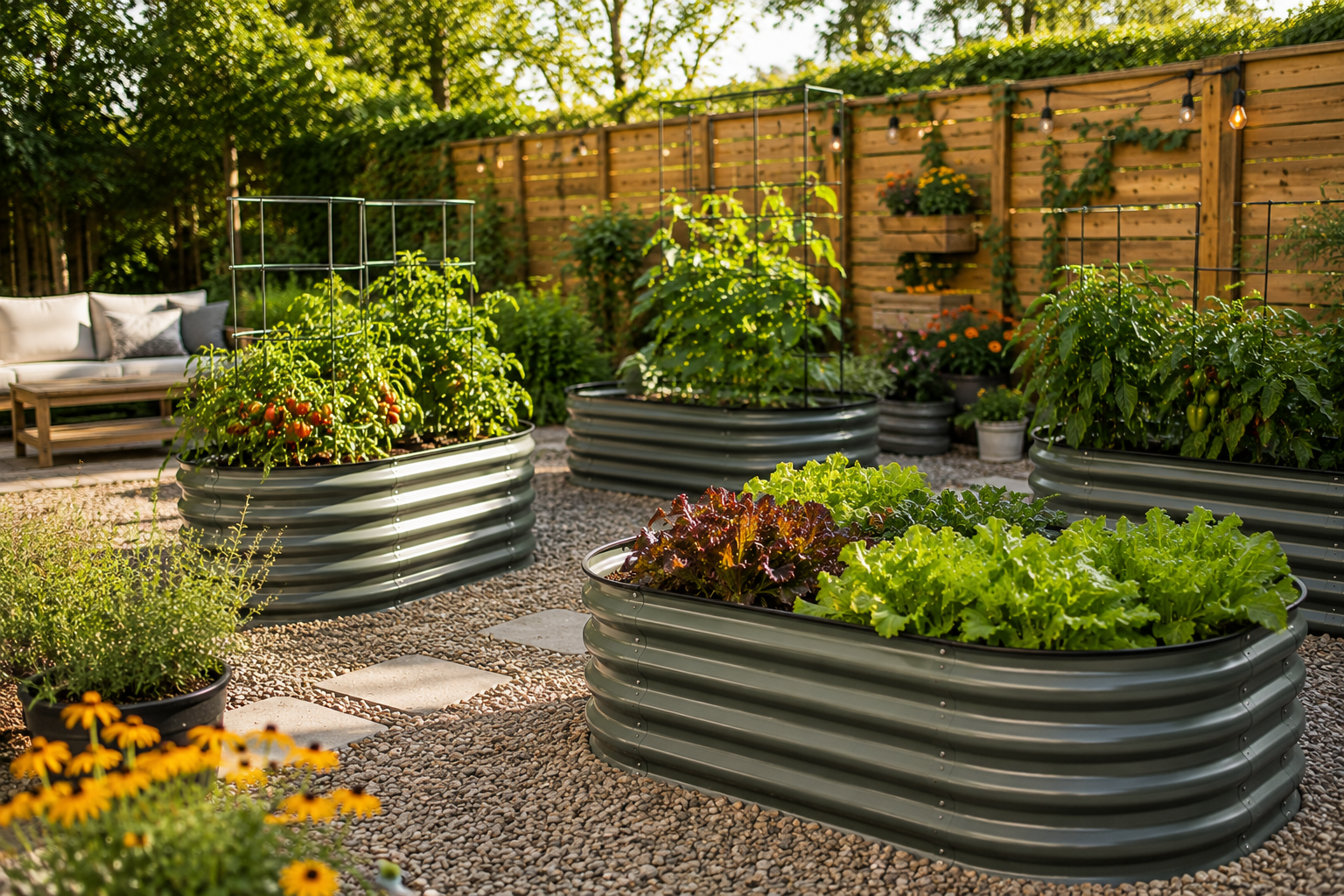
Metal raised garden beds are everywhere in modern backyard gardens. Their clean lines, tall sides, and colorful finishes can make an ordinary vegetable patch look organized almost instantly.
But they also tend to cost more than a basic DIY wooden frame.
So, are metal raised garden beds actually worth the money?
For many gardeners, the answer is yes—but not because metal automatically grows healthier vegetables. The real value comes from convenience, longevity, organization, and the ability to create a productive garden where traditional in-ground gardening may be difficult.
Here are the factors worth considering before spending your money.
One advantage that doesn’t get enough attention is organization.
A metal raised bed creates a clear boundary between your growing area and the rest of the backyard. Soil stays where it belongs, pathways remain easier to maintain, and different crops can be divided between individual beds.
For example, you might dedicate:
This makes planning, planting, and rotating crops much easier than working with one large garden plot.
For homeowners who also care about backyard appearance, metal beds can make a vegetable garden feel like an intentional part of the landscape.
Traditional garden plots often require significant preparation before planting season.
Depending on the site, you may need to deal with compacted ground, weeds, rocks, or poor native soil.
A raised bed lets you create your own growing environment from the beginning.
Once the bed is installed and filled, you can improve the soil each season with compost and other organic matter instead of rebuilding the entire growing area.
That doesn’t mean raised beds eliminate work.
You’ll still need to weed, water, fertilize, prune, and manage pests. But having a permanent defined growing space can make seasonal garden preparation more predictable.
Metal beds are available in many heights, including relatively tall models.
That extra height can be valuable even when your plants don’t require extremely deep soil.
Why?
Because it brings the garden closer to you.
A taller growing surface means less bending while:
Planting seedlings
Pulling weeds
Checking plants
Harvesting vegetables
Working with the soil
If you spend a lot of time in the garden, that difference can make everyday maintenance more comfortable.
This is one reason a taller raised bed may be worth paying for even if a shallower bed could technically support the same plants.
A cheap garden solution isn’t always the least expensive solution over time.
Wooden beds can perform very well, but wood exposed continuously to soil and moisture will eventually weather and may deteriorate.
Metal doesn’t have the same rot problem.
Quality galvanized or coated steel beds are designed for outdoor exposure and can potentially remain part of a garden for many growing seasons.
However, don’t assume every metal bed will perform equally well.
Before purchasing, examine:
Paying more makes sense only when you’re actually getting better construction.
Here’s something many buyers discover too late:
The bed may not be the most expensive part of the project.
Imagine purchasing an 8 × 4-foot bed that is 2 feet tall.
Its total internal volume is approximately:
8 × 4 × 2 = 64 cubic feet
That’s a lot of filling material.
You may also need compost, mulch, irrigation supplies, seedlings, trellises, and garden tools.
Therefore, when deciding whether a metal raised bed fits your budget, calculate the complete garden setup, not just the price shown on the product page.
This is actually where metal raised beds can make a lot of sense.
A carefully positioned raised bed can turn an otherwise unused corner of a backyard into a productive growing area.
For limited spaces, consider a compact bed and grow upward whenever possible.
A trellis can support:
Meanwhile, lettuce, herbs, radishes, or strawberries can occupy lower areas.
This combination allows you to harvest several crops from a relatively small footprint.
Raised beds require attention to moisture.
Because the growing area is elevated and surrounded by exposed sides, soil conditions can change faster than in some in-ground gardens.
During warm weather, check moisture regularly rather than relying on a fixed watering schedule.
Drip irrigation or a soaker hose can make watering more convenient, particularly if you have several beds.
Adding mulch around established vegetables can also reduce surface evaporation.
If you’re installing multiple metal beds, planning irrigation at the same time can save considerable work later.
Metal beds aren’t the best investment for everyone.
You may want another option if:
You already have excellent garden soil.
An in-ground garden may provide everything you need at a lower cost.
You enjoy DIY woodworking.
Building your own wooden beds gives you almost unlimited control over dimensions.
You move your garden frequently.
Although empty metal panels can be moved, a filled raised bed is effectively a permanent structure.
Your budget is very limited.
The combined cost of the bed and soil can be significant.
You want a traditional cottage-garden appearance.
Natural wood may blend into that landscape more effectively.
Instead of asking whether all metal raised beds are worth it, ask whether a particular product provides good value.
We would prioritize:
The walls should remain stable after the bed is filled with wet soil.
The top edges should be folded, rounded, or otherwise designed for safe everyday gardening.
Choose a height based on your plants and preferred working position—not simply because taller looks better.
You should be able to reach the center without climbing into the bed.
Trellises, irrigation, covers, and netting can make the bed more useful over time.
| Pros | Cons |
|---|---|
| No wood rot | Higher initial cost |
| Clean, organized appearance | Deep models need lots of soil |
| Many heights available | Exterior can become warm in sun |
| Good for difficult native soil | Filled beds are difficult to relocate |
| Low structural maintenance | Quality varies between products |
| Works in small gardens | Less DIY-friendly than wood |
For gardeners planning a long-term vegetable garden, metal raised garden beds can absolutely be worth the investment.
Their strongest advantages are not simply durability. They provide a defined growing space, make garden layouts easier to organize, offer comfortable height options, and allow you to create better growing soil even when your backyard conditions are less than ideal.
However, don’t buy one simply because metal beds are popular.
Consider the total cost, including soil. Measure your backyard carefully. Decide what vegetables you actually want to grow. And choose a bed with dimensions you can comfortably maintain.
For a permanent backyard garden where organization, convenience, low structural maintenance, and appearance are important, a well-built metal raised bed can provide excellent value for many growing seasons.