Newsletter Subscribe
Enter your email address below and subscribe to our newsletter


Raised Bed Gardening Made Simple
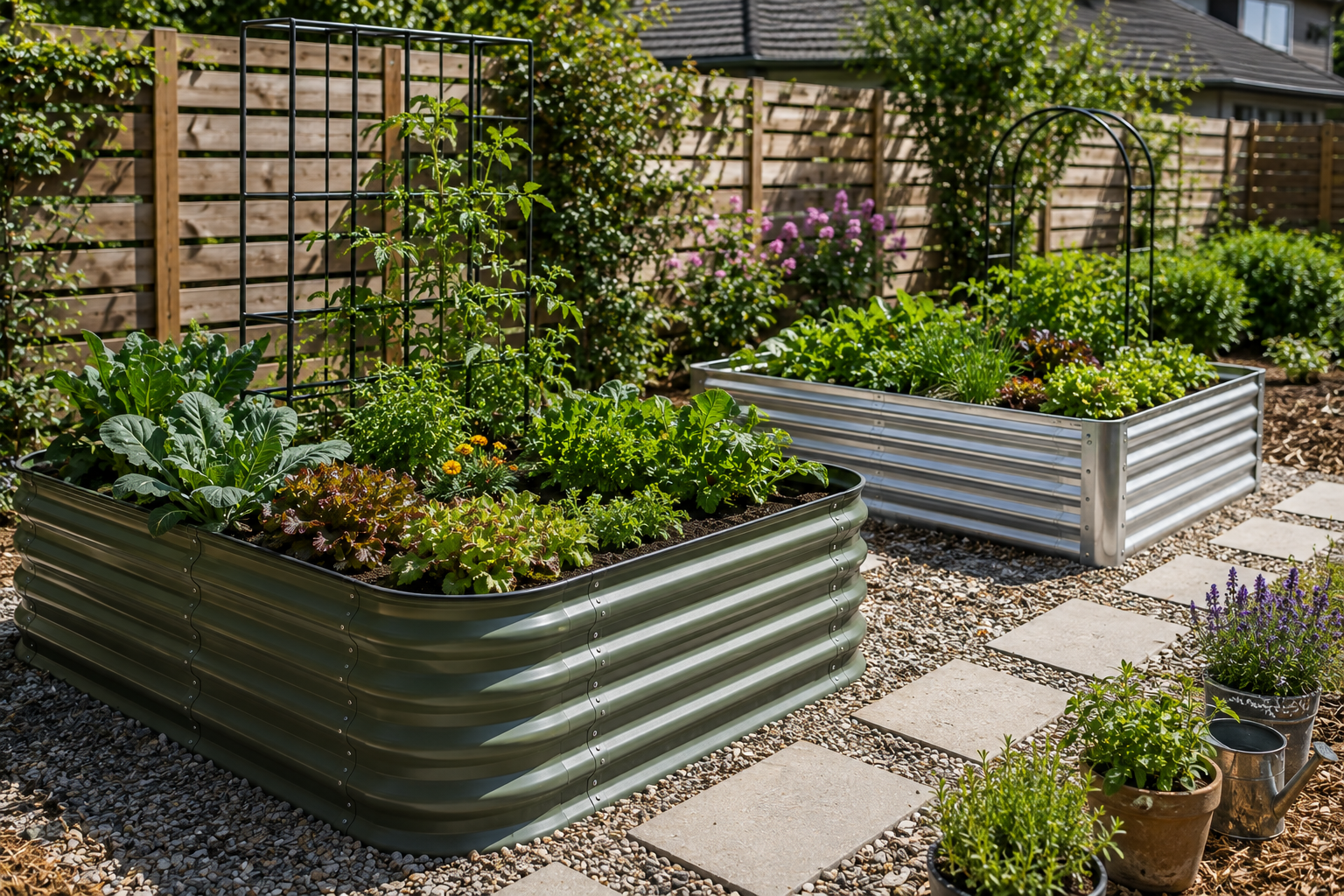
Raised garden beds are often chosen because they provide better control over soil conditions than traditional in-ground gardens. However, simply building a bed above ground does not guarantee perfect drainage.
When excess water remains around plant roots for too long, plants may struggle to absorb oxygen and can become more vulnerable to root problems. Poor drainage can also make soil compacted, create unpleasant odors, and slow vegetable growth.
The good news is that most drainage problems can be improved with a few practical changes. Here are some effective ways to create a healthier, better-draining raised garden bed.
The location of your raised garden bed can have a major effect on drainage.
Avoid placing the bed in a naturally low area where rainwater collects. If possible, choose a relatively level location with good natural drainage.
A slight slope around the surrounding landscape can also help excess water move away from the garden.
Before building the bed, observe the area after heavy rain. If water regularly remains on the ground for several hours, the location may need additional preparation.
Choosing the right location from the beginning is much easier than trying to correct drainage problems after the bed has been filled.
For raised garden beds installed directly on soil or grass, an open bottom is usually an effective drainage solution.
Water can move downward through the growing medium and eventually into the native soil.
An open bottom also allows plant roots to gradually explore the soil underneath the raised bed.
However, the ground below should not be heavily compacted.
If the soil beneath the bed is hard and dense, loosen the surface before filling the garden bed. This can create better pathways for water to move downward.
One of the most common causes of poor drainage is heavy soil.
Dense clay-based soil can hold large amounts of water and may become sticky when wet and hard when dry.
Instead of using heavy native soil by itself, choose a growing medium designed for raised beds.
A balanced mixture can contain quality topsoil, mature compost, and other suitable materials that improve soil structure.
The objective is to create soil with enough pore space for both water and air.
Good raised-bed soil should retain moisture without becoming permanently saturated.
Compost is extremely useful in raised garden beds, but adding large amounts without considering the rest of the soil mix is not always beneficial.
Fine organic material can retain considerable moisture.
Use mature compost as one component of the growing medium rather than filling the entire bed with compost.
A balanced mixture provides better long-term structure and helps maintain the right relationship between moisture retention and drainage.
As the soil settles over time, adding moderate amounts of compost can help maintain its quality.
Compaction can prevent water from moving through the root zone.
This can happen when people repeatedly walk on the soil, work with wet soil, or allow the bed to settle heavily over several seasons.
Avoid stepping directly inside the growing area whenever possible.
If the soil has already become compacted, gently loosen it with a garden fork or another suitable tool.
Do not repeatedly turn the entire bed unnecessarily. The goal is to restore air spaces without destroying the soil structure.
If your raised garden bed sits directly on the ground, water usually has somewhere to go.
But raised beds installed on patios, concrete, balconies, or other hard surfaces require a different approach.
These beds need a designed drainage route so excess water can escape instead of collecting at the bottom.
Check whether the container or bed has adequate drainage openings.
Without an exit path, even high-quality soil can become saturated after heavy rain or frequent irrigation.
Sometimes the problem isn’t the garden bed at all—it’s the watering schedule.
Plants do not necessarily need water every day.
Before watering, check the moisture level below the surface. The top layer of soil can look dry while the deeper root zone is still moist.
Weather also matters.
A raised bed may need significantly less water after several days of rain than it does during a hot, dry period.
Adjust watering according to temperature, rainfall, plant size, soil conditions, and the specific crops you are growing.
Plant spacing can affect how quickly moisture leaves the garden.
When vegetables are planted too closely together, their foliage can create a dense canopy that limits airflow and keeps the soil surface shaded.
Crowded plants can also make it harder to inspect the soil and identify wet areas.
Follow the recommended spacing for each crop and consider its mature size.
A well-spaced raised bed generally has better airflow and is easier to maintain throughout the growing season.
Drainage problems can sometimes originate outside the raised bed.
If rainwater flows toward the garden from a driveway, patio, roof, or sloped section of the yard, the bed may receive more water than it can handle.
Look at the surrounding landscape during heavy rain.
If necessary, create a shallow drainage path or adjust the surrounding soil so water moves around the garden instead of directly into it.
Keeping excess surface water away from the bed can make a surprisingly large difference.
Your plants can provide useful clues.
Signs of excessive moisture may include consistently wet soil, yellowing leaves, slow growth, wilting despite wet soil, or water remaining on the surface long after rainfall.
Check the soil several inches below the surface rather than judging moisture only by appearance.
If one section of the bed stays wetter than the rest, investigate that specific area.
The problem could be compacted soil, uneven ground, poor drainage beneath the bed, or excessive irrigation in that location.
If your raised garden bed already has poor drainage, don’t immediately replace everything.
First identify the cause.
If the soil is compacted, gently loosen it.
If the soil mix is too dense, gradually incorporate appropriate amendments or replace part of the growing medium.
If the bed sits on an impermeable surface, inspect the drainage openings and make sure excess water has somewhere to escape.
If overwatering is responsible, adjust your irrigation routine.
Making one change at a time can help you determine which solution actually improves the garden.
Good drainage is essential for a productive raised garden bed, but the goal is not to make water disappear as quickly as possible.
Plants need both moisture and oxygen around their roots.
The best approach is to create a growing environment that can retain enough moisture while allowing excess water to drain away.
Start with a suitable location, use well-structured soil, avoid compaction, provide an appropriate drainage path, and adjust watering according to weather and plant needs.
With these simple practices, a raised garden bed can maintain healthier soil conditions and provide a much more reliable environment for growing vegetables, herbs, and flowers.