Newsletter Subscribe
Enter your email address below and subscribe to our newsletter


Raised Bed Gardening Made Simple
Does the soil in your raised bed go from moist to bone-dry within hours of watering? You are not imagining it — raised beds genuinely dry out faster than in-ground gardens, and several fixable factors make the problem worse. Here is why it happens and how to keep moisture where your plants need it.
Many commercial raised bed mixes are heavy on perlite, vermiculite fines, and sand for drainage. Drainage is good — but too much of it, combined with little organic matter, means water runs straight through. If your mix feels gritty and dries within a day, it lacks water-holding material such as compost or coconut coir.
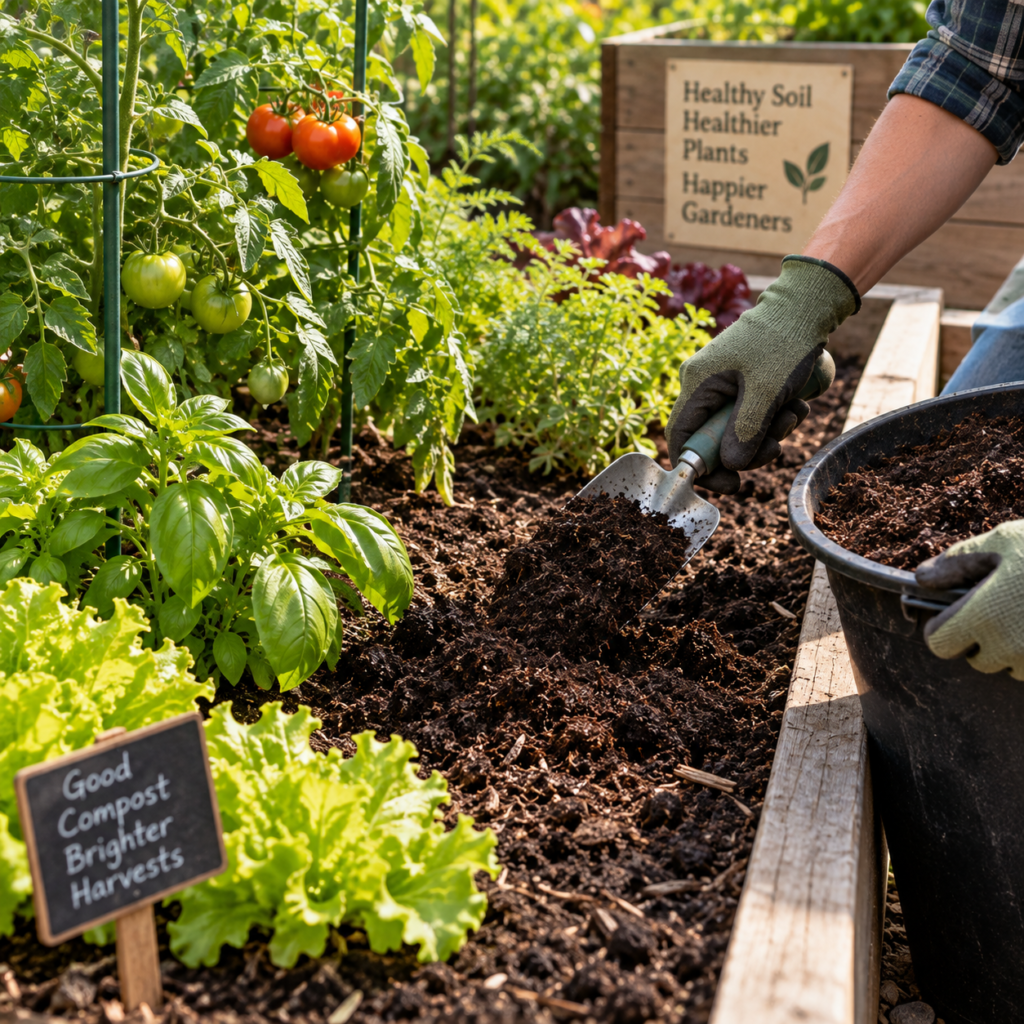
Compost acts like a sponge. As it decomposes over a season or two, the sponge shrinks, and the bed gradually loses water-holding capacity. A bed that held moisture well last year may be drying out fast this year simply because the organic matter has broken down.
Light daily sprinkles teach roots to stay near the surface, where heat and wind dry soil fastest. The result is a vicious cycle: shallow roots dry out quicker, so you water more often, and the cycle continues. Deep, infrequent watering builds deeper roots that access moisture longer.
Raised beds warm up earlier in spring — an advantage in cold climates, but a liability in summer. The sides of the bed absorb heat and bake the root zone, while wind passing over an exposed bed strips away surface moisture far faster than at ground level. Beds on south-facing patios or rooftops suffer the most.
Unmulched soil can lose moisture to evaporation at two to three times the rate of covered soil. Every hour of sun and wind on bare ground pulls water out of the bed before roots can use it.
Paradoxically, a bed that dries out completely can become hydrophobic — the organic matter shrinks and actually repels water, so each irrigation channels down the sides and out the bottom while the root zone stays dry. If water pools and runs off instead of soaking in, this is likely your problem.
Choosing the right mulch makes the single biggest difference in how fast your bed dries out. Here is how the most popular options stack up:
| Mulch Type | Moisture Retention | Cost | Longevity | Best For |
|---|---|---|---|---|
| Straw | Excellent | $ | 1 season | Vegetable beds, quick results |
| Shredded leaves | Excellent | Free | 1 season | Budget gardeners, soil building |
| Wood chips / bark | Very good | $–$$ | 2–3 seasons | Paths, perennial beds |
| Grass clippings | Good | Free | Weeks | Thin top-ups between plants |
| Coconut coir mat | Good | $$ | 1 season | Seedlings, tidy appearance |
| Compost (as topdress) | Moderate | $–$$ | Feeds soil as it breaks down | Two-in-one: mulch + fertilizer |
Table 1: Comparison of common mulch types for retaining moisture in raised garden beds.
Don’t water by the calendar. Push a finger 2 inches into the soil — if it feels moist, wait a day. If it feels dry at 2 inches but damp at 4, it’s time for a deep soak. This one habit prevents both drought stress and overwatering.
Some drying speed is expected and healthy: mature tomato, squash, and pepper plants can each drink several liters per day in peak summer, and a fully planted bed in July will always out-dry a bed of seedlings in April. Judge the problem by your plants, not the calendar — wilting that recovers by evening is normal transpiration; wilting that persists into the next morning means the bed genuinely cannot hold enough water.
Fast-drying raised bed soil almost always traces back to one of three things: a mix without enough organic matter, water lost to evaporation from bare soil, or watering habits that keep roots shallow. Rebuild the sponge with compost or coir, mulch generously, water deeply in the early morning, and your bed will hold moisture for days instead of hours — with healthier plants and a much smaller water bill.