Newsletter Subscribe
Enter your email address below and subscribe to our newsletter


Raised Bed Gardening Made Simple
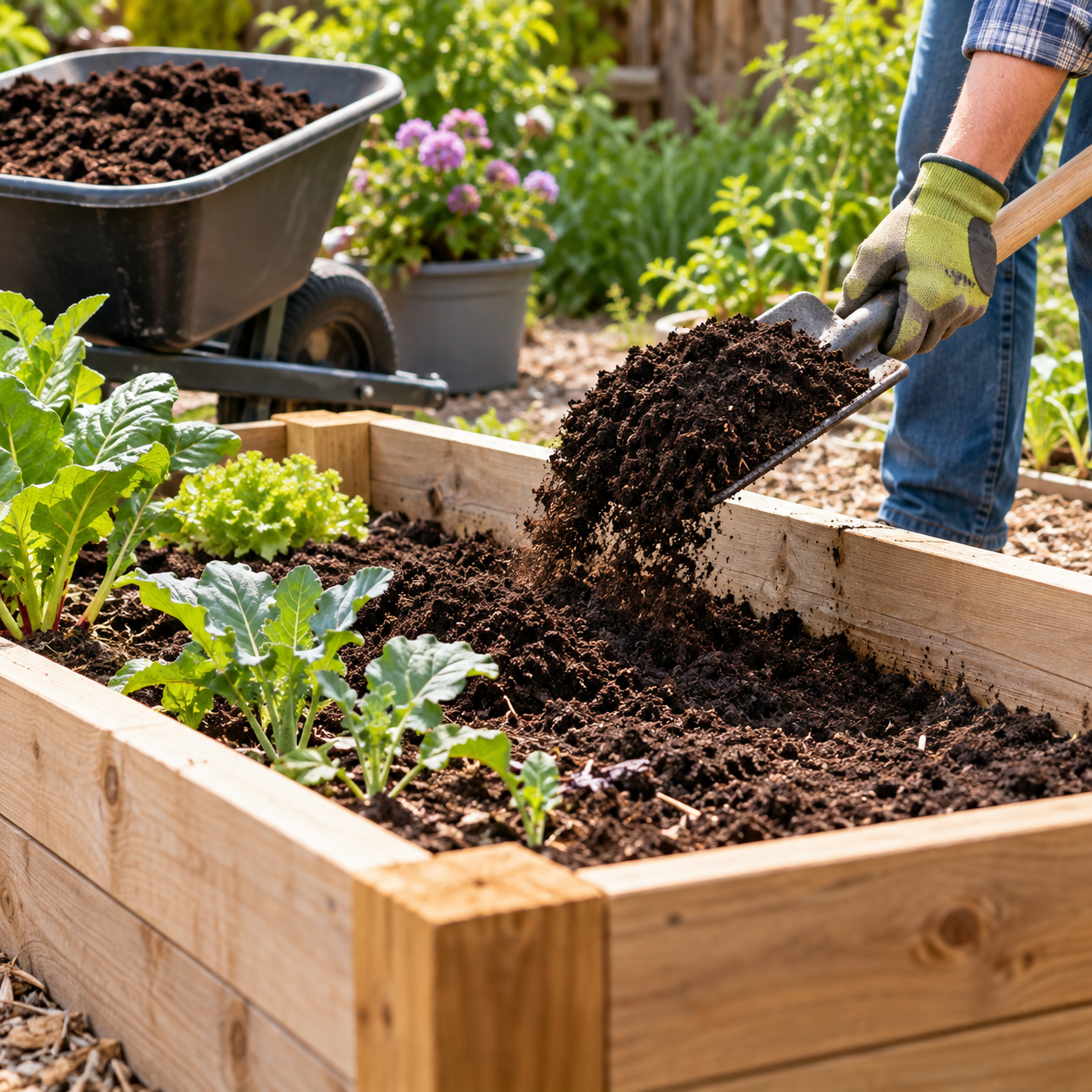
Have you noticed that the soil in your raised garden bed seems lower than it was when you first filled it? Perhaps the soil once reached near the top of the frame, but now there’s a noticeable gap between the surface and the boards.
This is a common experience, especially during the first growing season. Raised bed soil naturally settles as particles rearrange, organic matter decomposes, and water moves through the growing medium.
However, significant or uneven sinking can sometimes indicate a problem that needs attention.
Here’s how to identify the cause and restore your raised bed soil without unnecessary replacement.
Newly filled raised beds often contain loose soil with air spaces between particles.
After watering and rainfall, soil particles gradually settle into a more stable arrangement.
This can cause the surface level to drop, particularly during the first few months.
A small amount of settling is generally normal and doesn’t mean the soil is unhealthy.
If the soil remains loose, drains properly, and supports healthy plants, you may only need to top it up before the next planting season.
Avoid aggressively compacting the soil to prevent settling, since roots still need air and space to grow.
Compost, shredded leaves, and other organic materials gradually decompose.
As microorganisms break down these materials, their volume decreases.
This process is especially noticeable in beds filled with large quantities of unfinished organic matter, wood chips, or partially decomposed plant debris.
Beds constructed using layered organic materials may experience more dramatic settling than those filled with a stable mineral soil and mature compost blend.
Decomposition is a natural process, but excessive use of bulky organic material can create large changes in soil level.
Some raised beds are filled primarily with peat-based potting mix, coconut coir, or other lightweight materials.
These ingredients can provide useful growing properties, but mixes containing large amounts of decomposable organic material may lose volume over time.
For many open-bottom raised beds, a suitable blend containing mineral soil and mature compost can provide greater long-term stability.
However, the ideal mixture depends on drainage, crop requirements, and the underlying ground.
For more information about choosing suitable materials, read our guide on best soil for raised garden beds.
Not every drop in soil level is caused by settling.
Loose soil can sometimes escape through gaps between wooden boards, damaged corners, or openings beneath the frame.
Heavy rainfall and irrigation runoff may accelerate this problem.
Inspect the outside of the raised bed for soil deposits, exposed roots, or visible openings.
Repair loose joints and damaged boards where necessary.
Avoid blocking normal drainage while sealing gaps.
Strong rainfall can move fine soil particles toward low areas or wash them out of poorly constructed beds.
Uneven settling may be more noticeable where water repeatedly flows across the surface.
Check whether nearby paths or slopes direct runoff into the bed.
Organic mulch can reduce the impact of raindrops and help protect exposed soil.
If water regularly carries soil away, address the runoff pattern rather than simply adding more growing medium.
| Cause | Common Signs | Recommended Solution |
|---|---|---|
| Natural settling | Even drop in soil level | Top up with suitable soil |
| Organic matter decomposition | Gradual volume loss | Use mature compost and stable soil |
| Lightweight growing mix | Significant settling over time | Add appropriate mineral-based growing soil |
| Gaps in the frame | Soil visible outside the bed | Repair joints and openings |
| Rainwater erosion | Uneven surface or washed-out areas | Improve runoff control and mulch |
| Animal burrows | Localized holes or sudden depressions | Identify and address burrowing activity |
| Unstable underlying ground | Frame tilting or repeated uneven sinking | Investigate foundation stability |
The best solution depends on whether the soil is settling evenly or disappearing from a specific area.
There is no universal amount of settling that applies to every raised bed.
A newly filled bed containing a large proportion of organic material may settle considerably more than one filled with a stable soil blend.
Instead of relying on a fixed percentage, observe how quickly the soil level changes.
Gradual, even settling is usually less concerning than sudden depressions or areas that continue sinking after repeated repairs.
If the bed frame itself begins leaning or shifting, investigate the underlying ground before adding more soil.
If your bed is structurally sound and the soil is healthy, topping it up is often straightforward.
First, remove weeds and loose debris.
Check the existing soil for drainage problems or unusual compaction.
Add suitable growing soil to restore the desired level, leaving enough space below the frame edge for watering and mulch.
If vegetables are already growing, add soil carefully around them without burying sensitive stems or crowns.
For empty beds, gently level the new material and water to encourage natural settling.
The choice depends on why the soil level dropped.
If the bed has lost substantial volume, adding only compost may not provide the most stable long-term solution.
A suitable mineral-based growing soil may be more appropriate for restoring significant depth.
Mature compost can be added in modest amounts when additional organic matter is beneficial.
Avoid repeatedly adding thick compost layers without considering nutrient levels, since excessive applications can lead to nutrient imbalances.
For a more detailed explanation, explore our article on how to add compost to an established raised garden bed.
You cannot eliminate all natural settling, but you can reduce avoidable problems.
Use suitable, stable growing materials rather than filling the entire bed with unfinished organic debris.
Inspect wooden or metal frames for gaps and structural damage.
Protect exposed soil with mulch and prevent concentrated runoff from entering the bed.
Avoid stepping inside raised beds, which can compact soil and reduce pore space.
Check soil levels between growing seasons and make small adjustments when necessary.
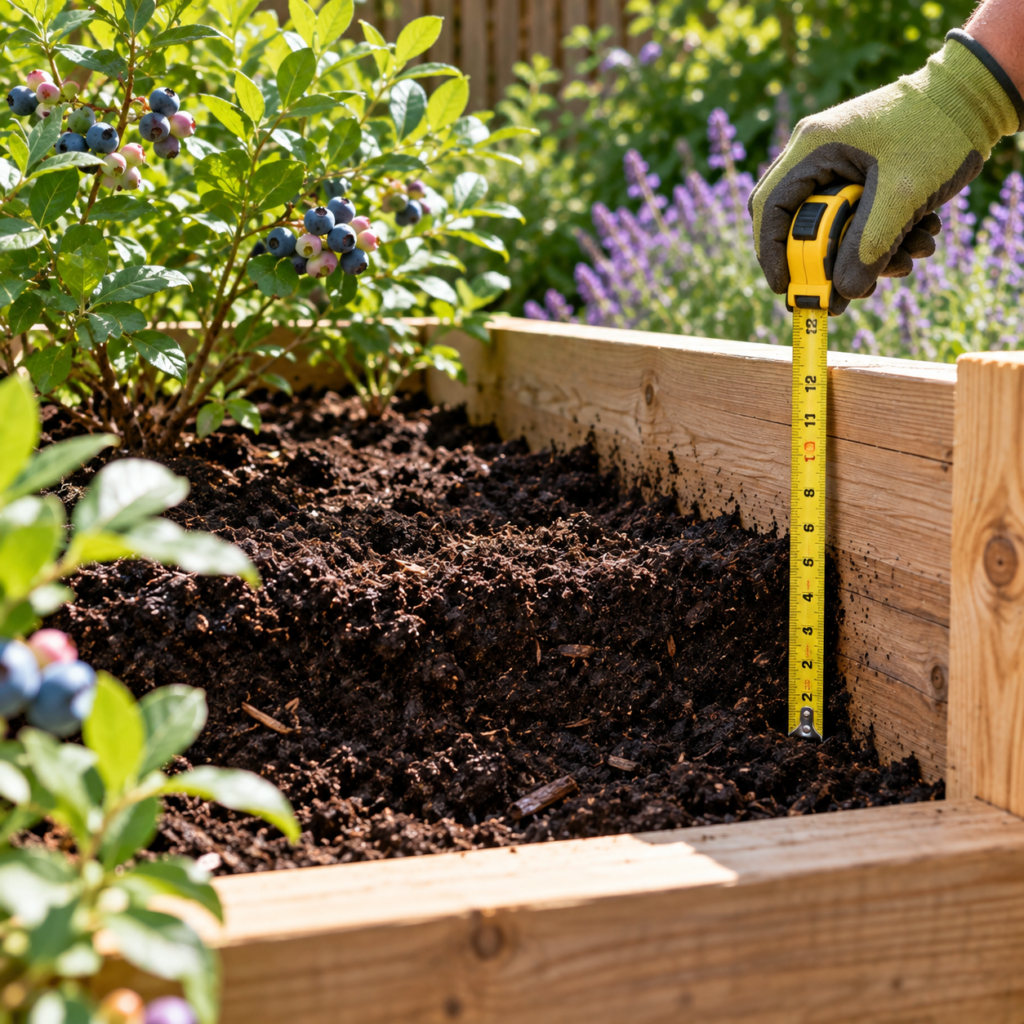
Investigate further if the soil surface develops sudden holes, one side of the bed sinks rapidly, or the frame becomes unstable.
These symptoms may indicate burrowing animals, erosion, underlying ground movement, or structural failure.
Do not attempt to correct a serious foundation problem simply by adding more soil.
For large or unstable raised structures, seek appropriate professional advice.
Raised bed soil sinking is usually a natural result of settling and organic matter decomposition.
In most cases, a gradual reduction in soil level can be corrected by adding suitable growing soil and maintaining healthy soil structure.
However, uneven sinking, visible soil loss, or frame movement deserves closer inspection.
Understanding the cause helps you avoid unnecessary soil replacement and keep your raised garden bed productive.
For more advice on soil preparation, compost, drainage, and maintaining healthy raised beds, explore our Soil & Compost guides.