Newsletter Subscribe
Enter your email address below and subscribe to our newsletter


Raised Bed Gardening Made Simple
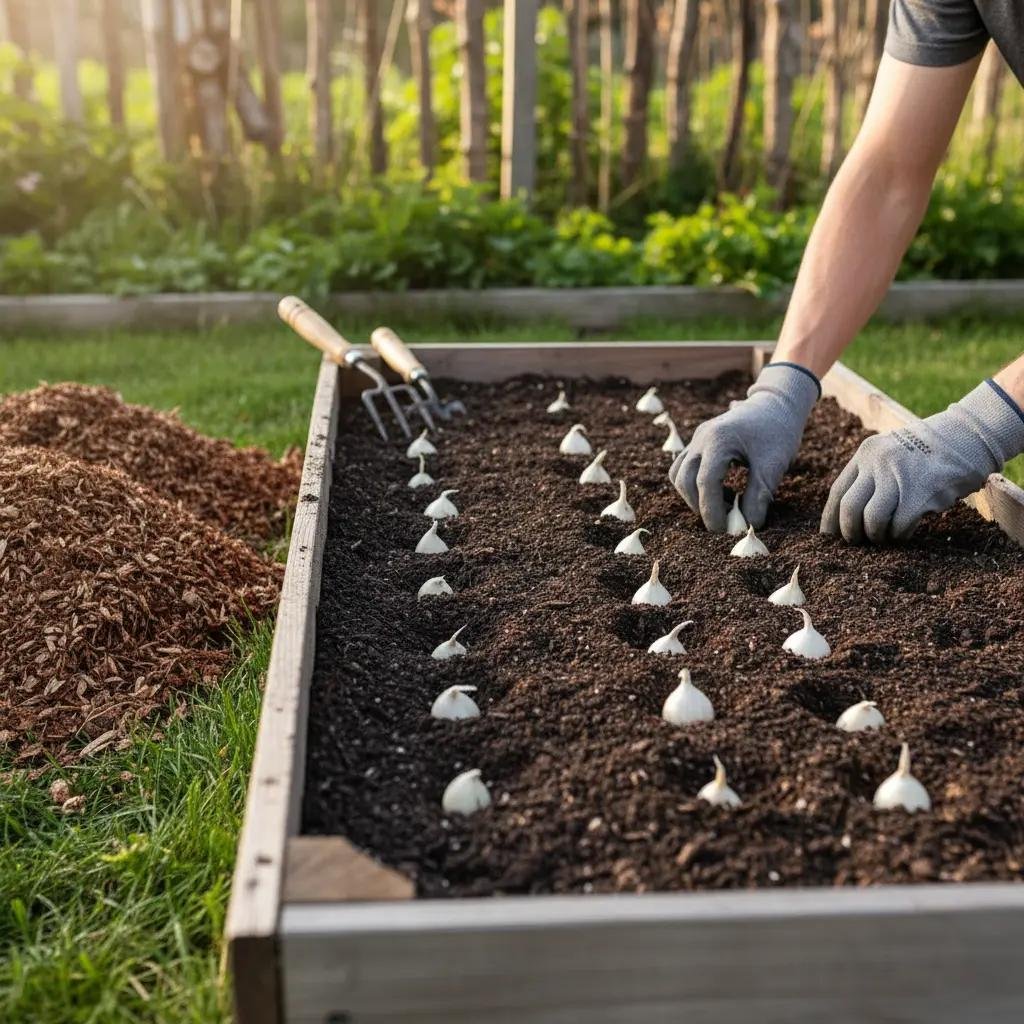
Growing garlic in a raised garden bed is a simple way to produce flavorful, homegrown bulbs without needing a large vegetable garden. Garlic takes several months to mature, but once planted, it generally requires less daily attention than many summer vegetables.
Raised beds are particularly useful for garlic because they provide loose, well-drained soil and make planting, weeding, and harvesting easier.
Whether you’re planting hardneck or softneck garlic, understanding the right timing, spacing, and soil conditions can make a noticeable difference in bulb development.
Here’s how to grow garlic successfully in a raised garden bed.
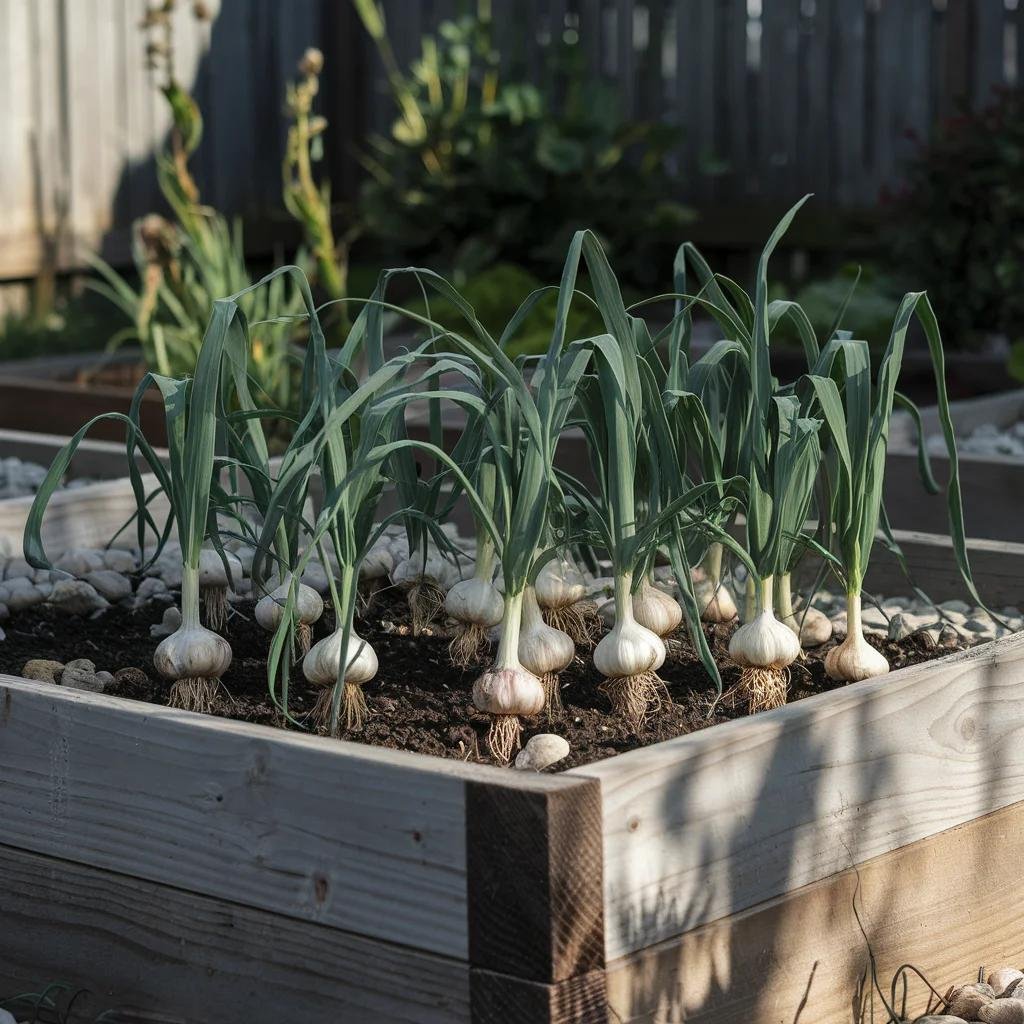
There are two main types of garlic commonly grown in home gardens: hardneck and softneck.
Hardneck garlic generally performs well in colder climates. It produces a stiff central stalk and edible flower shoots called garlic scapes.
Softneck garlic is commonly grown in milder climates and typically stores longer after harvesting. Its flexible stems can also be braided.
Choose varieties adapted to your local growing conditions rather than relying on supermarket garlic, which may not be suitable for your climate.
| Feature | Hardneck Garlic | Softneck Garlic |
|---|---|---|
| Climate preference | Generally better in cold winters | Often suited to milder winters |
| Flower stalk | Produces garlic scapes | Usually no true scape |
| Clove arrangement | Fewer, often larger cloves | More, often smaller cloves |
| Storage life | Generally shorter | Generally longer |
| Flavor | Often robust and complex | Varies by variety |
| Best for | Cold-climate gardeners | Mild-climate and storage-focused gardeners |
Both types can grow successfully in raised beds when conditions are suitable.
In much of the United States, garlic is planted in fall and harvested the following summer.
A useful guideline is to plant several weeks before the ground freezes, allowing roots to establish before winter.
In colder regions, this often means September through November, depending on local frost dates.
In warmer climates, planting schedules and variety selection may differ because garlic requires suitable temperature conditions for bulb development.
Check local agricultural extension recommendations before choosing a planting date.
Garlic grows best in loose, fertile, well-drained soil.
Choose a raised bed that receives at least six hours of direct sunlight daily, preferably more.
Remove weeds and loosen the upper soil before planting.
Incorporate mature compost where needed, but avoid excessive amendments that may create nutrient imbalances.
Garlic generally prefers slightly acidic to neutral soil, with a pH around 6.0–7.0.
If your soil has performed poorly in previous seasons, consider testing it before adding fertilizer.
For more information about preparing suitable growing soil, read our guide on best soil for raised garden beds.
Garlic is grown from individual cloves rather than the entire bulb.
Separate healthy cloves shortly before planting, keeping their papery skins intact.
Place each clove with the pointed end facing upward and the flat root end facing downward.
In many climates, planting cloves approximately 2–3 inches deep works well, although depth recommendations vary with local winter conditions and soil type.
Space cloves around 4–6 inches apart, allowing enough room for bulbs to develop.
Avoid planting damaged, soft, or visibly diseased cloves.
After planting, cover the bed with an appropriate organic mulch.
Clean straw or shredded leaves can help moderate soil temperature, reduce weed growth, and limit frost heaving in cold climates.
In regions with freezing winters, a mulch layer around 3–4 inches deep is commonly recommended.
Avoid using contaminated materials or mulch containing large quantities of weed seeds.
As spring arrives, check whether the mulch is restricting emerging shoots and adjust it if necessary.
For additional advice, explore our article on how to mulch a raised garden bed properly.
Garlic needs consistent moisture during active growth, particularly in spring when leaves and bulbs are developing.
Raised beds may dry out faster than surrounding soil, so check moisture beneath the surface regularly.
Water deeply when necessary, allowing excess moisture to drain.
Avoid keeping the bed constantly saturated, since prolonged wet conditions can encourage bulb and root problems.
As the plants approach maturity and lower leaves begin to brown, reduce watering.
Many growers stop irrigation roughly two weeks before the expected harvest, depending on soil moisture and weather.
Garlic benefits from adequate nutrients, especially nitrogen during early leaf development.
Healthy leaves help support the formation of larger bulbs later in the season.
If soil testing indicates a need for fertilizer, apply an appropriate product according to local recommendations.
Avoid excessive nitrogen late in the growing season, when bulb maturation becomes more important.
Compost can contribute organic matter, but it does not always supply sufficient nutrients by itself.
Hardneck garlic produces curling flower stalks known as scapes.
Many gardeners remove these shoots after they begin curling to encourage more energy to go toward bulb development.
Garlic scapes are edible and can be used in stir-fries, pesto, and other dishes.
Softneck varieties generally do not produce the same prominent scapes.
Garlic is usually ready to harvest when several lower leaves have turned brown while some upper leaves remain green.
Harvest timing varies by variety, planting date, and climate.
Gently loosen the soil with a garden fork rather than pulling forcefully on the stems.
Avoid bruising or cutting the bulbs.
After harvesting, brush away loose soil without washing bulbs intended for long-term storage.
Freshly harvested garlic needs curing before extended storage.
Place the bulbs in a dry, shaded, well-ventilated location for approximately three to four weeks.
Once the outer wrappers have dried, trim the roots and stems as appropriate for the variety.
Store cured garlic in a cool, dry, ventilated place.
Avoid sealed plastic bags that trap moisture and encourage spoilage.
Growing garlic in a raised garden bed is a practical option for gardeners who want a reliable crop with relatively simple maintenance.
Choose a suitable variety, plant healthy cloves in fall where appropriate, maintain well-drained soil, and protect the bed during winter.
With consistent moisture, proper nutrition, and careful harvesting, you can enjoy flavorful garlic from your own backyard.
For more vegetable planting tutorials, seasonal growing advice, and raised bed gardening techniques, explore our Growing Guides.