Newsletter Subscribe
Enter your email address below and subscribe to our newsletter
Raised Bed Gardening Made Simple
Category: Grow Your Own
Suggested URL: /how-to-grow-peppers-in-raised-garden-beds/
Primary Keyword: How to Grow Peppers in Raised Garden Beds
SEO Title: How to Grow Peppers in Raised Garden Beds
Meta Description: Learn how to grow peppers in raised garden beds, from choosing varieties and transplanting seedlings to watering, feeding, supporting plants, and harvesting a productive pepper crop.
Peppers are an excellent choice for raised garden beds. They grow relatively upright, don’t require the sprawling space of crops such as squash, and can produce an impressive harvest from a small backyard garden.
You can grow everything from sweet bell peppers to jalapeños, poblanos, banana peppers, and hotter varieties in the same general type of setup.
The biggest secret to growing peppers successfully isn’t complicated: give them warmth, sunlight, enough room to develop, and consistent care throughout the growing season.
Here’s how to get started.
Before planting, decide what kind of peppers will be most useful in your kitchen.
For sweet peppers, popular options include bell peppers and sweet banana types. If you enjoy some heat, jalapeños and serranos are productive choices. Gardeners interested in cooking may also consider poblano or other specialty varieties.
Don’t choose entirely based on appearance.
Check the expected mature plant size, days to maturity, and climate recommendations on the seed packet or plant label.
If your growing season is relatively short, earlier-maturing varieties may provide a better chance of producing a substantial harvest before cool weather returns.
Peppers can take time to develop.
Unlike radishes or beans, which can move from seed to harvest relatively quickly, peppers often benefit from an early start.
Many gardeners begin seeds indoors several weeks before outdoor planting conditions become suitable.
Pepper seeds also prefer warm conditions for germination. A consistently warm seed-starting environment can help encourage more reliable sprouting.
If you don’t want to start seeds indoors, purchasing healthy transplants from a local nursery is a perfectly practical alternative.
Look for compact plants with healthy leaves rather than simply choosing the tallest seedlings available.
Peppers love warm weather and dislike cold conditions.
A few sunny spring days can make it tempting to transplant seedlings immediately, but nighttime temperatures matter too.
Wait until frost danger has passed and conditions have warmed appropriately for peppers in your region.
Before transplanting indoor-grown seedlings, gradually expose them to outdoor conditions over several days.
This process, commonly called hardening off, helps plants adjust to direct sunlight, wind, and changing temperatures.
Avoid moving tender indoor seedlings directly into a full day of intense outdoor sun.
Pepper seedlings look small when they first enter the garden, but healthy plants become much wider as the season progresses.
Depending on the variety, spacing plants roughly 18–24 inches apart is a useful general starting point.
Always check the recommendations for your specific pepper.
Adequate spacing makes harvesting easier and helps air move between mature plants.
If you’re growing several vegetables in one raised bed, avoid placing peppers directly behind crops that will become much taller and shade them later in summer.
Unlike tomatoes, peppers generally don’t need to be buried deeply along their stems.
Transplant them approximately at the depth they were growing in their containers.
Dig a hole large enough to comfortably accommodate the root ball, place the plant carefully, and gently firm the surrounding soil.
Water after transplanting to help settle the soil around the roots.
Young peppers may temporarily slow down after transplanting. Once temperatures remain warm and roots become established, growth should accelerate.
Peppers perform best in a sunny location.
Aim for at least six to eight hours of direct sunlight during the growing season.
Raised beds can be particularly useful because their soil may warm relatively quickly during sunny weather.
However, extremely high temperatures can sometimes affect flowering and fruit set.
If plants look healthy but flowers repeatedly drop during unusually hot conditions, temperature stress may be contributing.
Don’t immediately assume the plant needs more fertilizer.
Pepper plants appreciate consistent moisture, especially when flowering and developing fruit.
Allowing the root zone to become extremely dry and then soaking it heavily can create unnecessary stress.
Check moisture below the surface rather than judging only by appearance.
During hot weather, the top inch can look dry while deeper soil still contains adequate moisture.
Water near the base of the plants when possible.
As plants become larger and temperatures rise, they will generally use more water than they did shortly after transplanting.
A pepper plant covered in beautiful green leaves isn’t necessarily a productive pepper plant.
Too much nitrogen can encourage vigorous foliage at the expense of flowering and fruit production.
Start with fertile garden soil and use additional fertilizer according to plant needs and product directions.
Once plants begin flowering, pay attention to overall development rather than trying to force rapid leafy growth.
If you’re uncertain about the fertility of an established raised bed, a soil test can provide better information than simply adding more fertilizer.
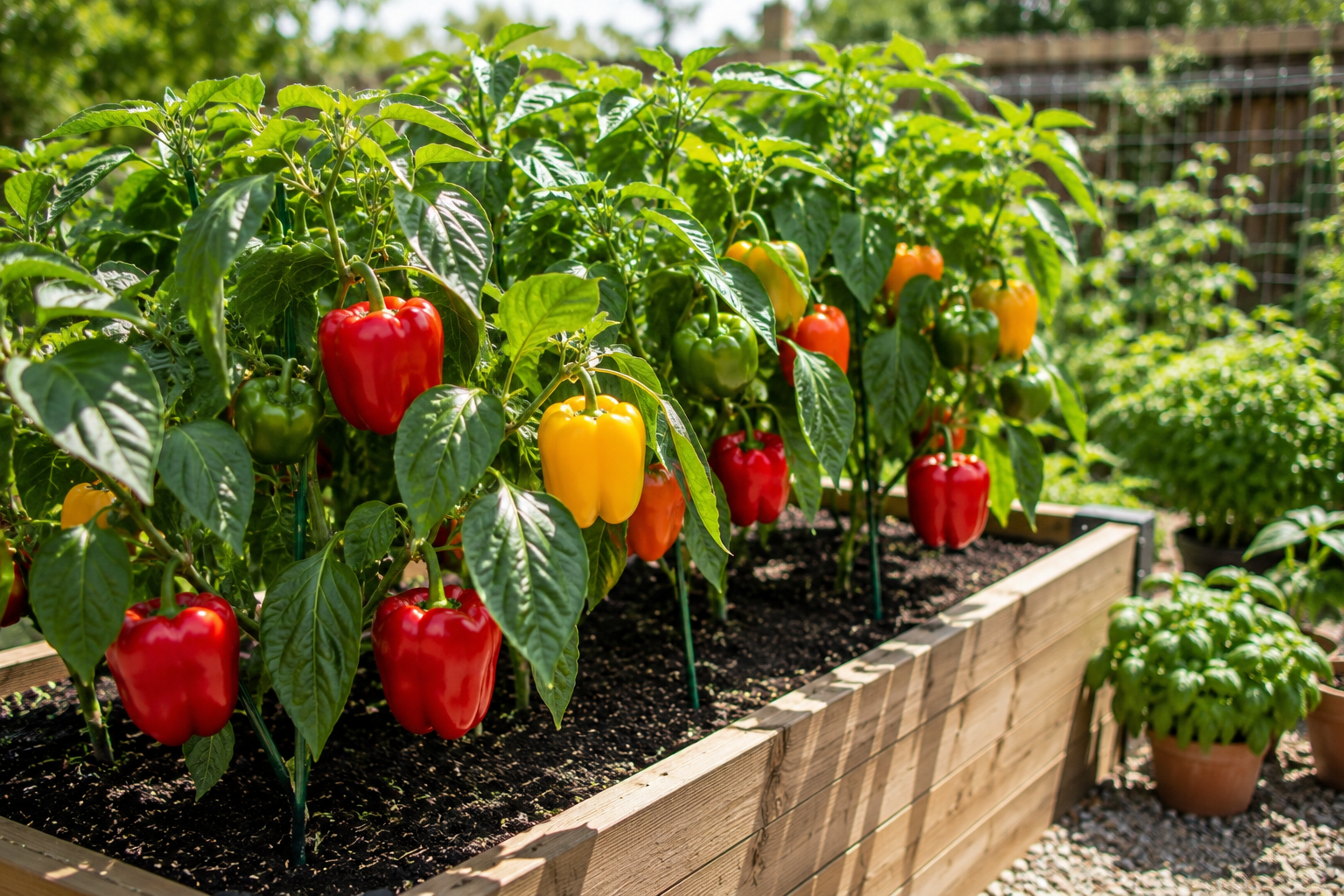
Peppers don’t climb like cucumbers, but mature plants can still benefit from support.
Branches may bend when several heavy peppers develop at once, particularly after rain or wind.
Small tomato cages, stakes, or compact plant supports can help keep branches upright.
Install supports before the plants become heavily loaded with fruit.
If you tie stems to stakes, use soft material and leave enough room for the stem to expand.
Pepper flowers are self-pollinating, although wind and visiting insects can help move pollen.
If you’re seeing flowers but little fruit, consider environmental conditions first.
Extreme heat, cold nights, inconsistent watering, and plant stress can all affect fruit set.
Give plants time.
Once favorable conditions return, healthy peppers may begin producing normally without major intervention.
One of the interesting things about peppers is that you can often choose when to harvest them.
Many peppers begin green and gradually change color as they mature.
A green bell pepper may eventually turn red, yellow, orange, or another color depending on the variety.
Allowing peppers to mature fully can produce sweeter flavors in many sweet varieties, while harvesting earlier gives you usable fruit sooner.
Use scissors or garden pruners to remove mature peppers rather than pulling aggressively on the branches.
Don’t forget about peppers once the first fruits appear.
Check plants regularly and harvest fruits when they reach the size and maturity you want.
Picking peppers can encourage the plant to continue developing additional fruit during favorable weather.
Regular harvesting also prevents hidden peppers from becoming overripe.
Dense foliage can make fruit surprisingly easy to miss, so inspect plants from several angles.
Peppers are particularly well suited to raised garden beds because they provide a large harvest without demanding enormous amounts of space.
Start with varieties suited to your climate and cooking preferences. Give seedlings a warm start, wait until outdoor temperatures are appropriate, and provide plenty of sunlight.
As plants mature, focus on consistent watering, sensible feeding, adequate spacing, and support for fruit-heavy branches.
You don’t need dozens of plants to enjoy a useful harvest.
A small group of healthy bell peppers, jalapeños, or other favorite varieties can produce fresh peppers for salads, grilling, sauces, salsa, and everyday cooking throughout the summer.
Give them warmth and time, and peppers can become one of the most colorful and productive crops in your raised garden bed.