Newsletter Subscribe
Enter your email address below and subscribe to our newsletter


Raised Bed Gardening Made Simple
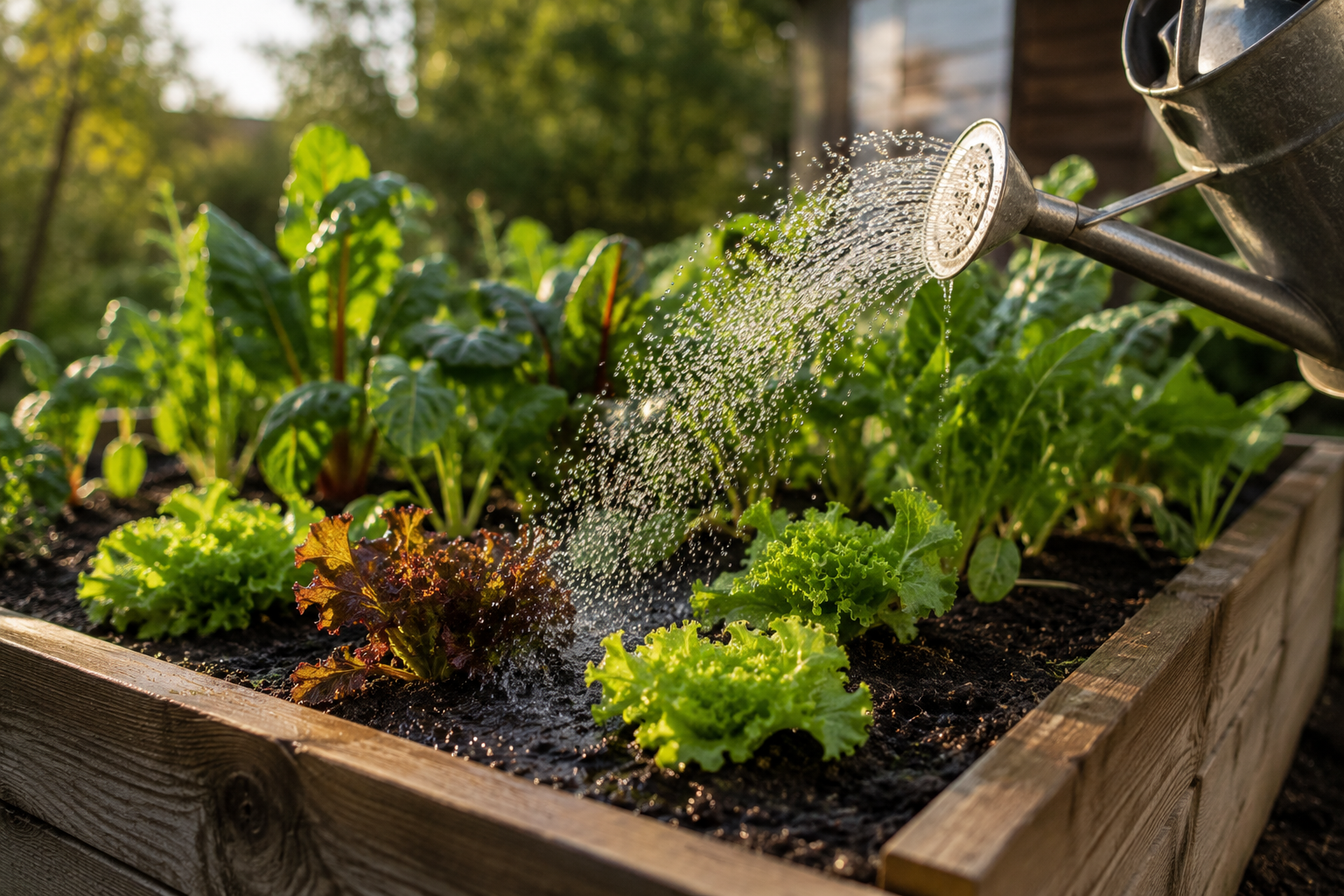
One of the most common questions new raised-bed gardeners ask is surprisingly difficult to answer with a fixed number:
How often should I water my raised garden bed?
For many established vegetable gardens, watering deeply around two to three times per week can be a reasonable starting point during moderate weather. But that is not a universal schedule.
A raised bed in cool spring weather may stay moist for several days, while the same bed could need water every day during a hot, dry summer.
Instead of watering strictly according to the calendar, learn to recognize when your garden actually needs moisture.
Raised garden beds behave differently from traditional in-ground gardens.
Because much of the soil is elevated above the surrounding ground, it is exposed to more air and can lose moisture relatively quickly.
Several factors influence how fast this happens:
A large bed filled with mature tomato and cucumber plants will also use water much faster than the same bed containing a few young seedlings.
That’s why watering needs change throughout the growing season.
The simplest way to decide whether your raised bed needs water is to check below the surface.
Push your finger approximately 1–2 inches into the soil.
If the soil feels noticeably moist, you may be able to wait.
If it feels dry at that depth, watering is probably appropriate.
Don’t judge moisture only by looking at the surface. The top layer can dry quickly under direct sunlight while the soil around the roots remains adequately moist.
For gardeners who prefer another method, an inexpensive soil moisture meter can provide additional information, although it shouldn’t completely replace observation.
Spring usually brings cooler temperatures and lower water demand than midsummer.
Young plants also have smaller root systems and less foliage, so they generally use less water than mature vegetables.
Depending on rainfall and local conditions, you may only need to water your raised bed every few days.
Check the soil regularly rather than automatically watering each morning.
Spring rain can sometimes provide all the moisture your garden needs for several days.
Overwatering during cool conditions may keep the root zone unnecessarily wet.
Summer is when raised-bed watering becomes more important.
High temperatures, strong sunlight, mature plants, and dry winds can remove moisture quickly.
During typical summer weather, many raised vegetable beds may need deep watering several times per week.
During particularly hot or dry periods, daily watering may sometimes be necessary, especially for shallow beds or thirsty crops.
The key is observation.
Check moisture frequently during heat waves instead of assuming your normal schedule will still work.
A garden that was comfortable with watering every three days in June may need much more attention in August.
Early morning is generally an excellent time to water a raised garden bed.
Temperatures are cooler, evaporation is lower than during the hottest part of the afternoon, and plants have access to moisture as the day warms.
Morning watering is also convenient when using drip irrigation on a timer.
If your plants are seriously dry during the afternoon, however, don’t avoid watering simply because it isn’t the “perfect” time.
A plant experiencing significant water stress benefits more from receiving needed moisture than from waiting until the next morning.
A quick splash across the soil surface may make the garden look watered without delivering much moisture to the root zone.
When you irrigate, apply enough water to penetrate deeper into the soil.
Then allow conditions to guide when you water again.
This encourages plants to develop roots throughout a larger portion of the growing area rather than depending entirely on moisture near the surface.
How long this takes depends on your watering method and soil.
After irrigation, dig carefully into an unused area of the bed to see how deeply the moisture traveled.
This simple test can teach you more about your irrigation system than guessing based on minutes.
Seeds and newly germinated seedlings require different treatment from established vegetables.
Seeds planted close to the surface can fail if the surrounding soil repeatedly dries out during germination.
Young seedlings also have small root systems and cannot access moisture deep in the bed as effectively as mature plants.
You may therefore need to water newly planted areas more frequently but gently.
As plants develop larger root systems, transition toward deeper watering rather than continuing frequent shallow irrigation.
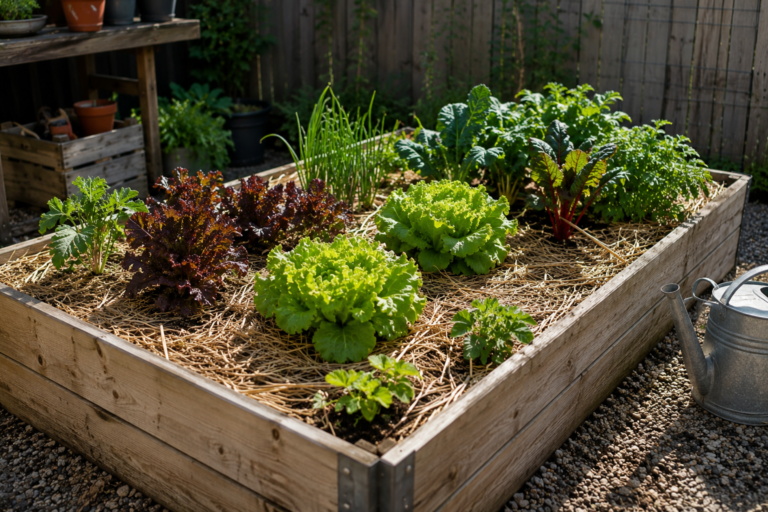
Mulch can significantly influence moisture retention.
A layer of clean straw, shredded leaves, or another appropriate organic mulch helps shade the soil surface and slow evaporation.
This can be especially valuable during hot summer weather.
However, don’t assume a mulched bed needs no monitoring.
Move the mulch aside occasionally and check the soil underneath.
You may discover that moisture lasts much longer than it did when the soil was exposed.
Adjust your watering frequency accordingly rather than continuing the old schedule.
Hand watering works perfectly well for a few raised beds, but consistency becomes harder as the garden expands.
A drip irrigation system or soaker hose can deliver water directly around the root zone while reducing unnecessary watering of pathways and foliage.
Timers can also help maintain consistency when you’re busy or away from home.
However, a timer shouldn’t operate blindly.
Seasonal rainfall and temperature changes still matter.
If your system runs after several days of heavy rain simply because the timer says so, you’re no longer responding to actual garden conditions.
Plants often provide clues when moisture becomes insufficient.
Possible signs include:
Be careful with midday wilting.
Some plants temporarily wilt during intense afternoon heat even when the soil contains moisture, then recover as temperatures cool.
Always check the soil before assuming more water is the solution.
More water isn’t always better.
Possible signs of excessive moisture include:
These symptoms can have multiple causes, so don’t diagnose a watering problem based on one yellow leaf.
Check the moisture level and look at the overall growing conditions.
Rather than trying to give every raised bed an identical number of gallons, focus on whether water is reaching the active root zone.
The amount required varies considerably depending on bed dimensions, soil, weather, crops, and irrigation method.
A useful habit is to water thoroughly, wait a short time, and then check moisture several inches below the surface.
If only the top layer is wet, you probably haven’t watered deeply enough.
If water is constantly running out of the bed while the soil remains saturated, you may be applying too much.
One of the biggest watering mistakes is using the same schedule from planting day until harvest.
A raised bed containing tiny seedlings in May has very different water requirements from the same bed filled with mature vegetables in July.
As plants develop more leaves and fruit, their water use increases.
Weather changes at the same time.
Treat watering as a seasonal adjustment, not a setting you choose once and forget.
So, how often should you water a raised garden bed?
There is no single schedule that works for every garden.
During moderate weather, two or three deep waterings per week may be a useful starting point for many established vegetable beds, but hot summer conditions can require much more frequent irrigation.
Instead of relying entirely on the calendar, check the soil 1–2 inches below the surface, observe your plants, and adjust according to temperature, rainfall, plant maturity, and moisture retention.
Water deeply when the garden needs it, preferably in the morning, and use mulch or drip irrigation when appropriate to improve moisture management.
The best watering schedule isn’t the one with the most precise timetable.
It’s the one that changes with your garden.