Newsletter Subscribe
Enter your email address below and subscribe to our newsletter


Raised Bed Gardening Made Simple
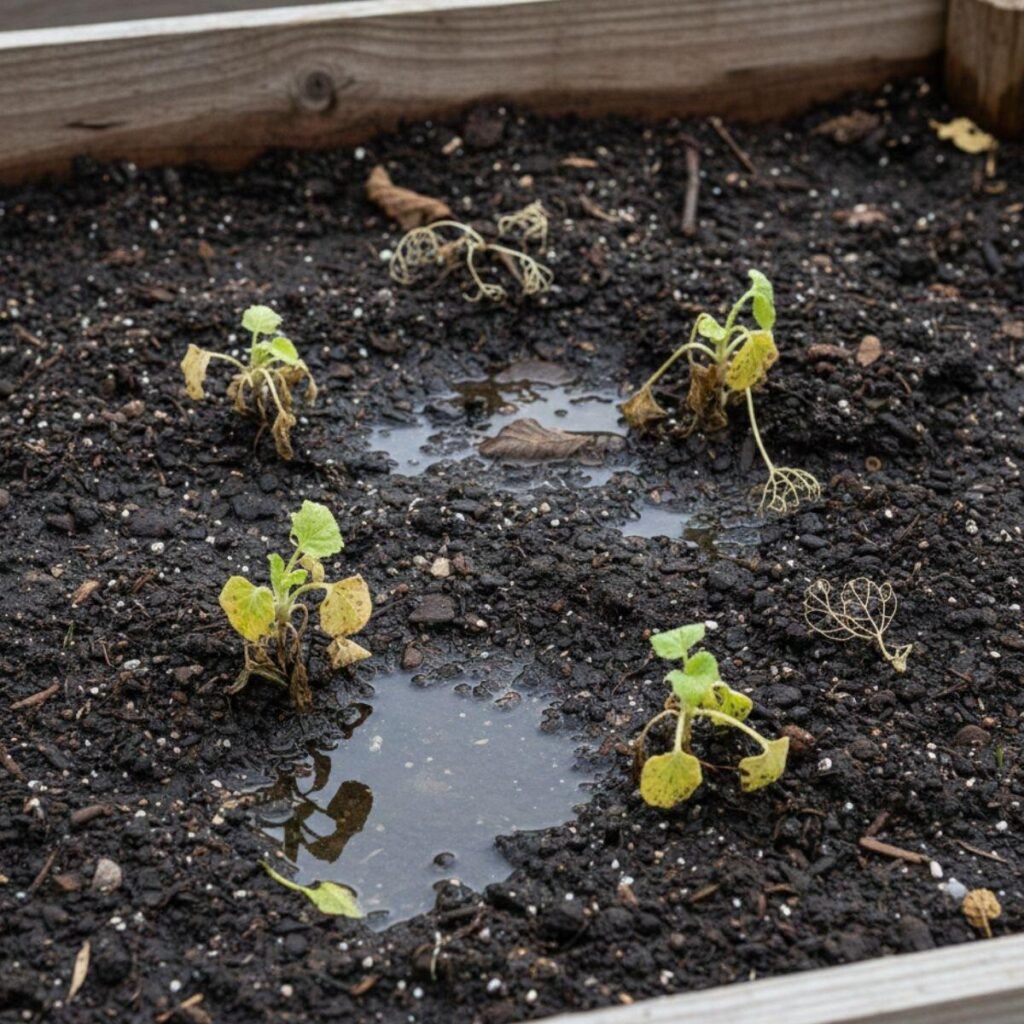
Raised garden beds are designed to provide better control over soil conditions, but drainage problems can still develop over time. Water may collect on the surface, soil may remain soggy for days, or plants may begin showing signs of stress.
Fortunately, poor drainage does not always mean you need to empty or rebuild your raised garden bed.
In many cases, a few practical adjustments to watering, soil structure, and surrounding conditions can improve drainage while preserving your existing garden setup.
Raised beds generally drain well when they contain properly structured soil and have a suitable outlet for excess water.
However, several conditions can interfere with drainage.
Compacted soil reduces the spaces between soil particles, slowing water movement and limiting oxygen availability around plant roots.
Heavy clay-rich soil may hold moisture for extended periods, particularly when mixed with insufficient organic material.
Blocked drainage outlets can cause problems in elevated planters or raised beds with solid bottoms.
Poor underlying ground drainage may also contribute to waterlogging, especially when raised beds sit directly over compacted clay soil.
Before making changes, identify whether water is collecting on the surface, remaining trapped inside the bed, or failing to drain into the ground below.
Wet soil does not automatically indicate a drainage problem.
After heavy rainfall, raised bed soil may remain moist for a reasonable period without harming plants.
To assess conditions, insert a finger or small garden tool several inches into the soil.
If the soil feels moist but crumbly, drainage may be adequate.
However, if it remains saturated, smells unpleasant, or releases water when squeezed, further investigation may be necessary.
Yellowing leaves, slow growth, and root problems can also indicate waterlogging, although these symptoms may have other causes.
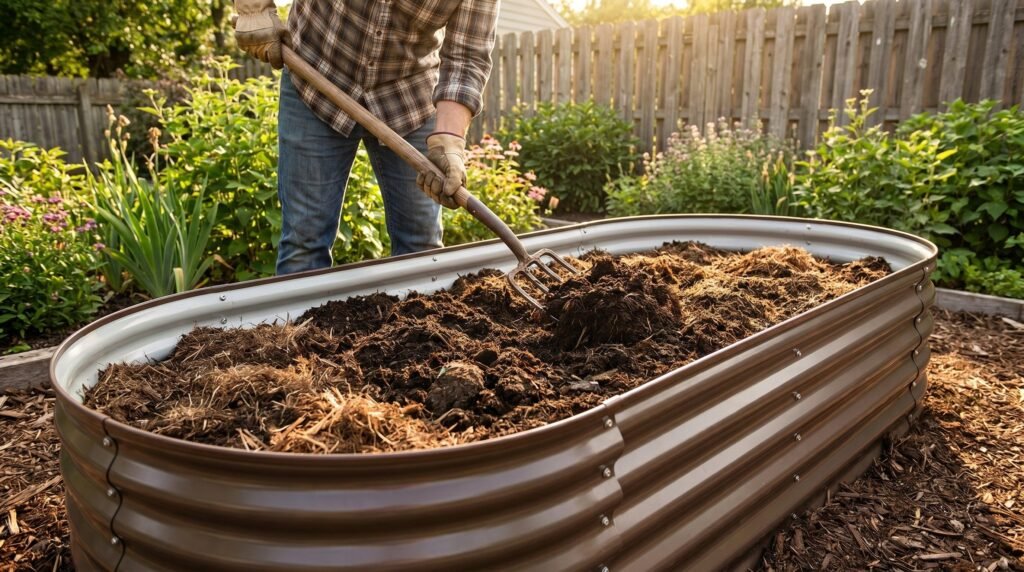
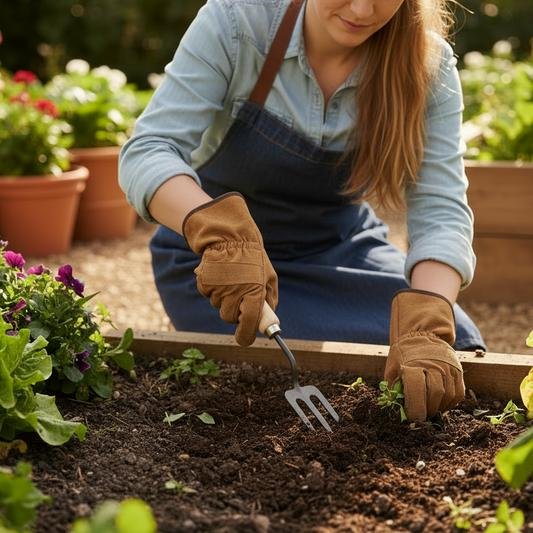
One of the simplest ways to improve water infiltration is to loosen compacted soil near the surface.
Use a hand fork or small cultivator to gently break up crusted areas, working around existing plants.
Avoid deep digging close to established roots.
Loosening the upper few inches can help water enter the soil more easily, but it will not solve drainage problems caused by an impermeable layer beneath the bed.
For more information about protecting soil structure, see How to Prevent Soil Compaction in Raised Garden Beds.
Organic matter can help improve soil structure and support healthier growing conditions.
Apply approximately 1–2 inches of mature compost to the soil surface when appropriate.
Between growing seasons, gently incorporate compost into the upper soil layer if necessary.
Over time, organic matter supports soil organisms and the formation of stable soil aggregates, which can improve pore space and water movement.
However, compost is not an instant solution for severely waterlogged soil.
Avoid adding large quantities of sand directly to clay-heavy soil. Small amounts may fail to improve drainage and can produce an unfavorable soil texture.
The best solution depends on the cause of the drainage problem.
| Drainage Solution | Main Benefit | Best For |
|---|---|---|
| Loosen surface soil | Improves surface infiltration | Crusted or lightly compacted soil |
| Add mature compost | Supports long-term soil structure | Dense or low-organic-matter soil |
| Adjust watering frequency | Reduces unnecessary saturation | Overwatered raised beds |
| Clear existing drainage holes | Restores water outlets | Raised beds with solid bottoms |
| Improve surrounding drainage | Reduces water accumulation | Beds affected by runoff |
| Apply organic mulch | Protects soil from surface crusting | Beds exposed to heavy rain |
Several methods may be needed when drainage problems have more than one cause.
Overwatering can make otherwise healthy soil appear poorly drained.
Instead of watering on a fixed daily schedule, check moisture below the surface and consider recent rainfall.
Water deeply when necessary, then allow excess moisture to drain before watering again.
Drip irrigation and soaker hoses can help deliver water gradually without flooding the bed.
During cool or rainy weather, plants often require less supplemental irrigation.
If you need additional guidance, read How Often to Water Raised Garden Beds.
Drainage problems sometimes originate beneath the growing medium.
For raised beds with solid bottoms, inspect existing drainage holes for roots, debris, or other obstructions.
If your bed sits directly on the ground, consider whether compacted soil beneath it is preventing water from moving downward.
In some cases, improving drainage around the outside of the bed can help redirect runoff.
Avoid adding a thick layer of gravel beneath the soil as a quick fix. In containers and enclosed planters, gravel layers can actually reduce the effective depth of freely draining soil.
For severe problems caused by a solid base or impermeable ground, structural changes may eventually be necessary.
Intense rainfall can damage the soil surface and contribute to drainage problems.
Organic mulch helps reduce the impact of raindrops, limit surface crusting, and protect soil structure.
Shredded leaves, clean straw, or other suitable organic materials can be applied around established plants.
Temporary rain covers may also help during unusually wet periods, provided they allow ventilation and do not trap excessive humidity.
For additional protection strategies, explore How to Protect Raised Garden Beds From Heavy Rain.
Most minor drainage problems can be improved through routine maintenance.
However, rebuilding or modifying the bed may be necessary when the base has no functional drainage outlet, the underlying ground remains persistently saturated, or the structure traps water.
If plants repeatedly develop root rot despite appropriate watering, investigate the entire drainage pathway rather than focusing only on the topsoil.
Improving drainage in raised garden beds does not always require expensive reconstruction.
Start by checking soil moisture, identifying the cause of waterlogging, and making targeted adjustments.
Gentle surface loosening, mature compost, better watering habits, and clear drainage outlets can improve many common problems.
By addressing the underlying cause rather than simply adding more materials, you can create healthier growing conditions while keeping your existing raised garden bed intact.