Newsletter Subscribe
Enter your email address below and subscribe to our newsletter


Raised Bed Gardening Made Simple
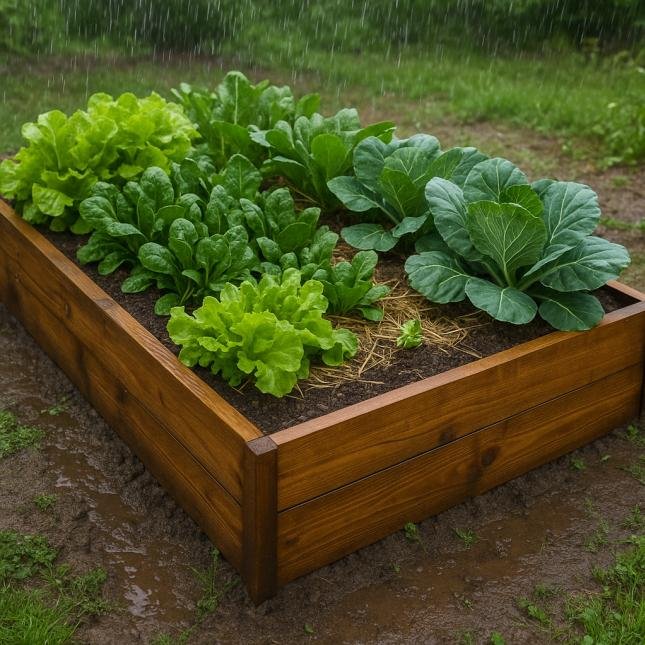
Heavy rain can be beneficial for a vegetable garden, but prolonged downpours can also create problems for raised garden beds. Excess water may wash away exposed soil, damage young seedlings, weaken plant supports, and leave roots sitting in saturated growing conditions.
Although raised beds often drain better than surrounding garden soil, they are not automatically protected from flooding or erosion.
The best approach combines good drainage, soil protection, and a few practical precautions before severe weather arrives.
Here’s how to protect your raised garden beds from heavy rain and help your vegetables recover afterward.
Proper drainage is one of the most important defenses against heavy rainfall.
In open-bottom raised beds, water must be able to move through the growing soil and into the ground beneath.
If the underlying soil is heavily compacted or already saturated, water may accumulate even when the bed contains a well-draining soil mix.
Inspect your beds for standing water, blocked drainage openings, or unusually compacted areas.
For elevated planters with enclosed bottoms, confirm that drainage holes are unobstructed.
Avoid adding a thick gravel layer beneath the soil as a universal drainage solution. In many containers, this can reduce the effective growing depth without correcting drainage problems.
Bare soil is vulnerable to the impact of heavy raindrops.
When rain strikes exposed soil, it can dislodge particles, create surface crusting, and contribute to erosion.
A suitable layer of organic mulch helps absorb some of that impact.
Clean straw, shredded leaves, and other appropriate materials can protect the soil surface.
Keep mulch away from vegetable stems and avoid burying small seedlings.
Lightweight materials may move during strong storms, so inspect the mulch afterward.
For more detailed guidance, read our article on how to mulch a raised garden bed properly.
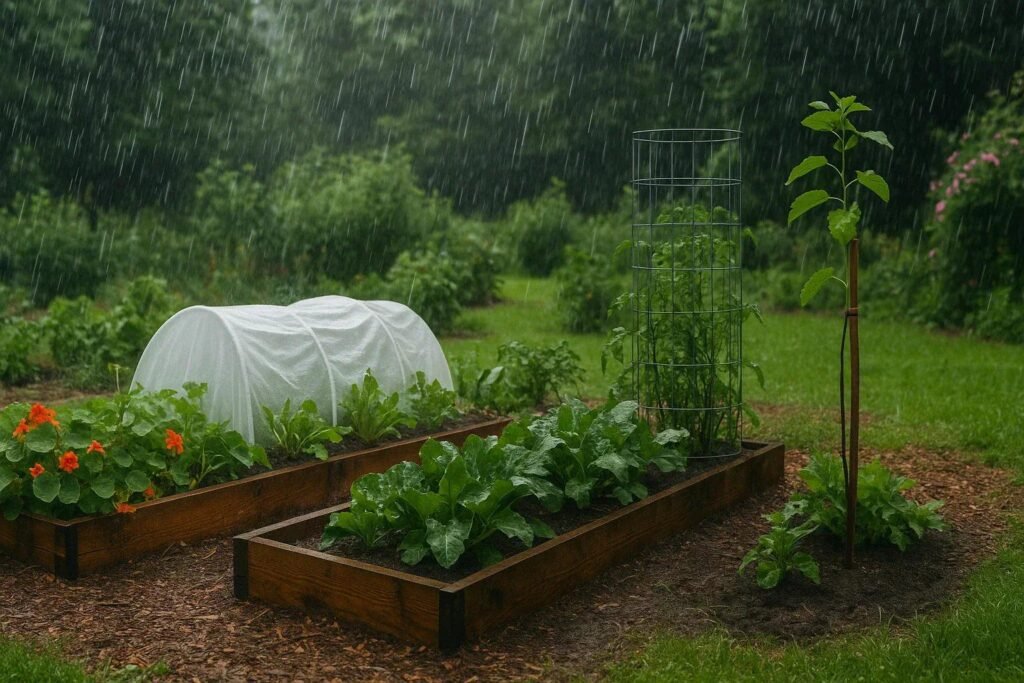
Newly planted seeds and small seedlings are particularly vulnerable to intense rainfall.
Strong downpours may displace seeds, flatten delicate stems, or wash growing soil away from shallow roots.
Temporary row covers can offer some protection when properly secured, although lightweight fabric alone may not stop intense rainfall.
For vulnerable seedlings, a sturdy, appropriately designed rain shelter may be more effective.
Use covers that allow ventilation and do not trap excessive heat.
Remove temporary protection when conditions improve.
Heavy rain often arrives with strong winds.
Tomatoes, cucumbers, beans, and other climbing vegetables may suffer damage when their supports become unstable.
Before a storm, inspect cages, stakes, and trellises.
Tighten loose connections and secure supports firmly.
Use soft plant ties where necessary, leaving enough room for stems to move and grow.
Avoid attaching large sheets of plastic to weak trellises, as wind pressure can cause the entire structure to collapse.
Soil loss is especially common around raised beds with gaps between boards or exposed edges.
Check wooden frames for loose joints, damaged corners, or openings where soil can escape.
Repair structural problems before heavy rainfall.
If runoff from nearby paths flows toward the bed, consider redirecting it away from the growing area.
Avoid creating barriers that trap water inside the bed.
For additional erosion-control strategies, explore our guide on how to prevent soil from washing out of a raised garden bed.
| Protection Method | Main Purpose | Best Time to Use | Important Consideration |
|---|---|---|---|
| Organic mulch | Reduce surface erosion | Before rainfall | Keep away from stems |
| Drainage inspection | Prevent prolonged saturation | Before rainy periods | Check underlying drainage |
| Temporary rain shelter | Protect delicate seedlings | Before intense storms | Secure and ventilate properly |
| Reinforced trellises | Reduce wind damage | Before storms | Anchor supports firmly |
| Frame repairs | Prevent soil leakage | During routine maintenance | Replace damaged components |
| Runoff diversion | Reduce incoming surface water | Before heavy rainfall | Avoid directing water toward buildings |
Choose protection methods according to the conditions in your garden rather than using every method automatically.
After heavy rainfall, it can be tempting to loosen the soil immediately.
However, digging or walking on wet soil may increase compaction and damage its structure.
Wait until the soil has drained sufficiently before cultivating.
If water remains pooled for an extended period, investigate the cause instead of repeatedly disturbing the bed.
For plants showing signs of stress, check soil moisture before adding more water or fertilizer.
Once the storm has passed, examine your plants carefully.
Look for broken stems, damaged leaves, exposed roots, and collapsed supports.
Remove severely damaged plant material when appropriate, using clean tools.
Gently reposition displaced mulch and add suitable soil around exposed roots if necessary.
Avoid immediately applying fertilizer to stressed plants without understanding the problem.
Persistent wilting or yellowing may indicate root damage, oxygen shortage, disease, or other issues requiring closer inspection.
Extended periods of leaf wetness and high humidity can favor certain plant diseases.
Inspect vegetables for unusual leaf spots, mold, rotting fruit, or spreading discoloration.
Maintain appropriate spacing and avoid unnecessary overhead watering while the soil remains wet.
Remove affected material when recommended for the particular disease.
Not every discolored leaf indicates an infection, so identify the problem before using a treatment.
After recovering from heavy rainfall, review what happened.
Did water collect in one corner? Did mulch wash away? Were certain seedlings repeatedly damaged?
Use these observations to improve drainage, reinforce supports, or adjust planting locations.
A few changes based on real garden conditions can be more useful than installing expensive protection systems.
Protecting raised garden beds from heavy rain starts with preparation.
Maintain suitable drainage, cover exposed soil, secure plant supports, and protect vulnerable seedlings when severe weather is expected.
After a storm, allow saturated soil to recover, inspect plants for damage, and correct any erosion or drainage problems.
With regular maintenance, raised garden beds can remain productive through periods of wet weather.
For more practical advice on seasonal garden maintenance, watering, drainage, and vegetable care, explore our Garden Care guides.