Newsletter Subscribe
Enter your email address below and subscribe to our newsletter

Raised Bed Gardening Made Simple
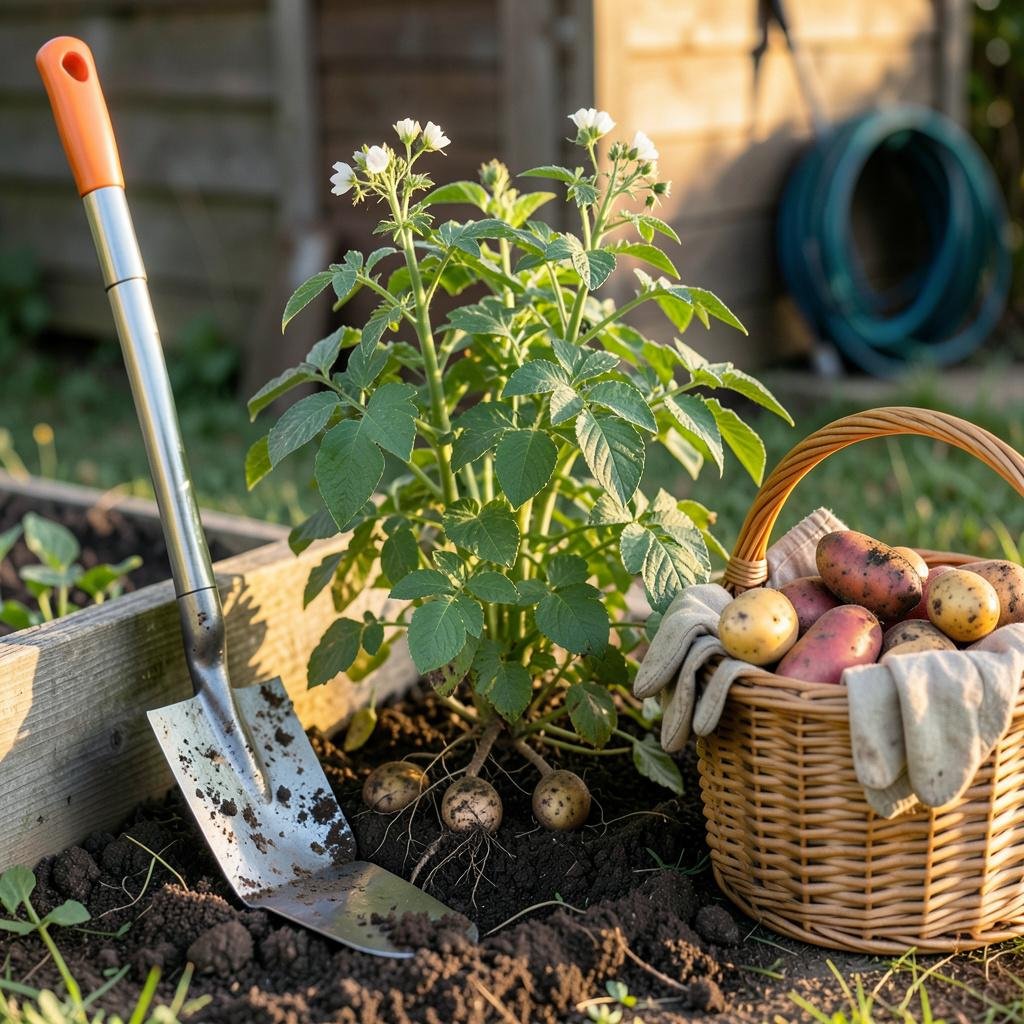
Growing potatoes in raised garden beds is a practical way to enjoy fresh, homegrown potatoes, even if your backyard has limited space or difficult soil. Raised beds provide a defined growing area where you can manage drainage, soil quality, and planting conditions more easily.
Unlike many leafy vegetables, potatoes develop edible tubers underground. That means soil depth, planting spacing, and keeping developing potatoes covered are especially important.
Whether you’re growing small new potatoes or larger storage varieties, this guide explains how to plant, care for, and harvest potatoes successfully in raised beds.
Before planting, consider how quickly you want to harvest and how you plan to use your potatoes.
Early-season varieties generally mature sooner and are useful for gardeners with shorter growing seasons.
Midseason and late-season varieties usually need more time but may offer different storage and culinary qualities.
Fingerling potatoes are another popular choice for home gardens because of their distinctive shapes and flavors.
Choose varieties suited to your climate and buy certified seed potatoes from a reputable supplier.
Avoid relying on supermarket potatoes, which may carry diseases or have been treated to delay sprouting.
Potatoes grow best in loose, well-drained soil that allows tubers to expand without excessive resistance.
A raised bed at least 12 inches deep can work well, provided there is enough growing medium for planting and subsequent hilling.
Potatoes generally prefer slightly acidic soil. A pH around 5.0–6.0 is suitable for many varieties, although recommendations vary.
Add mature compost where needed, but avoid excessive amendments.
A soil test can help determine nutrient requirements before planting.
For more soil preparation advice, explore our guide on best soil for raised garden beds.
Potatoes are cool-season crops.
In many temperate regions, gardeners plant them in early spring when soil temperatures reach approximately 45–50°F (7–10°C).
Cold, saturated soil can cause seed potatoes to rot before they establish.
Planting dates vary considerably by location. Gardeners in warmer regions may grow potatoes during cooler winter or spring months.
Check local frost dates and soil conditions rather than following a single calendar date.
Small certified seed potatoes can often be planted whole.
Larger seed potatoes may be cut into pieces weighing approximately 1.5–2 ounces, with at least one healthy eye on each piece.
Use a clean knife and allow cut surfaces to dry and form a protective layer before planting, following supplier guidance.
Discard pieces showing signs of rot or disease.
Planting healthy seed potatoes is one of the simplest ways to reduce avoidable problems later.
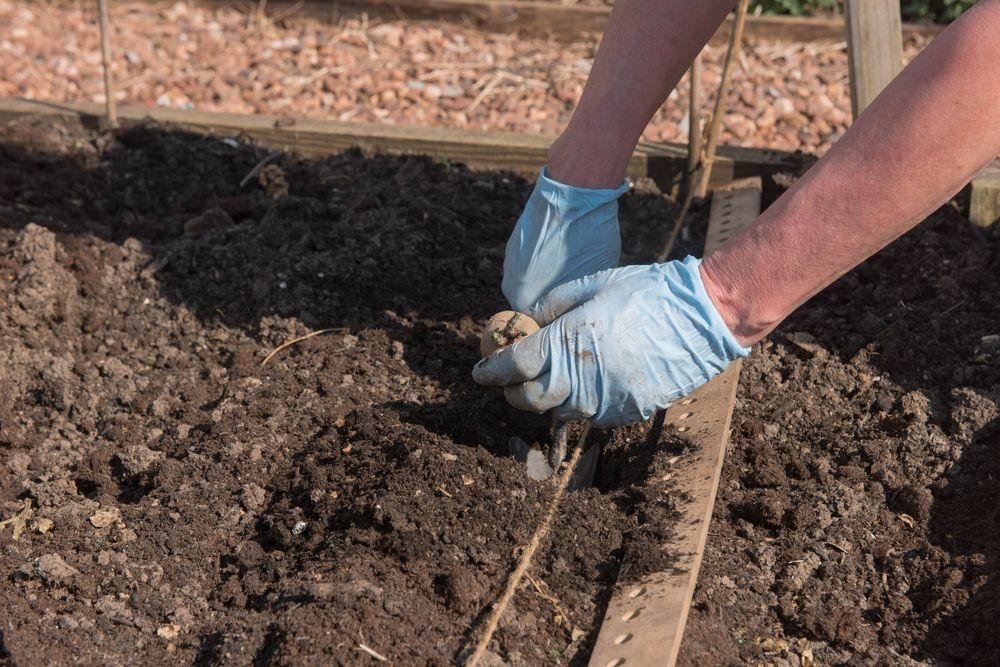
Create planting furrows approximately 3–5 inches deep.
Place seed potatoes with the eyes facing upward and space them roughly 10–12 inches apart for many home garden varieties.
Cover them with loose soil and water gently.
In a 4 × 4-foot raised bed, avoid crowding the planting area. Potatoes need space for foliage, roots, and developing tubers.
Leave enough soil available for hilling as the plants grow.
| Growing Factor | Recommended Starting Point | Why It Matters |
|---|---|---|
| Sunlight | 6–8+ hours daily | Supports healthy foliage |
| Soil pH | Approximately 5.0–6.0 | Supports suitable growing conditions |
| Planting depth | 3–5 inches | Protects seed pieces |
| Plant spacing | 10–12 inches | Allows tuber development |
| Soil temperature | About 45–50°F or warmer | Supports establishment |
| Watering | Consistent moisture, not saturation | Supports tuber growth |
| Harvest timing | Often 90–120 days | Varies by variety |
These are general guidelines. Adjust them according to your chosen variety and local extension recommendations.
Hilling is one of the most important potato-growing tasks.
When shoots reach approximately 6–8 inches tall, gently mound loose soil around their bases, leaving several inches of foliage exposed.
Repeat as needed during growth.
Hilling helps keep developing tubers covered and prevents sunlight from reaching them.
Potatoes exposed to light can turn green and accumulate potentially harmful glycoalkaloids.
Avoid damaging roots and underground tubers while adding soil.
Potatoes need adequate moisture, especially during flowering and tuber development.
Check soil moisture several inches below the surface.
Water thoroughly when necessary, but avoid keeping the bed waterlogged.
Uneven moisture can contribute to misshapen or cracked tubers.
Mulch may help reduce evaporation and moderate soil temperature during warm weather.
For practical watering guidance, read our article on how often you should water a raised garden bed.
Inspect plants regularly for Colorado potato beetles, aphids, unusual leaf spots, and wilting.
Potatoes are related to tomatoes and peppers, so some diseases can affect all three crops.
Avoid repeatedly planting potatoes in beds with a history of serious nightshade diseases.
Maintain suitable airflow and remove diseased plant material according to local guidance.
Do not eat green or severely damaged potatoes.
New potatoes can sometimes be harvested after flowering, once small tubers have developed.
For mature storage potatoes, wait until the foliage naturally yellows and dies back.
Use a garden fork or your hands to loosen the soil carefully.
Avoid piercing or bruising the tubers.
Let harvested potatoes dry briefly in a shaded location before removing loose soil.
For long-term storage, cure suitable mature potatoes under appropriate conditions and keep them in a cool, dark, ventilated place.
Growing potatoes in raised garden beds is straightforward when you focus on healthy seed potatoes, loose soil, proper spacing, and consistent moisture.
Remember to hill soil around developing plants, protect tubers from sunlight, and harvest carefully to avoid damage.
With suitable growing conditions and regular attention, even a modest raised bed can produce a satisfying potato harvest.
For more vegetable growing tutorials, seasonal planting advice, and practical raised bed gardening tips, explore our Growing Guides.