Newsletter Subscribe
Enter your email address below and subscribe to our newsletter
Raised Bed Gardening Made Simple
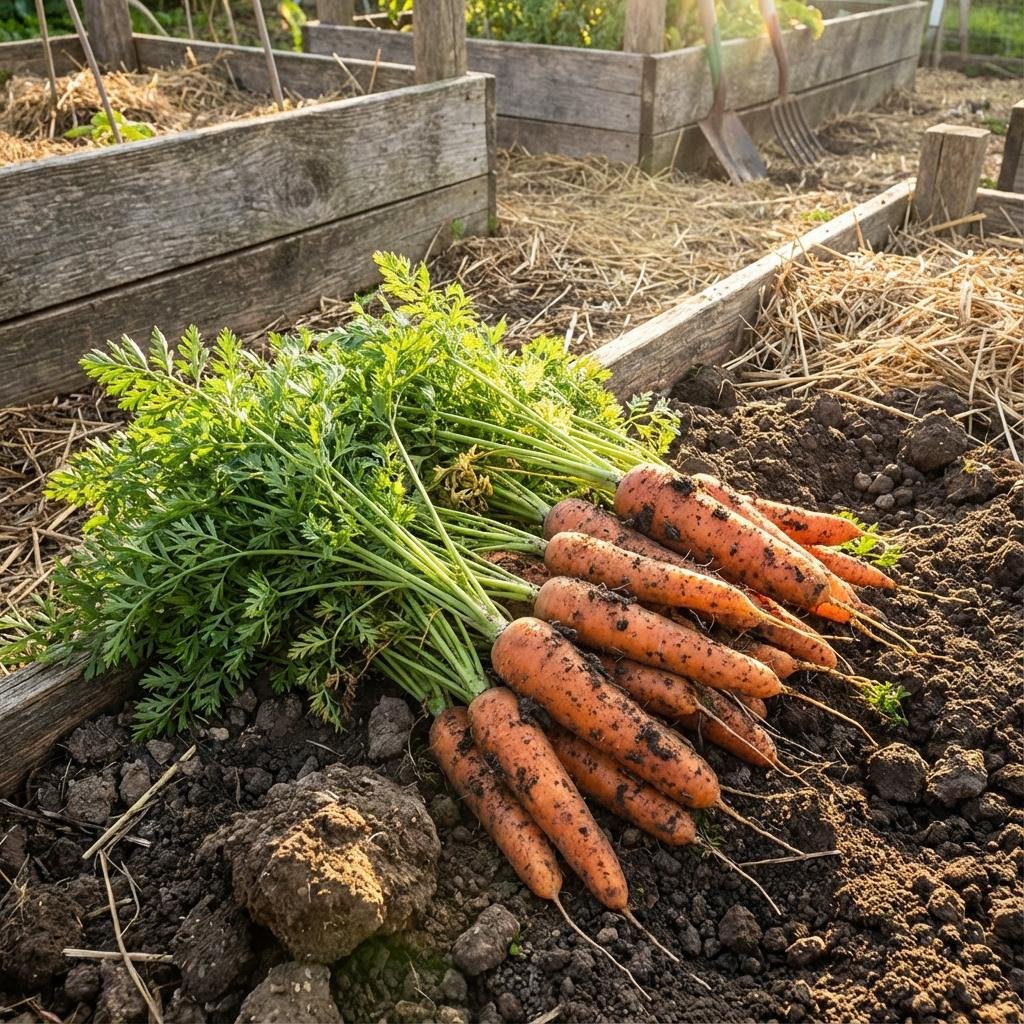
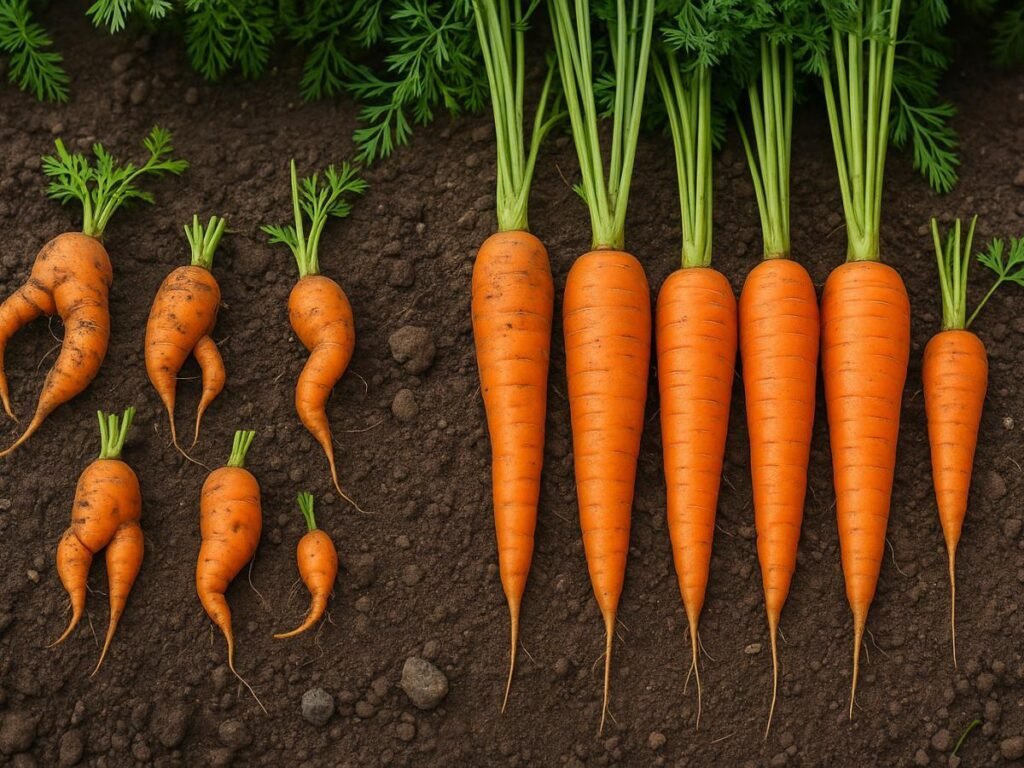
Pulling a carrot from your raised garden bed should reveal a healthy, well-shaped root. But sometimes, instead of one straight carrot, you discover several twisted, forked, or unusually short roots.
Forked carrots are usually still edible, but their unusual shape can make harvesting, cleaning, and peeling more difficult.
The good news is that raised garden beds can provide excellent conditions for growing straight carrots. With loose soil, proper spacing, consistent moisture, and the right varieties, you can reduce many common causes of root deformities.
Here’s how to grow carrots in raised garden beds without unnecessary forking.
Carrot roots naturally grow downward as they develop.
When the main root encounters resistance or becomes damaged, the plant may produce additional root branches instead of developing one smooth taproot.
Common causes include:
Excessive fertilization and irregular moisture can also contribute to poor root development.
Identifying the underlying cause is the first step toward improving your next harvest.
Soil preparation is particularly important when growing carrots.
Long carrot varieties need enough loose soil to develop without hitting rocks, hard layers, or other obstructions.
For many standard varieties, aim for approximately 12 inches of unobstructed growing depth. Longer varieties may benefit from deeper soil, while shorter carrots can grow successfully in shallower conditions.
Remove stones, large roots, and hard clumps before planting.
Avoid stepping inside the raised bed, since foot traffic can compact the growing medium.
If your soil is dense or difficult to work, read our guide on how to fix compacted soil in a raised garden bed.
Not every carrot variety grows to the same length.
Long, slender varieties generally perform best in deep, loose soil.
Shorter or tapered carrots are often better suited to gardens where soil depth is limited.
Nantes carrots are known for their relatively cylindrical roots, while Chantenay types have shorter, broader shapes.
Danvers carrots offer another practical option for home gardens.
Choose varieties according to your available soil depth, climate, and growing season.
| Carrot Type | Typical Root Shape | Best Growing Conditions | Main Advantage |
|---|---|---|---|
| Nantes | Medium-length, cylindrical | Loose, well-drained soil | Smooth roots and sweet flavor |
| Danvers | Medium-length, tapered | Moderately heavy soil | Adaptable for home gardens |
| Chantenay | Short, broad, tapered | Shallower or heavier soil | Less depth required |
| Imperator | Long and slender | Deep, loose soil | Long, straight roots in ideal conditions |
| Round varieties | Small and rounded | Shallow growing areas | Suitable for limited soil depth |
Actual root size depends on the cultivar and growing conditions.
Carrots generally do not transplant well because disturbing their developing taproots can cause deformities.
Sow seeds directly into the raised bed.
Plant them approximately ¼–½ inch deep, covering them lightly with fine soil.
Carrot seeds are small and may take one to three weeks to germinate, depending on soil temperature.
Keep the seedbed consistently moist during this period.
Avoid allowing the surface to form a hard crust, which can prevent delicate seedlings from emerging.
Carrot seeds are easy to sow too densely.
When seedlings become established, thin them according to the variety’s recommended spacing.
For many standard carrots, approximately 2–3 inches between plants provides a useful starting point.
Crowded carrots compete for growing space and may develop small or distorted roots.
If seedlings are tightly packed, carefully snip unwanted plants at soil level rather than pulling them and disturbing neighboring roots.
Proper spacing helps each carrot develop more evenly.
Carrots need nutrients, but adding too much fertilizer can create problems.
Excessive nitrogen may encourage leafy growth without producing well-developed roots.
Fresh manure and poorly decomposed organic materials are also unsuitable additions immediately before planting carrots.
Use mature compost where appropriate and consider soil testing before applying fertilizer.
A balanced approach is more effective than repeatedly adding nutrients without knowing what the soil needs.
For soil preparation advice, explore our article on best soil for raised garden beds.
Carrots grow best when moisture remains reasonably consistent.
Dry soil can slow root development, while sudden heavy watering after a dry period may contribute to splitting.
Check soil moisture regularly and water gently when needed.
Raised beds may dry out quickly during hot weather, so pay attention to changing conditions.
Avoid waterlogging, which can damage roots and encourage disease.
A light mulch layer around established seedlings can help reduce moisture loss.
Not every forked carrot is caused by poor soil.
Root-knot nematodes and certain soilborne diseases can damage developing roots and cause branching or deformities.
If carrots repeatedly grow distorted despite loose soil and proper spacing, investigate possible biological causes.
Look for unusual root swellings, stunted plants, or recurring problems in the same growing area.
Contact a local agricultural extension service when identification is uncertain.
Most carrot varieties are ready to harvest approximately 60–80 days after sowing, although some require longer.
Check the seed packet for expected maturity.
Gently loosen the soil beside mature carrots before pulling them.
Avoid forcing roots out of compacted or dry soil.
If the soil is very dry, watering lightly before harvest may make removal easier.
Remove the leafy tops before storing harvested carrots, and refrigerate them promptly.
Growing straight carrots in raised garden beds starts with creating the right conditions below the soil surface.
Choose suitable varieties, remove soil obstructions, sow seeds directly, and thin seedlings before they become crowded.
Maintain consistent moisture and avoid excessive fertilization or root disturbance.
While occasional forked carrots are normal, good soil preparation can greatly improve the quality of your harvest.
For more practical vegetable growing advice, planting techniques, and seasonal gardening guides, explore our Growing Guides.