Newsletter Subscribe
Enter your email address below and subscribe to our newsletter


Raised Bed Gardening Made Simple
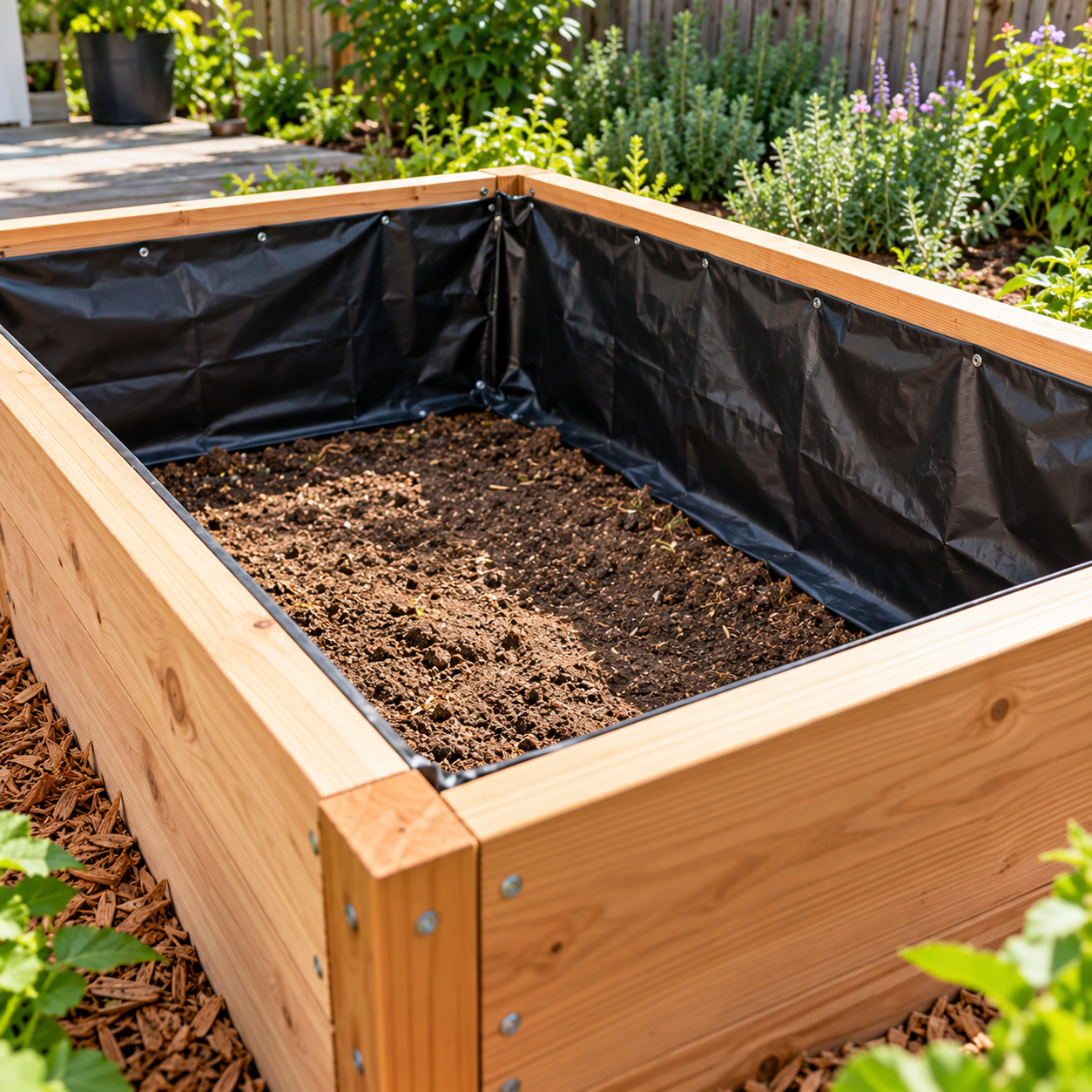
When building a raised garden bed, you might wonder whether to install a liner before adding soil. Some gardeners use plastic sheets to protect wooden frames, while others install landscape fabric to keep soil from escaping.
But do raised garden beds actually need a liner?
Most open-bottom raised beds placed directly on healthy garden soil do not need one. However, a liner can be useful in certain situations, depending on the bed’s construction, location, and the problem you’re trying to solve.
Here’s how to decide whether a liner is necessary and which materials make the most sense.
A raised garden bed liner is a material placed between the growing soil and part of the bed’s structure or the ground underneath.
Liners serve different purposes depending on where they’re installed.
A side liner may reduce direct contact between damp soil and wooden boards. A permeable bottom liner can help retain soil in an elevated planter, while wire mesh can discourage burrowing animals.
These materials are not interchangeable.
Before purchasing a liner, determine whether you need wood protection, soil retention, weed suppression, or pest control.
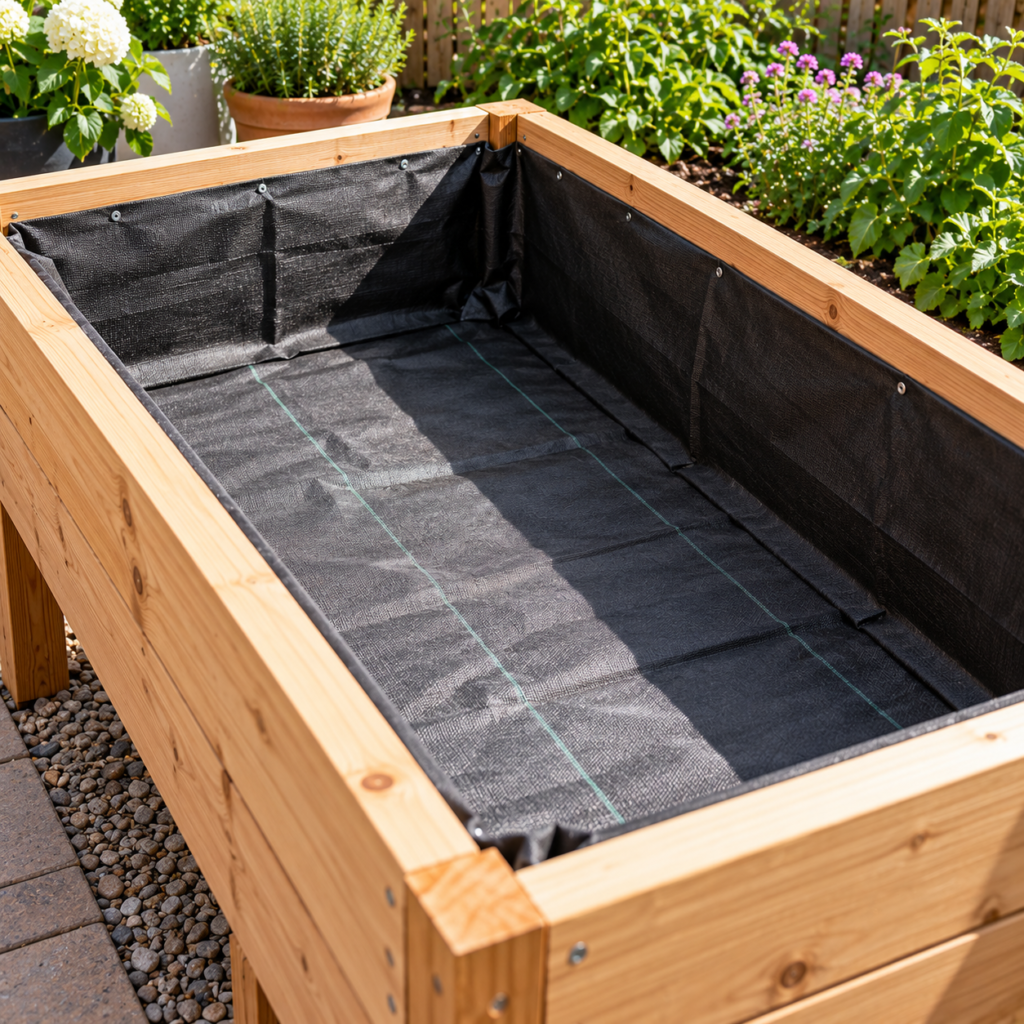
No. Traditional open-bottom raised beds generally work well without a bottom liner.
Direct contact with the ground allows roots to extend into the underlying soil when conditions are suitable. It also provides a route for water to drain downward.
Installing an unnecessary barrier may restrict root growth or water movement.
If you’re building over healthy soil, leaving the bottom open is often the simplest solution.
For more information about preparing the base, read our guide on what to put on the bottom of a raised garden bed.
A liner may be helpful when a raised bed has specific construction requirements.
For wooden frames, a side liner can reduce contact between moist soil and the boards.
Elevated planters with slatted bottoms may benefit from permeable fabric that prevents soil from falling through while allowing drainage.
Beds affected by burrowing rodents may require galvanized hardware cloth beneath the soil.
However, a liner should not be used as a substitute for investigating contaminated ground. Suspected contamination requires proper assessment and a suitable isolation or remediation plan.
| Liner Material | Best Use | Advantages | Limitations |
|---|---|---|---|
| Heavy-duty plastic | Wooden bed sides | Reduces direct soil-to-wood contact | Blocks drainage if placed across the bottom |
| Landscape fabric | Elevated planter bottoms | Holds soil while allowing water through | May deteriorate or restrict roots |
| Cardboard | Temporary vegetation suppression | Inexpensive and biodegradable | Can temporarily restrict water movement |
| Galvanized hardware cloth | Burrowing pest protection | Durable and water-permeable | Does not prevent weeds |
| Natural fiber fabric | Short-term soil retention | Biodegradable | Breaks down over time |
| No liner | Open-bottom beds on healthy soil | Supports drainage and root access | Does not protect wooden sides |
The best choice depends on your raised bed design rather than a single universal recommendation.
One potential advantage is protecting wooden bed walls from continuous soil contact.
A properly installed side liner may help reduce moisture exposure, although it won’t prevent all weather-related deterioration.
Permeable fabric can also help retain soil in elevated planters with drainage openings.
Another benefit is pest protection when using suitable wire mesh beneath a bed.
In these situations, the right material solves a specific problem without unnecessarily restricting the growing environment.
The biggest risk is interfering with drainage.
Impermeable plastic across the bottom can trap excess water and create unfavorable conditions for roots.
Some fabrics may also deteriorate, become difficult to remove, or restrict roots from extending into the ground.
Liners add material costs and installation time.
They can also complicate future repairs if the bed needs to be dismantled.
For many ordinary ground-level raised beds, these disadvantages outweigh the potential benefits of a bottom liner.
Wooden raised beds are exposed to moisture from soil, irrigation, and rainfall.
Some gardeners install heavy-duty plastic along the interior walls to reduce direct contact with damp soil.
If you choose this approach, attach the material securely to the sides while leaving the bottom open for drainage.
Choose materials suitable for their intended use and avoid unidentified recycled sheets or products with questionable chemical treatments.
A liner may reduce moisture exposure, but wood species, construction quality, climate, and maintenance also affect durability.
For additional advice, explore our guide on how to extend the life of a wooden raised garden bed.
Metal raised beds usually do not need a liner solely because they are made of metal.
Products designed for vegetable gardening commonly use galvanized steel or other corrosion-resistant materials.
A liner may be considered for a particular manufacturer’s design, but it is not automatically necessary.
Follow the manufacturer’s assembly and maintenance instructions.
Avoid adding plastic across the bottom of an open metal bed, as this can interfere with normal drainage.
Start by identifying the area that actually needs protection.
For wooden sidewalls, measure the interior surfaces and cut the liner to fit.
Secure it without leaving loose sections that could fold into the growing area.
Keep the bottom open whenever the bed is designed to drain into the ground.
For elevated planters, choose a permeable material supported by a properly constructed base with drainage openings.
Check that water can escape before filling the planter completely.
Finally, add suitable growing soil and inspect the liner periodically for damage.
One common mistake is covering the entire bottom with waterproof plastic.
Another is assuming landscape fabric will permanently eliminate weeds.
Weed seeds can still arrive from above through wind, birds, and gardening materials.
Cardboard is sometimes used over existing grass, but it can temporarily slow water infiltration and root access.
Avoid choosing liner materials without considering drainage, soil conditions, and the long-term needs of your plants.
Most raised garden beds do not require a liner, especially when installed directly over suitable garden soil.
However, side liners can be useful for protecting wooden frames, permeable fabric can retain soil in elevated planters, and hardware cloth can help discourage burrowing pests.
The key is choosing a material that solves a specific problem without restricting drainage or healthy root growth.
For more advice on raised bed construction, materials, and maintenance, explore our Raised Beds guides.