Newsletter Subscribe
Enter your email address below and subscribe to our newsletter
Raised Bed Gardening Made Simple
Category: Buying Guides
Suggested URL: /what-size-raised-garden-bed/
Primary Keyword: What Size Raised Garden Bed Should You Buy
SEO Title: What Size Raised Garden Bed Should You Buy? | BedRoot
Meta Description: Not sure what size raised garden bed to buy? Compare 4×2, 6×3, 8×4 and larger garden beds and learn how to choose the right width, length and depth for your backyard.
Choosing the right size raised garden bed can make gardening easier, more productive, and much more enjoyable.
A bed that’s too small may limit what you can grow, while an oversized bed can require more soil, water, maintenance, and backyard space than you actually need.
The ideal size depends on three main factors: your available space, what you want to grow, and how easily you can reach your plants.
Before buying the biggest raised bed you can find, here’s what you should consider.
Width is arguably the most important dimension.
A raised garden bed should be narrow enough that you can comfortably reach the center without stepping onto the soil.
Walking inside the bed can compact the soil and make planting, weeding, and harvesting more difficult.
For a bed accessible from both sides, a width of approximately 3 to 4 feet works well for many gardeners.
If the bed will sit against a wall or fence and you can only access it from one side, consider a narrower design—often around 2 feet wide.
Access from two sides: Up to about 4 feet wide
Access from one side: Around 2 feet wide
Comfort matters more than maximizing every inch of growing space.
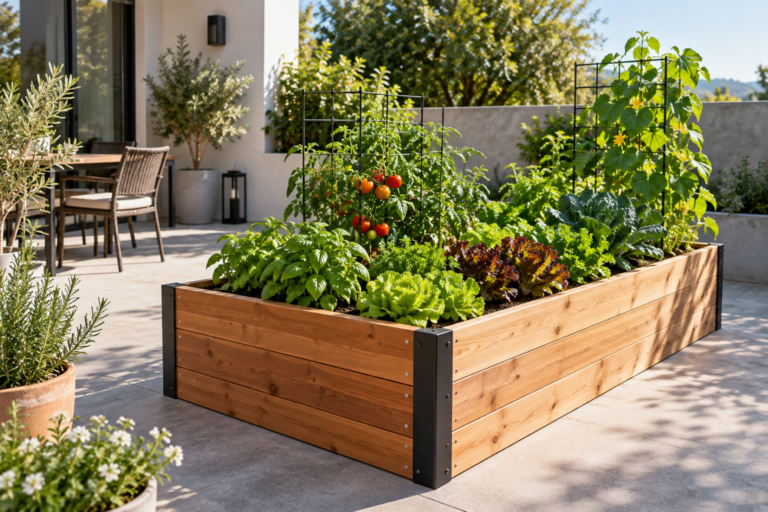
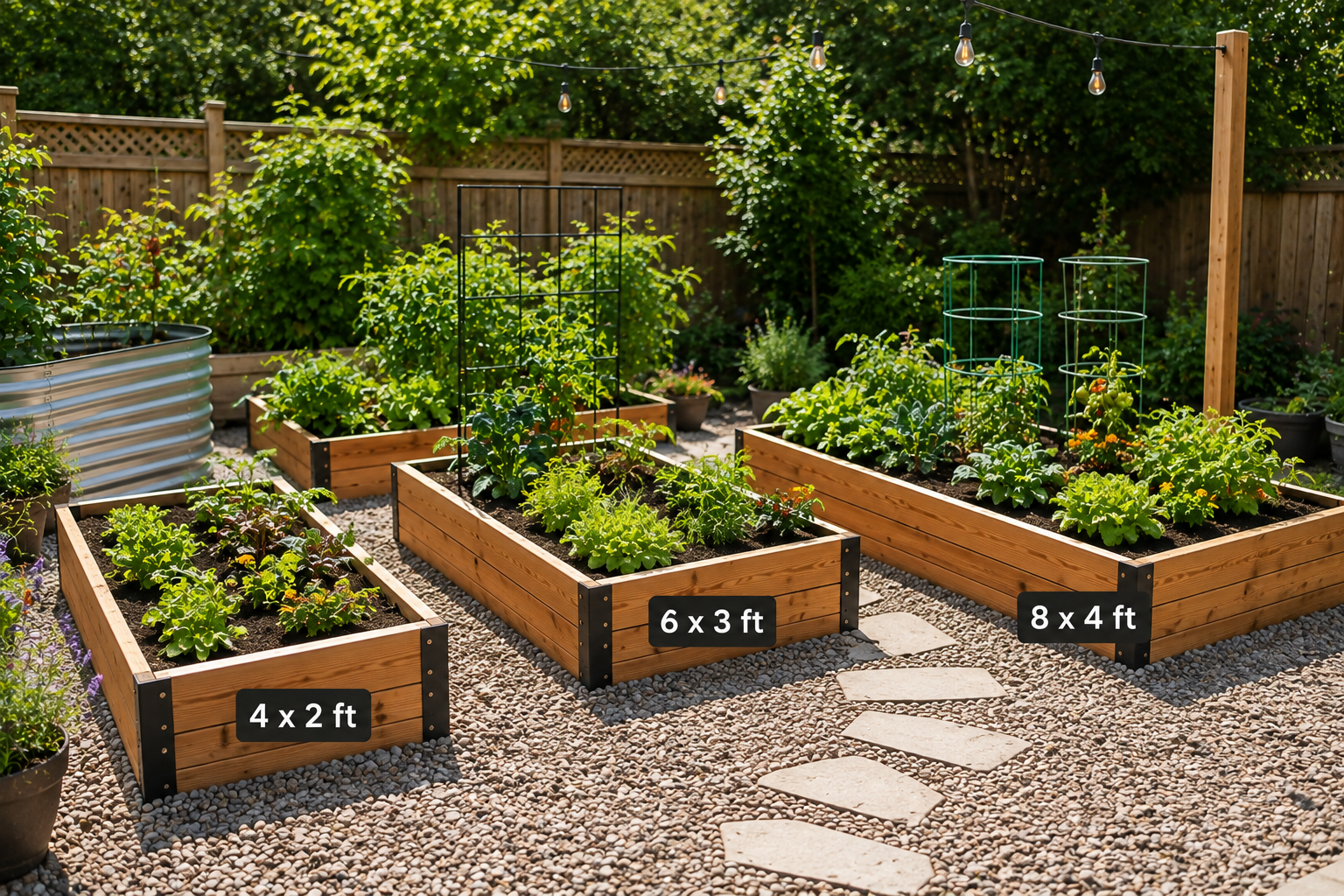
A 4 × 2-foot raised bed provides 8 square feet of growing area and is an excellent choice for patios, narrow side yards, and compact backyards.
Don’t underestimate how much you can grow in a small bed.
Depending on spacing, you could plant:
Adding a trellis can make the bed even more productive by allowing cucumbers, peas, or climbing beans to grow vertically.
Best for: Small gardens and beginners with limited space.
For someone starting their first serious vegetable garden, 6 × 3 feet is one of our favorite sizes.
It provides 18 square feet of growing space without becoming difficult to manage.
You can comfortably reach the center while still having enough room to experiment with several vegetables.
For example, a mixed garden might contain tomatoes along the back, peppers in the middle, and lettuce, herbs, or radishes near the edges.
It’s also much less expensive to fill than a large, deep garden bed.
Best for: First-time raised-bed gardeners.
The classic 8 × 4-foot raised garden bed is popular for a reason.
With 32 square feet of growing area, it provides enough space to create a productive backyard vegetable garden.
You could grow combinations of:
Tomatoes
Peppers
Carrots
Lettuce
Beans
Cucumbers
Herbs
Flowers
Four feet is also a practical width when the bed can be accessed from both long sides.
The biggest consideration is soil. An 8 × 4-foot bed requires significantly more filling material than a smaller model, especially if you choose a tall design.
Best for: Homeowners who want a productive vegetable garden.
Beds measuring 10, 12, or even 16 feet long can work well in larger gardens.
Length isn’t usually as restrictive as width because you don’t need to reach across the entire length.
However, longer beds need stronger construction.
Once filled with moist soil, the sidewalls experience considerable outward pressure. Long metal beds may need support bars, while wooden beds may benefit from additional reinforcement.
Also consider access.
Instead of creating one extremely long bed, two smaller beds separated by a pathway may make it easier to move around your garden.
Size isn’t only about length and width.
Depth matters too.
A practical starting guide is:
| Depth | Good For |
|---|---|
| 6–8 inches | Lettuce, herbs, radishes |
| 10–12 inches | Many common vegetables |
| 12–18 inches | Peppers, carrots, cucumbers |
| 17–24 inches | Tomatoes and larger crops |
| 24+ inches | Tall, accessible garden beds |
For a versatile vegetable garden, 12–18 inches gives you plenty of options.
If the bed sits over healthy soil, roots may be able to extend into the ground underneath. Beds installed over concrete or another hard surface need enough contained soil for the plants you’re growing.
Larger isn’t always better because every additional inch requires more soil.
Use this simple formula:
Length × Width × Depth = Cubic Feet
For example, an 8 × 4-foot bed that is 1 foot deep requires:
8 × 4 × 1 = 32 cubic feet
Make that same bed 2 feet deep and you’ll need approximately:
64 cubic feet
That can significantly increase your project cost.
Always calculate soil volume before buying a deep raised bed.
Your garden needs pathways too.
Leaving approximately 2–3 feet between beds gives you room to walk, water, weed, and harvest comfortably.
Consider wider paths if you plan to use a wheelbarrow, garden cart, or other equipment.
Your layout might look like:
Raised Bed → 3 ft Path → Raised Bed → 3 ft Path → Raised Bed
Good pathways can make a large garden much easier to maintain.
Think about what you actually want to grow.
For herbs and salad greens, a small 4 × 2-foot bed may be enough.
For tomatoes, peppers, cucumbers, and mixed vegetables, a 6 × 3 or 8 × 4-foot bed provides more flexibility.
If you want to grow large crops such as squash, remember that vines can quickly spread beyond the bed.
Use trellises whenever possible to take advantage of vertical space.
For many gardeners, several medium-sized beds are better than one enormous bed.
Multiple beds allow you to organize crops more easily.
For example:
Bed 1: Tomatoes and peppers
Bed 2: Lettuce and herbs
Bed 3: Carrots and root vegetables
Bed 4: Cucumbers and beans
Separate beds can also make crop rotation and seasonal planting easier.
For most home gardeners, there are three sizes worth considering.
Choose 4 × 2 ft if you have limited space or primarily want herbs and smaller vegetables.
Choose 6 × 3 ft if you’re a beginner and want a manageable all-purpose garden.
Choose 8 × 4 ft if you have enough backyard space and want to grow a larger variety of vegetables.
For depth, approximately 12–18 inches is a versatile starting point for many vegetable gardens.
Most importantly, don’t choose your raised bed based on size alone.
Make sure you can comfortably reach your plants, leave enough space for pathways, calculate the amount of soil you’ll need, and think about what you actually plan to grow.
The best raised garden bed isn’t the biggest one—it’s the one that fits your backyard, plants, budget, and gardening style.