Newsletter Subscribe
Enter your email address below and subscribe to our newsletter


Raised Bed Gardening Made Simple
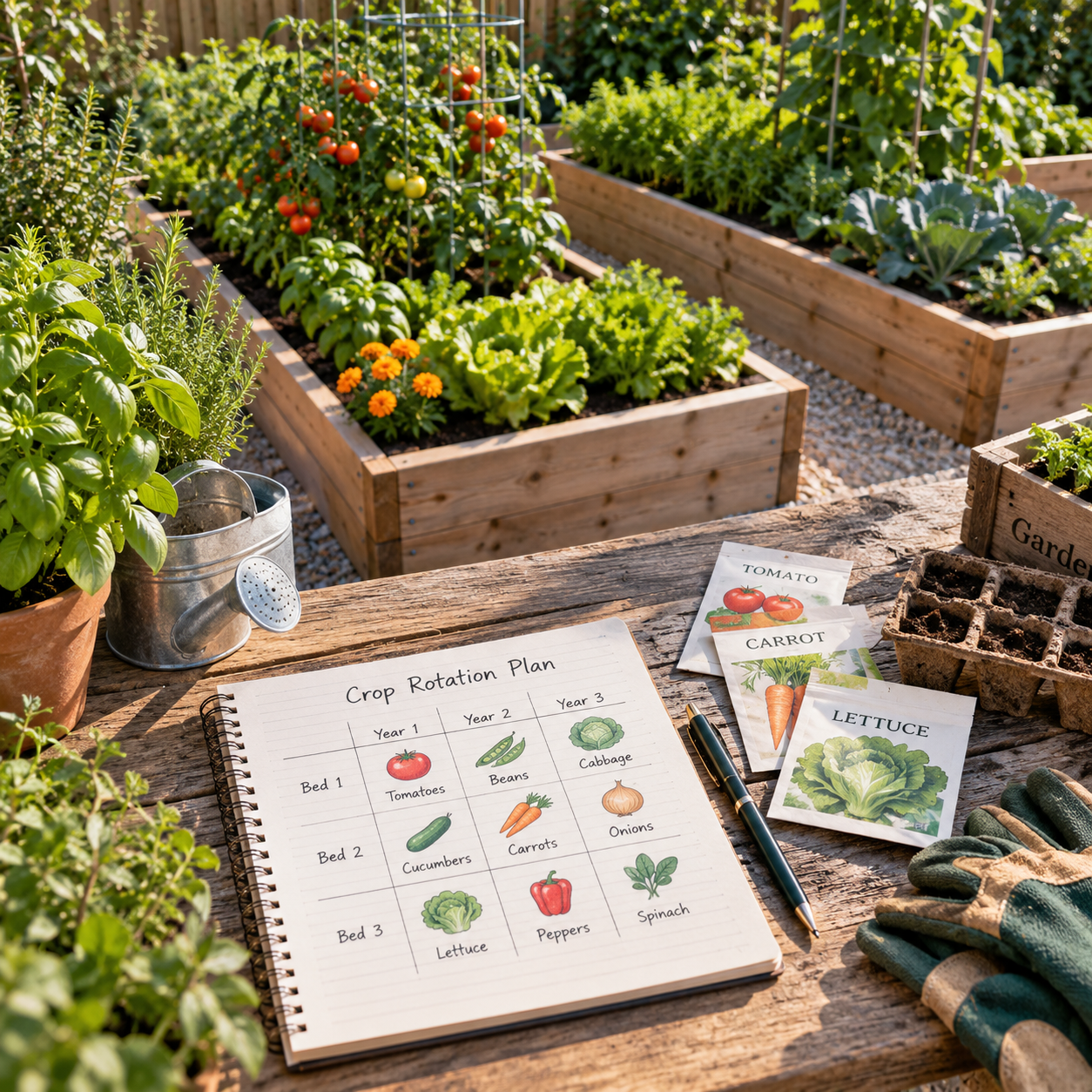
Growing vegetables in raised garden beds makes planting and maintenance more manageable, but using the same growing space year after year requires some planning. One useful practice is crop rotation—changing where different groups of vegetables grow from one season to the next.
Crop rotation can help reduce the buildup of certain soilborne pests and diseases, support soil management, and encourage more thoughtful planting decisions.
Even if you only have two or three raised beds, you can develop a simple rotation plan that works with your garden.
Crop rotation means growing different crops in the same location over successive growing seasons.
For example, instead of planting tomatoes in the same raised bed every summer, you might grow beans or lettuce there the following year.
The goal is to avoid repeatedly growing closely related plants in the same soil, especially when they share common pests and diseases.
Crop rotation is particularly useful when combined with compost, proper watering, and good garden sanitation.
However, rotation alone cannot prevent every plant disease or correct poor soil conditions.
The first step is understanding which vegetables are related.
Plants in the same botanical family often share certain pests and diseases, making plant families a practical basis for crop rotation.
For example, tomatoes, peppers, potatoes, and eggplants belong to the nightshade family.
Cucumbers, squash, pumpkins, and melons belong to the cucurbit family.
Beans and peas belong to the legume family.
Knowing these relationships helps you avoid planting closely related crops in the same location repeatedly.
| Plant Family | Common Vegetables | Rotation Considerations |
|---|---|---|
| Solanaceae (Nightshades) | Tomatoes, peppers, potatoes, eggplants | May share soilborne diseases |
| Brassicaceae (Brassicas) | Cabbage, broccoli, kale, radishes | Watch for clubroot and other family-specific problems |
| Cucurbitaceae (Cucurbits) | Cucumbers, squash, pumpkins, melons | Rotate where practical to reduce disease pressure |
| Fabaceae (Legumes) | Beans, peas | Useful in diverse rotations; nitrogen benefits vary |
| Amaryllidaceae (Alliums) | Onions, garlic, leeks | Avoid repeating where family-specific diseases occur |
| Apiaceae (Carrot Family) | Carrots, celery, parsley | Group related crops when planning rotation |
This table provides a useful starting point for organizing your raised bed planting schedule.
Before planting, draw a basic diagram of your raised garden beds.
Label each bed with a number and record which vegetables grew there during the previous season.
For example:
Bed 1: Tomatoes and peppers
Bed 2: Beans and peas
Bed 3: Cabbage and kale
Next season, move each crop family to a different bed where possible.
Keeping a record is more reliable than trying to remember previous planting locations.
If you need help arranging growing areas and pathways, see our guide on how to design a raised garden bed layout.
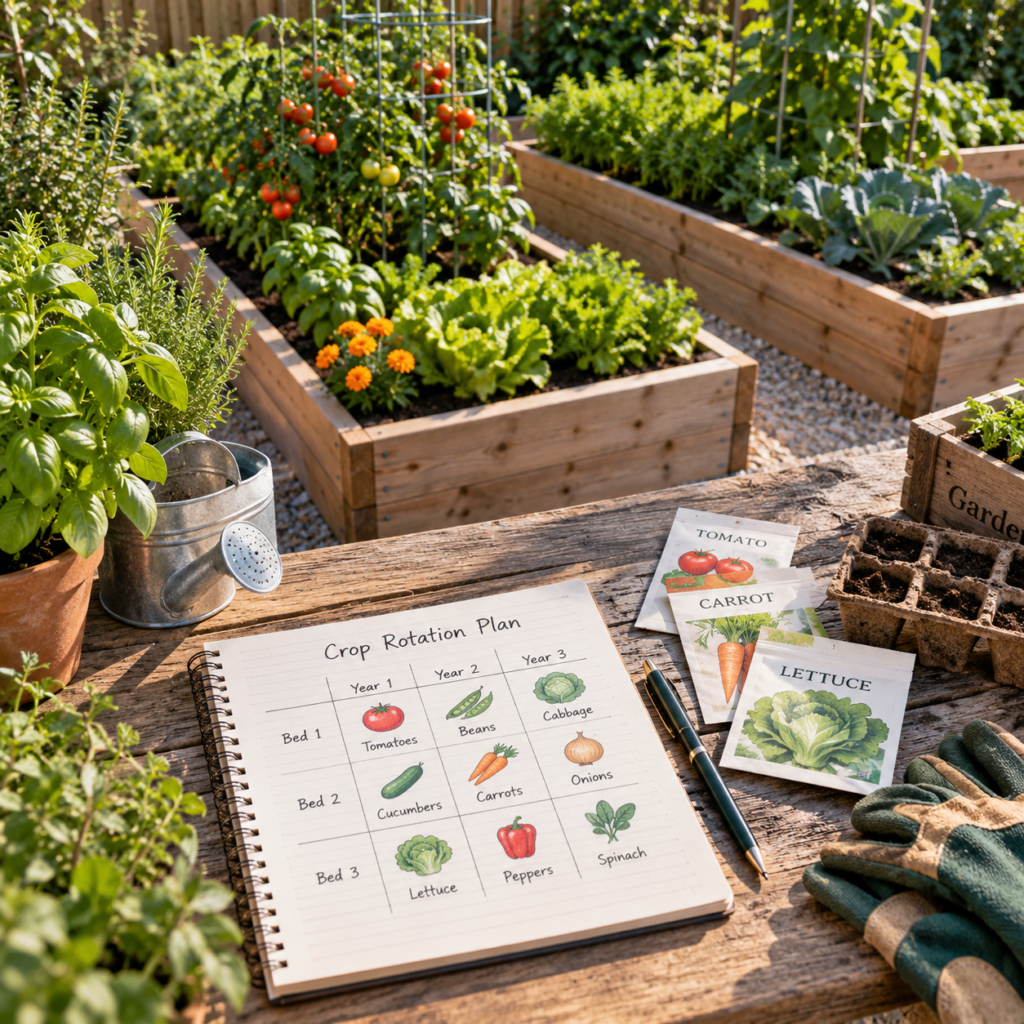
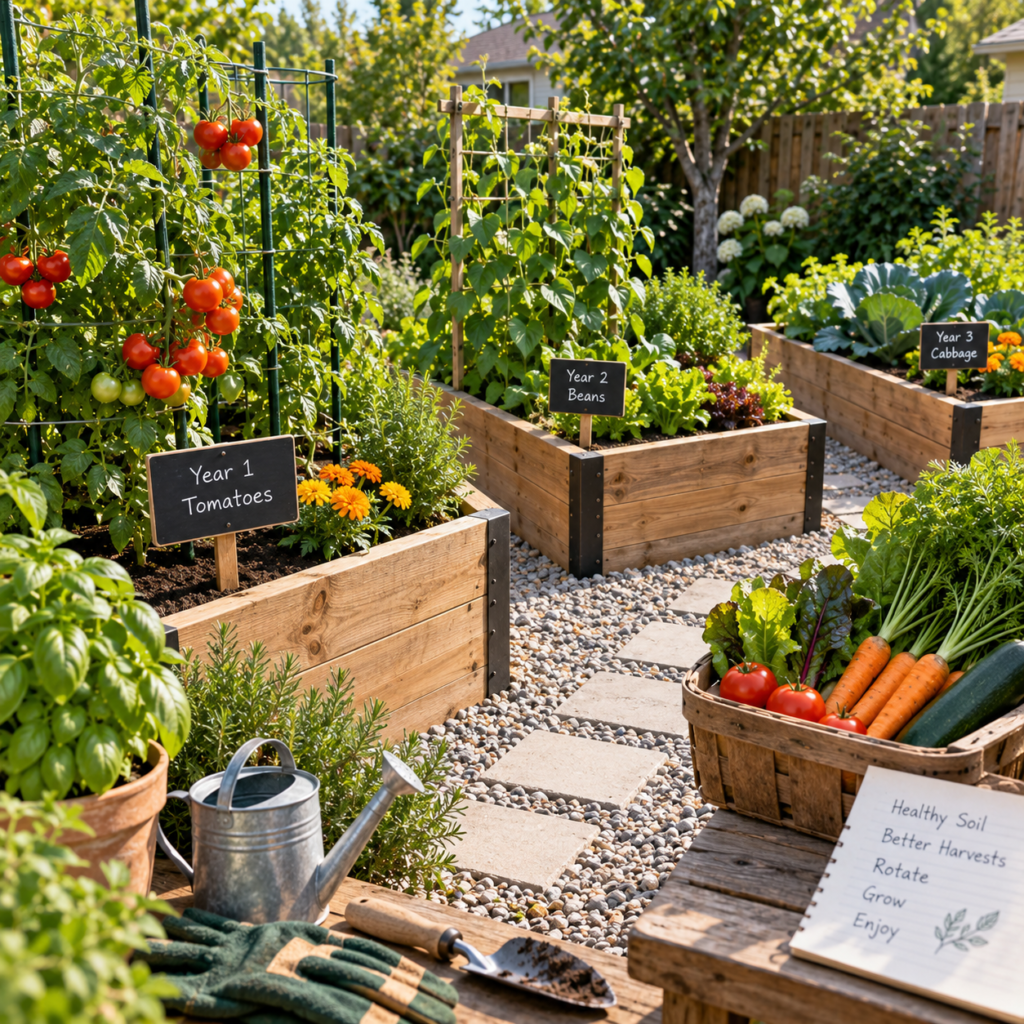
A three-year rotation can be a practical starting point for a garden with several raised beds.
For example:
Year 1
Year 2
Year 3
This arrangement separates repeated plant-family use in each bed, although a longer interval may be preferable when managing certain soilborne diseases.
Adjust your plan according to your climate, crop preferences, and available growing space.
Crop rotation works best when soil care is part of your routine.
Vegetables remove nutrients as they grow, and raised beds may need additional organic matter over time.
Adding mature compost can improve soil structure and support biological activity.
However, compost does not automatically provide every nutrient in the correct amount. Soil testing can help determine whether additional amendments are necessary.
Avoid assuming that growing beans or peas will supply enough nitrogen for the next crop without further soil management.
For practical soil improvement advice, explore our guide on best soil for raised garden beds.
Small raised bed gardens may not have enough space for a strict rotation schedule.
If you only grow a few favorite vegetables, prioritize avoiding repeated planting of crops with known soilborne disease problems.
You can also use containers, separate planting areas, or resistant varieties when appropriate.
For some gardeners, maintaining healthy soil and selecting disease-resistant plants will be more practical than following a complicated rotation chart.
The goal is to improve growing conditions, not create unnecessary restrictions.
At the end of each season, record what you planted and how well the crops performed.
Include notes about disease symptoms, pest problems, harvest quality, and soil conditions.
A simple notebook or spreadsheet is enough.
Over time, these records help you recognize recurring problems and make better planting decisions.
One common mistake is rotating individual vegetables without considering their plant families.
For example, replacing tomatoes with peppers is not a meaningful family rotation because both are nightshades.
Another mistake is expecting rotation to eliminate all diseases. Some pathogens can remain in soil for years or spread through contaminated tools, plants, or water.
Finally, avoid neglecting soil fertility. Crop rotation supports garden management but does not replace compost, appropriate fertilization, or soil testing.
Crop rotation in raised garden beds doesn’t need to be complicated.
Start by grouping vegetables into plant families, recording where each crop grows, and changing planting locations when practical.
Combine your rotation plan with good soil management, disease prevention, and seasonal recordkeeping.
Even a simple approach can help you make more informed decisions about what to plant next.
For more practical vegetable growing advice, seasonal planting tips, and raised bed gardening techniques, explore our Growing Guides.