Newsletter Subscribe
Enter your email address below and subscribe to our newsletter
Raised Bed Gardening Made Simple
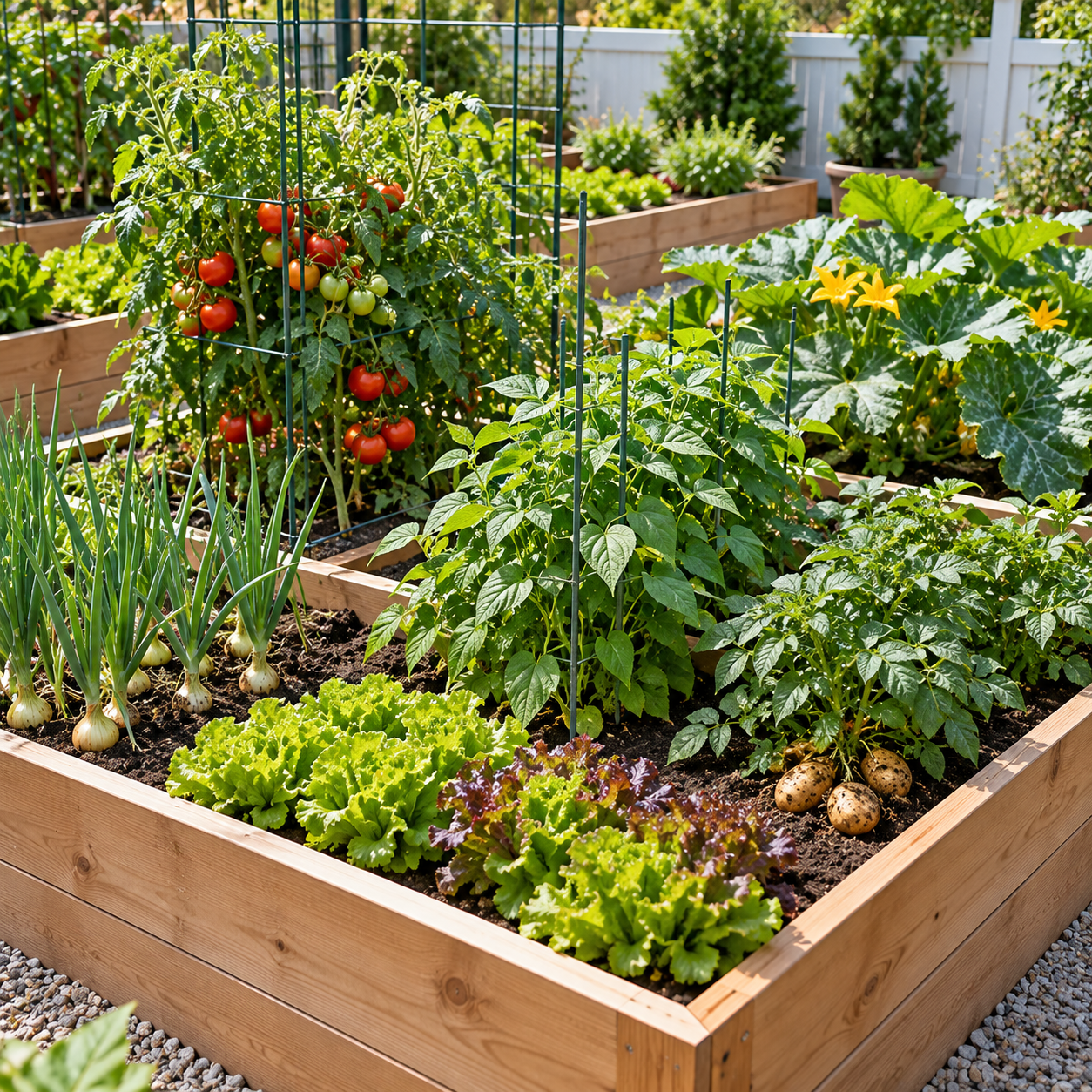
Raised garden beds make it easier to manage soil, organize crops, and grow vegetables in limited spaces. However, planting too many vegetables together can create problems with sunlight, water, nutrients, and disease.
You may have heard that certain vegetables should never grow next to each other. While some combinations deserve caution, many traditional companion planting rules are based on gardening experience rather than controlled scientific research.
The most reliable approach is to understand why particular vegetables may compete or share disease risks.
Here are several combinations worth reconsidering when planning your raised garden beds.
Tomatoes and potatoes belong to the nightshade family, Solanaceae.
Both crops are susceptible to several related diseases, including late blight caused by Phytophthora infestans.
When infected plants grow close together, disease can spread between susceptible hosts under favorable conditions.
This does not mean tomatoes and potatoes cannot survive in the same garden. However, growing them in separate beds may make disease monitoring and management easier.
Avoid planting infected seed potatoes, remove diseased plant material promptly, and follow local disease-management recommendations.
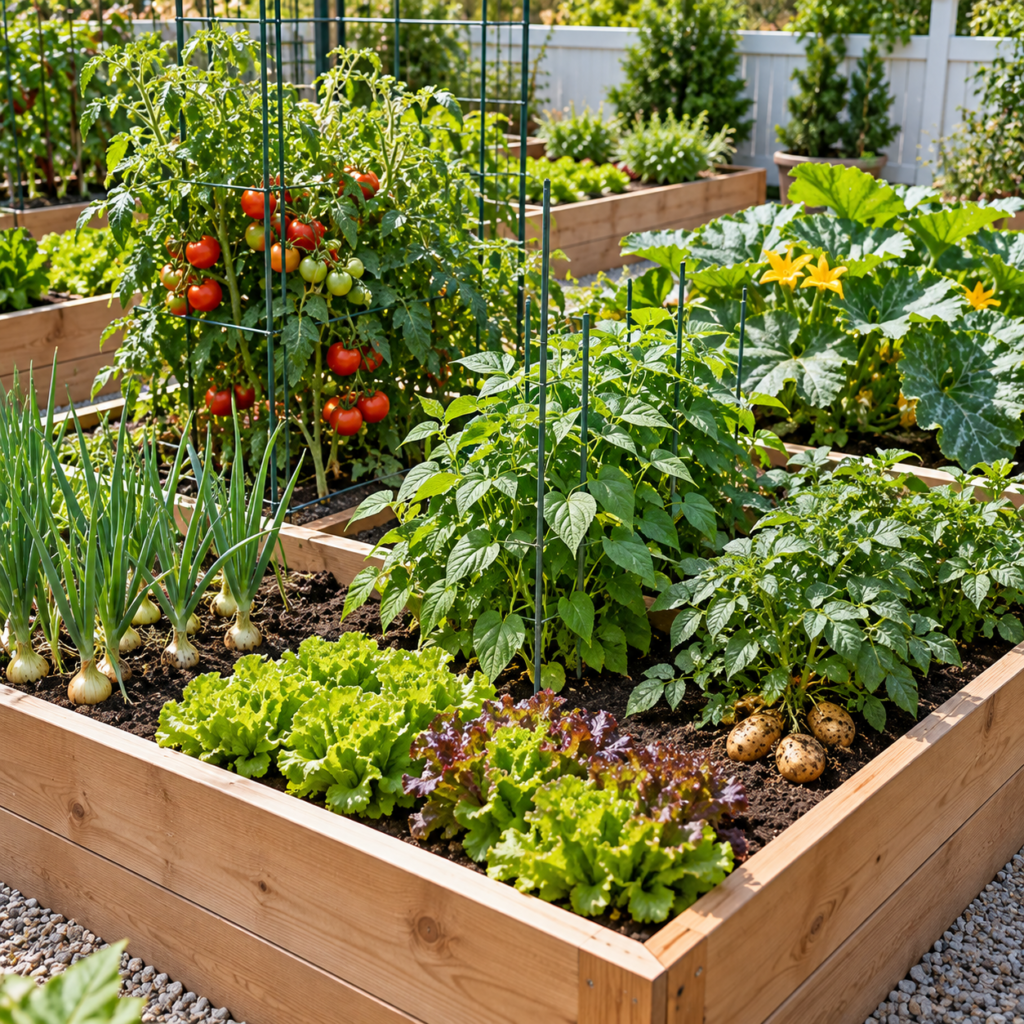
Onions and beans are frequently listed as incompatible companion plants.
West Virginia University Extension identifies onions and beans as a pairing that may negatively affect bean growth.
However, the strength of this interaction can vary with growing conditions, spacing, and crop varieties.
There is limited controlled research establishing that every onion-and-bean combination will perform poorly.
For a small raised bed, separating these crops is a reasonable precaution when space allows.
If you choose to grow them together, maintain adequate spacing and compare their growth with plants in separate sections.
Corn and tomatoes are both vigorous warm-season crops.
When planted too closely, tall corn stalks may shade tomato plants and compete for water and nutrients.
Both crops also require substantial growing space.
Some pests, including certain caterpillar species, can affect both crops.
The main concern is not that corn chemically harms tomatoes. Instead, their growth habits and management requirements can make close planting inconvenient.
Place tall crops where they will not block sunlight from neighboring vegetables.
Pumpkin vines can spread several feet beyond their original planting location.
Potatoes also require adequate space for root and tuber development.
When planted in the same small raised bed, sprawling pumpkin foliage may cover potato plants and make harvesting difficult.
Both crops require appropriate soil moisture and nutrients, but their management needs are not identical.
For compact gardens, pumpkins are often better grown in a separate bed or allowed to trail into a designated open area.
The following table summarizes combinations that may create practical problems in raised beds.
| Vegetable Combination | Main Concern | Recommended Approach |
|---|---|---|
| Tomatoes + Potatoes | Shared disease susceptibility | Separate when practical and monitor disease |
| Onions + Beans | Traditionally reported growth interference | Use separate sections if space allows |
| Onions + Peas | Possible growth interference | Trial separately or provide spacing |
| Corn + Tomatoes | Shade, competition, some shared pests | Avoid overcrowding |
| Pumpkins + Potatoes | Sprawling growth and resource competition | Grow in separate beds |
| Large Tomatoes + Lettuce | Excessive shade in poorly planned layouts | Adjust spacing and seasonal timing |
These are planting cautions, not universal biological prohibitions. Outcomes depend on plant variety, spacing, climate, and management.
In raised beds, overcrowding is often a bigger problem than planting the supposedly wrong vegetables together.
Closely spaced plants compete for sunlight, moisture, and nutrients.
Dense foliage can also reduce airflow, creating conditions favorable to some plant diseases.
Before combining vegetables, compare their mature sizes rather than their seedling dimensions.
A small tomato transplant may eventually occupy several square feet.
Likewise, cucumbers and squash can spread far beyond their original planting positions.
Use trellises, appropriate spacing, and regular pruning where suitable.
For better soil structure and root development, read How to Prevent Soil Compaction in Raised Garden Beds.
Different vegetables have different temperature and moisture requirements.
Spinach and peas generally prefer cooler growing conditions, while peppers and eggplants perform best in warmer weather.
Combining crops with very different seasonal requirements can complicate planting schedules.
Watering needs also matter.
A vegetable requiring consistently moist soil may not grow well beside a crop managed under significantly drier conditions.
Choose combinations based on climate, sunlight, soil conditions, and irrigation needs.
For planting preparation, see How to Start Seeds Directly in a Raised Garden Bed.
Start by listing the vegetables you want to grow.
Check each crop’s mature height, recommended spacing, planting season, and sunlight requirements.
Place taller plants where they will not shade smaller crops unnecessarily.
Keep sprawling vegetables near bed edges or provide suitable support structures.
Group crops with compatible watering requirements, and avoid repeatedly planting closely related crops in the same soil when disease pressure is a concern.
For larger vegetables, fewer healthy plants often produce better results than an overcrowded bed.
If drainage problems affect your planting layout, explore How to Improve Drainage Without Rebuilding Your Raised Garden Bed.
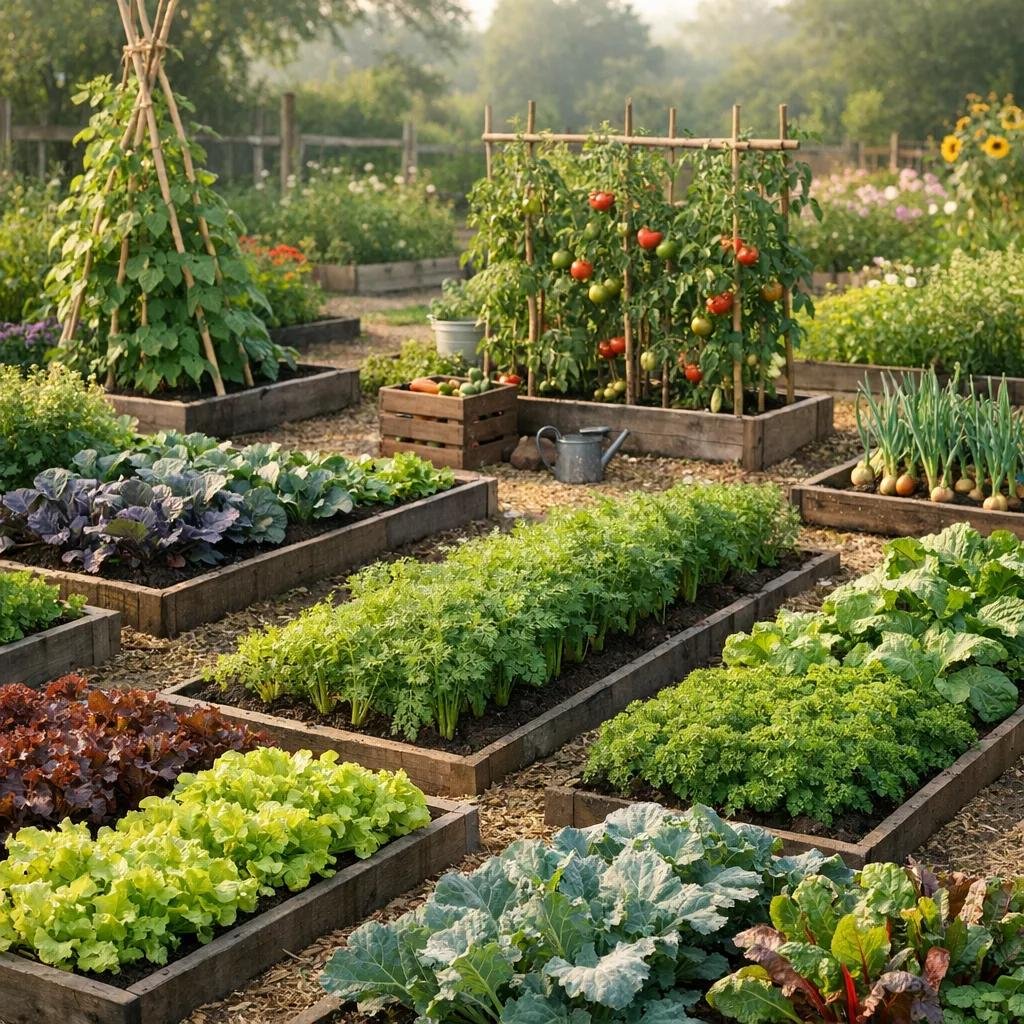
There are few vegetable combinations that must never be planted together under every circumstance.
Some pairings, such as tomatoes and potatoes, deserve caution because of shared diseases. Others create problems mainly through overcrowding, shading, or competing resource needs.
Traditional companion planting charts can provide useful ideas, but they should not replace sound horticultural practices.
For successful raised-bed gardening, prioritize appropriate spacing, healthy soil, sufficient sunlight, and compatible growing conditions.
A well-planned garden is more valuable than following a long list of unsupported planting rules.