Newsletter Subscribe
Enter your email address below and subscribe to our newsletter

Raised Bed Gardening Made Simple
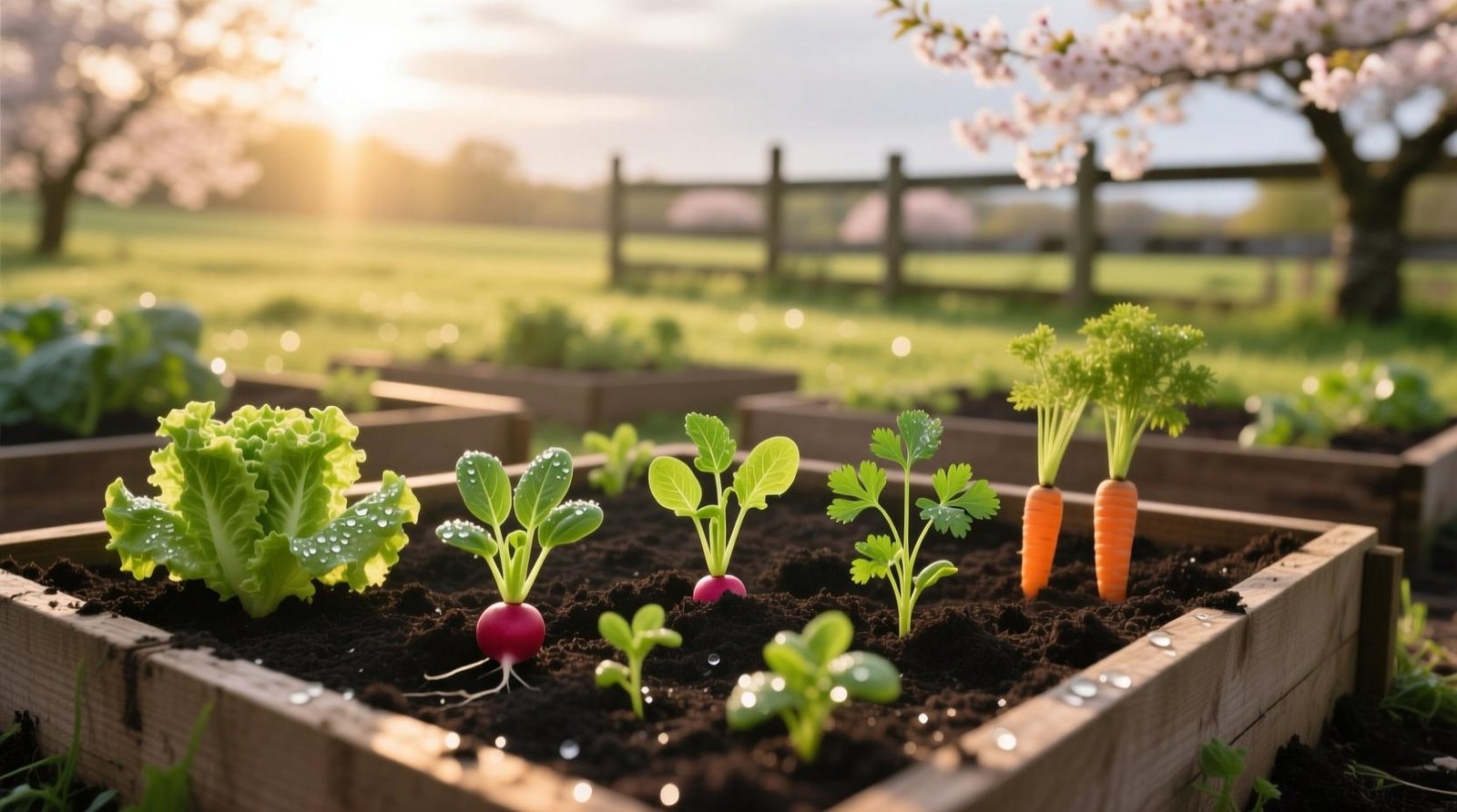
Starting seeds directly in a raised garden bed is one of the simplest ways to grow vegetables at home. Instead of starting seedlings indoors and transplanting them later, you sow seeds directly into the soil where they will mature.
This method, known as direct sowing, works particularly well for carrots, radishes, beans, peas, and many leafy greens.
Raised beds offer several advantages, including improved soil management, convenient planting access, and better control over spacing.
However, successful germination depends on choosing suitable crops, preparing the soil, and maintaining consistent moisture.
Here’s how to get started.
Not every vegetable benefits equally from direct sowing.
Root vegetables such as carrots and radishes are excellent candidates because transplanting can disturb their developing roots.
Beans, peas, spinach, lettuce, and beets are also commonly grown from seeds planted directly outdoors.
Warm-season vegetables, including cucumbers and squash, can be direct-sown once soil temperatures are suitable.
Tomatoes and peppers are often started indoors in cooler climates because they require a longer growing season.
Before planting, check your local frost dates and the temperature requirements printed on each seed packet.
Healthy soil provides the foundation for successful seed germination.
Start by removing weeds, old plant debris, and large stones from the planting area.
Gently loosen the upper soil layer with a hand fork, avoiding unnecessary disturbance of the deeper soil structure.
Add finished compost if the soil needs organic matter, then rake the surface until it is reasonably smooth.
The soil should feel loose and crumbly rather than sticky or compacted.
Avoid working the bed when the soil is excessively wet, as this can damage its structure.
For additional soil preparation advice, read How to Prevent Soil Compaction in Raised Garden Beds.
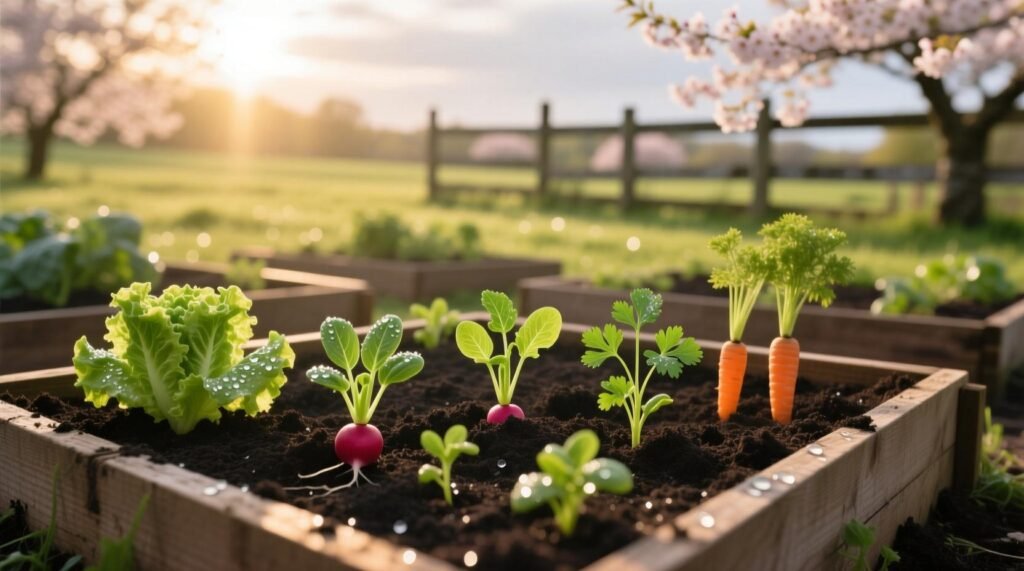
Soil temperature affects how quickly seeds germinate.
Cool-season crops such as peas, spinach, and radishes can often be planted earlier than warm-season vegetables.
Beans, cucumbers, and squash generally need warmer soil for reliable germination.
A soil thermometer provides a more dependable measurement than air temperature alone.
Check the seed packet for the recommended planting temperature.
If conditions are too cold, waiting a little longer may improve germination and reduce the risk of seed rot.
Planting depth is one of the most important factors in direct sowing.
Seeds buried too deeply may struggle to reach the surface, while shallow seeds can dry out or wash away.
Always follow the seed packet’s instructions.
As a general guideline, many seeds are planted at approximately twice their width, although some require very shallow coverage or light exposure.
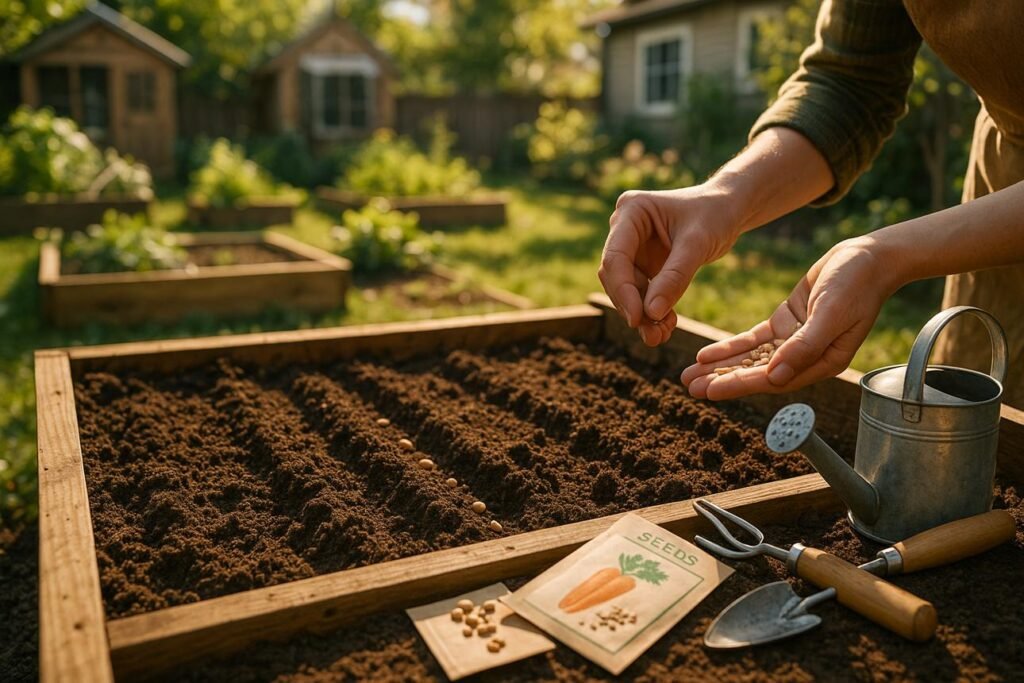
Use your finger, a ruler, or a small gardening tool to create shallow planting furrows.
Place the seeds carefully, cover them with fine soil, and gently firm the surface to improve seed-to-soil contact.
The following table provides approximate planting depths and spacing for popular raised-bed vegetables.
| Vegetable | Planting Depth | Final Plant Spacing | Best Planting Season |
|---|---|---|---|
| Carrots | ¼ inch | 2–3 inches | Cool season |
| Radishes | ½ inch | 1–2 inches | Cool season |
| Lettuce | ⅛–¼ inch | 6–12 inches | Cool season |
| Spinach | ½ inch | 3–6 inches | Cool season |
| Bush beans | 1 inch | 3–6 inches | Warm season |
| Peas | 1 inch | 2–3 inches | Cool season |
| Beets | ½ inch | 3–4 inches | Cool season |
These are general gardening guidelines. Actual planting depth and spacing depend on the variety, growing conditions, and seed supplier recommendations.
Seeds need consistent moisture to germinate.
After planting, water gently using a watering can with a fine rose or a hose attachment designed for delicate seedlings.
Avoid strong water pressure, which can displace seeds or create channels in the soil.
During germination, keep the seed zone evenly moist without making it waterlogged.
Raised beds can dry faster than surrounding garden soil, particularly during warm or windy weather.
Check moisture regularly by touching the upper soil layer.
If water pools or drains poorly, investigate the soil condition before continuing heavy irrigation.
For related advice, explore How to Improve Drainage Without Rebuilding Your Raised Garden Bed.
Small seeds are difficult to space perfectly.
Once seedlings emerge, you may notice several growing too close together.
Thinning gives the remaining plants enough room to develop healthy roots and leaves.
Wait until seedlings are established enough to identify, then follow the recommended final spacing.
For delicate root crops, snipping unwanted seedlings at soil level can reduce disturbance to neighboring roots.
Avoid leaving plants overcrowded, as competition for light, water, and nutrients may reduce growth.
Newly emerged seedlings are vulnerable to insects, birds, strong sunlight, and sudden temperature changes.
Lightweight row covers can protect crops from some pests and provide limited weather protection.
Make sure covers do not overheat plants, and remove or manage them when pollination is required.
Inspect seedlings regularly for damage, weeds, and signs of moisture stress.
Once plants become established, adjust watering frequency to encourage healthy root development.
Direct sowing makes succession planting especially convenient.
Instead of planting every seed at once, sow small batches of fast-growing vegetables at suitable intervals.
For example, radishes and certain lettuce varieties can be planted repeatedly during favorable growing conditions.
This approach can provide a more continuous harvest and reduce the likelihood of having too much produce ready at once.
When planning later crops, consider mature plant size, seasonal temperatures, and available growing space.
For more crop-specific guidance, see How to Grow Onions in Raised Garden Beds From Sets or Seeds.
Starting seeds directly in a raised garden bed is an affordable and practical way to grow vegetables.
The most important steps are selecting suitable crops, preparing loose soil, planting at the correct depth, and maintaining consistent moisture.
Pay attention to soil temperature, thin overcrowded seedlings, and protect young plants while they establish.
With careful preparation and regular observation, direct sowing can become a reliable part of your raised-bed gardening routine.