Newsletter Subscribe
Enter your email address below and subscribe to our newsletter
Raised Bed Gardening Made Simple
Category: Raised Bed Guides
Suggested URL: /how-deep-should-a-raised-garden-bed-be/
Primary Keyword: How Deep Should a Raised Garden Bed Be
SEO Title: How Deep Should a Raised Garden Bed Be? A Practical Guide
Meta Description: How deep should a raised garden bed be? Learn the ideal soil depth for tomatoes, carrots, lettuce, herbs and other vegetables, plus tips for choosing the right bed height.
One of the first questions gardeners ask when planning a raised bed is surprisingly simple: How deep does it really need to be?
You will find raised garden beds ranging from less than 8 inches to more than 30 inches tall. That does not mean deeper is always better.
The right depth depends on the plants you want to grow, the ground underneath the bed, your preferred gardening height, and how much soil you are prepared to buy.
Understanding these factors before building or purchasing your bed can save money and create better growing conditions for your plants.
First, it helps to separate two ideas that are often confused.
Bed height is the distance from the ground to the top of the raised bed.
Soil depth is the actual amount of growing medium available to plant roots.
A 24-inch-tall garden bed does not necessarily need 24 inches of premium garden soil. Depending on the design and crops, part of a very deep bed may contain other suitable organic filling materials beneath the main growing layer.
What plants care about most is having enough healthy soil for their root systems.
A shallow raised bed can be surprisingly productive.
Beds around 6–8 inches deep are suitable for many plants with relatively shallow root systems, particularly when the bed is placed directly over healthy native soil.
Good choices include:
Shallow beds also cost less to fill, making them attractive for gardeners working with a limited budget.
However, they can dry out more quickly during warm weather because they hold a smaller volume of soil.
A bed around 10–12 inches deep is a useful middle ground for general gardening.
It provides more growing medium than a very shallow frame while keeping soil requirements manageable.
This depth can accommodate many everyday garden crops, especially when the bed has an open bottom over good soil.
It is a practical option if you want to grow combinations of leafy greens, herbs, bush beans, smaller peppers, and seasonal vegetables.
For many first-time gardeners, 12 inches is a sensible starting point.
If you want one raised bed that can handle a wide variety of vegetables, consider approximately 12–18 inches of growing depth.
The additional soil volume provides several benefits.
Roots have more room to spread, the bed can retain more moisture, and gardeners have greater flexibility when changing crops from season to season.
This depth works particularly well for:
Peppers – Benefit from additional root space as plants mature.
Beets – Need loose soil for proper root development.
Carrots – Deeper, stone-free soil helps produce straighter roots.
Bush beans – Grow comfortably in a general-purpose vegetable bed.
Cucumbers – Can grow well when paired with vertical support.
A 12–18-inch bed is therefore a strong choice if you have not decided exactly what you will plant every year.
Tomatoes are large, vigorous plants and benefit from generous root space.
For a dedicated tomato garden, a bed around 18–24 inches deep can provide a substantial growing area, particularly if the surface underneath is poor or inaccessible.
A deeper bed also holds more soil, which can help buffer changes in moisture during hot weather.
However, depth alone will not produce healthy tomatoes.
Tomatoes also need plenty of sunlight, consistent watering, appropriate nutrition, adequate spacing, and strong cages or trellises.
Think of extra depth as one part of the growing system rather than a guarantee of bigger harvests.
The surface underneath your garden makes a major difference.
A raised bed sitting over open soil allows plant roots to potentially continue growing below the constructed bed.
Concrete, paving, rooftops, and other solid surfaces create a completely different situation.
Roots cannot extend beyond the contained growing medium.
For beds installed over hard surfaces, choosing sufficient depth becomes much more important.
You must also pay close attention to drainage. Water needs a reliable way to escape so that roots are not left sitting in saturated soil.
For vegetable gardens over hard surfaces, deeper containers are generally more flexible than very shallow ones.
Not automatically.
A 24-inch or taller bed offers one obvious advantage: less bending.
The higher working surface can make planting, weeding, and harvesting more comfortable.
Tall beds can also create an attractive architectural feature in a landscaped backyard.
But there are trade-offs.
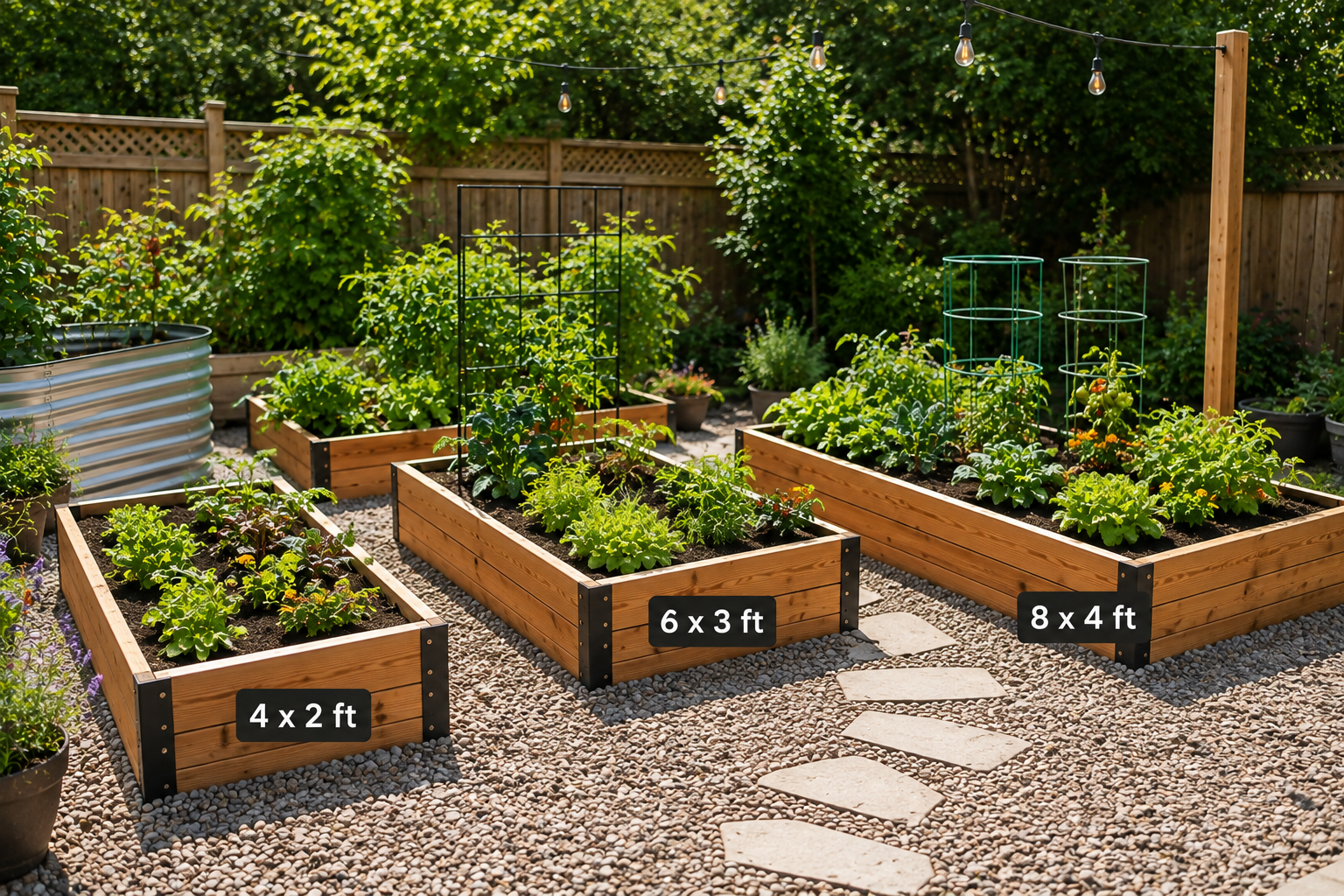
An 8 × 4-foot bed that is 2 feet deep has a total volume of:
8 × 4 × 2 = 64 cubic feet
That is a considerable amount of material.
Before choosing a very tall bed, ask whether your plants actually require that much soil or whether you mainly want the additional height for comfort.
Depth affects watering too.
Shallow beds have less soil available to store moisture and may need closer monitoring during dry summer conditions.
Deeper beds contain a larger soil volume, but watering needs still depend on weather, plant size, soil composition, and drainage.
Instead of watering according to a rigid calendar, check the soil itself.
Adding a layer of organic mulch around established plants can also help reduce surface evaporation.
| Bed Depth | Best Uses |
|---|---|
| 6–8 inches | Lettuce, spinach, radishes, herbs |
| 10–12 inches | General light vegetable gardening |
| 12–18 inches | Peppers, carrots, beets, beans, cucumbers |
| 18–24 inches | Tomatoes, larger plants, flexible vegetable gardens |
| 24+ inches | Comfortable working height and deep garden designs |
These numbers should be treated as practical guidelines rather than strict rules. Plant varieties and underlying soil conditions can change what works best.
Before buying your raised bed, answer four questions:
What will I grow?
Leafy greens need less depth than a garden dominated by large vegetables.
What is underneath the bed?
Open soil gives roots more options than concrete.
How much soil can I afford?
Increasing depth can dramatically increase filling costs.
How much bending is comfortable?
A taller bed may be worthwhile even when plants do not require the full height.
Balancing these considerations is better than simply buying the deepest model available.
For most general backyard vegetable gardens, 12–18 inches is a practical and versatile raised-bed depth.
Gardeners primarily growing lettuce, herbs, radishes, and other smaller crops can often use shallower beds, particularly over healthy native soil.
If you plan to grow tomatoes, want more root space, garden over a hard surface, or prefer a taller working height, an 18–24-inch bed may make more sense.
Ultimately, there is no single perfect depth.
Choose your raised garden bed around the plants you actually want to grow and the conditions in your backyard. That approach can save money on unnecessary soil while giving your vegetables the space they need to develop into healthy, productive plants.