Newsletter Subscribe
Enter your email address below and subscribe to our newsletter


Raised Bed Gardening Made Simple
Category: Grow Your Own
Suggested URL: /best-vegetables-for-raised-garden-beds/
Primary Keyword: Best Vegetables to Grow in Raised Garden Beds
SEO Title: 12 Best Vegetables to Grow in Raised Garden Beds
Meta Description: Discover 12 of the best vegetables to grow in raised garden beds, from tomatoes and lettuce to carrots and cucumbers, plus practical tips for planning a productive backyard garden.
Raised garden beds make it possible to grow an impressive amount of food in a relatively small backyard.
Because you can control the growing area more carefully, raised beds are particularly useful for vegetables that benefit from loose soil, consistent care, and organized spacing.
But which vegetables should you plant?
The best choices aren’t necessarily exotic varieties. Many familiar vegetables perform extremely well in raised beds and can provide harvests throughout spring, summer, and fall.
Here are 12 vegetables worth considering for your next raised-bed garden.
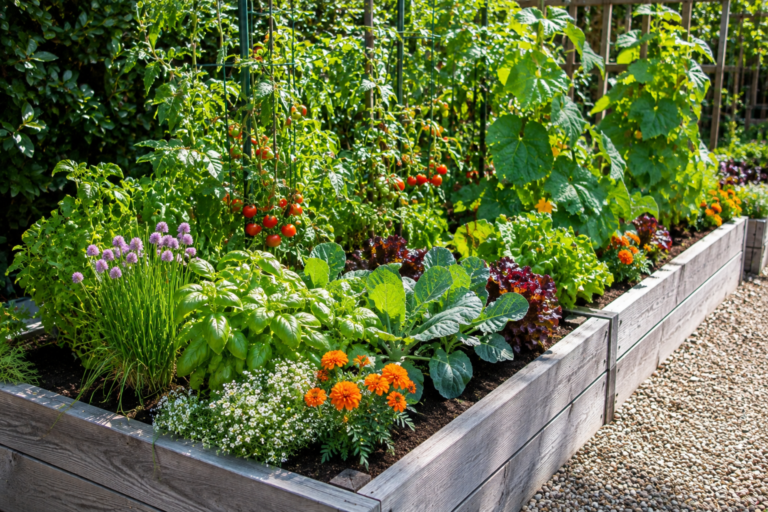
Tomatoes are one of the most rewarding crops for a sunny raised bed.
Their upright growth makes excellent use of vertical space, especially when plants are supported with cages or stakes.
Indeterminate tomatoes continue growing throughout the season and can become quite large, so position them where they won’t shade shorter crops.
Cherry tomatoes are particularly appealing for backyard gardeners because they can produce generously over a long period.
Give plants adequate spacing to improve airflow and make harvesting easier.
Lettuce is an excellent choice when you want quick results without sacrificing much space.
Leaf lettuce can be harvested gradually by removing outer leaves while allowing the center to continue growing.
It also fits easily between larger plants early in the season.
Try growing several varieties with different colors and leaf textures. A mixture of green and red lettuce can make a raised vegetable bed surprisingly decorative.
Because lettuce generally prefers cooler conditions, it is especially useful for spring and fall gardens.
Raised beds are ideal for carrots because you have more control over the soil surrounding their roots.
Carrots grow best when they can develop downward without encountering large stones or severely compacted ground.
Choose varieties according to the available growing depth.
Shorter varieties can work well in compact beds, while longer carrots require additional root space.
Instead of transplanting seedlings, carrots are generally started directly where they will grow.
If patience isn’t your strength, plant radishes.
Many varieties mature relatively quickly, making them excellent for filling temporary gaps between slower-growing vegetables.
Because they occupy limited space, you can sow small batches at intervals rather than planting the entire crop at once.
This approach can provide a more continuous harvest.
Radishes also work well in early-season gardens before larger summer vegetables need the space.
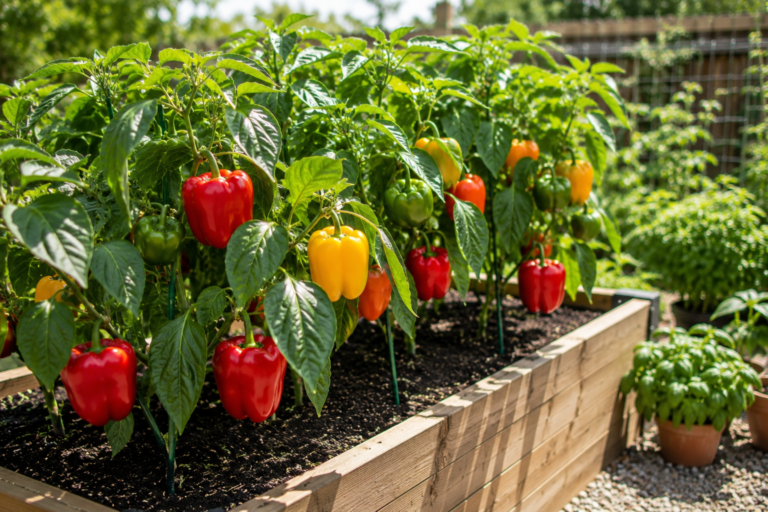
Pepper plants have a relatively tidy growth habit compared with sprawling vegetables, making them useful in organized raised beds.
Both sweet peppers and hot peppers can be grown successfully where conditions are warm and sunny.
Place them where neighboring plants won’t block their light.
Since pepper plants can become loaded with fruit later in the season, small stakes or supports may help prevent branches from bending.
Their compact footprint makes peppers especially useful for smaller backyard gardens.
Cucumbers can consume a surprising amount of horizontal space if allowed to trail across the soil.
The solution is simple: grow them vertically.
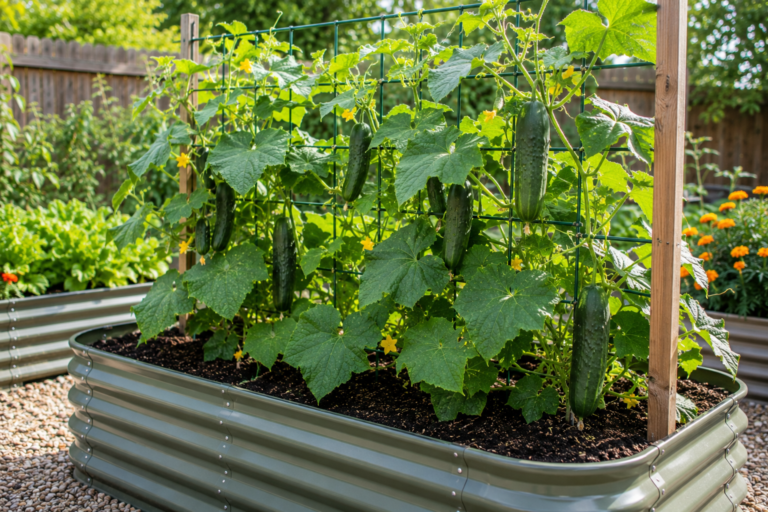
Install a sturdy trellis along one side of the raised bed and guide the vines upward.
This keeps much of the growing area available for other crops and can make cucumbers easier to find during harvest.
Vertical vines can also create shade, so consider their position relative to sun-loving plants.
Bush beans are productive without requiring a large trellis.
Their compact form makes them easy to arrange in rows or blocks inside a raised bed.
Beans are also useful when planning successive crops. Once an early vegetable has finished, beans may be able to occupy the newly available space during warm weather.
Harvest regularly when pods reach the desired size.
Frequent picking can encourage continued production on many varieties.
Kale deserves a place in raised beds because it can remain productive over an extended period.
Rather than harvesting the entire plant, gardeners can remove mature outer leaves and allow younger growth to continue developing.
Kale plants eventually become fairly substantial, so don’t crowd seedlings too closely.
Their large textured leaves can also add visual interest to an edible garden, particularly when combined with compact lettuces and herbs.
Beets provide two potential harvests from one small area.
The roots are the obvious crop, but young beet greens are also edible.
Loose raised-bed soil helps the roots develop without fighting heavily compacted ground.
When seedlings are crowded, thinning is important. Giving individual plants enough space encourages better root development.
Beets can be particularly useful during the cooler parts of the growing season.
Swiss chard combines productivity with appearance.
Varieties with brightly colored stems can make an edible raised bed look almost ornamental.
Plants can produce leaves repeatedly when harvested carefully from the outside.
Chard also handles warm conditions better than some tender salad greens, making it useful when lettuce begins struggling with summer temperatures.
A few healthy plants can provide plenty of leaves without occupying an entire bed.
Green onions are excellent space fillers.
Their narrow, upright growth allows them to fit along bed edges and between larger vegetables without creating much shade.
They are especially useful if you want to maximize production from every section of a small raised bed.
Rather than planting one enormous crop, consider sowing smaller groups at different times.
This can extend your harvest instead of producing more onions than you can use at once.
Zucchini can grow successfully in raised beds—but give it room.
A mature zucchini plant can become much larger than its seedling suggests.
Instead of planting several close together, dedicate a corner or larger section to one healthy plant.
Position it so its broad leaves don’t overwhelm smaller vegetables.
If your raised bed is particularly small, compact or container-oriented varieties may be easier to manage.
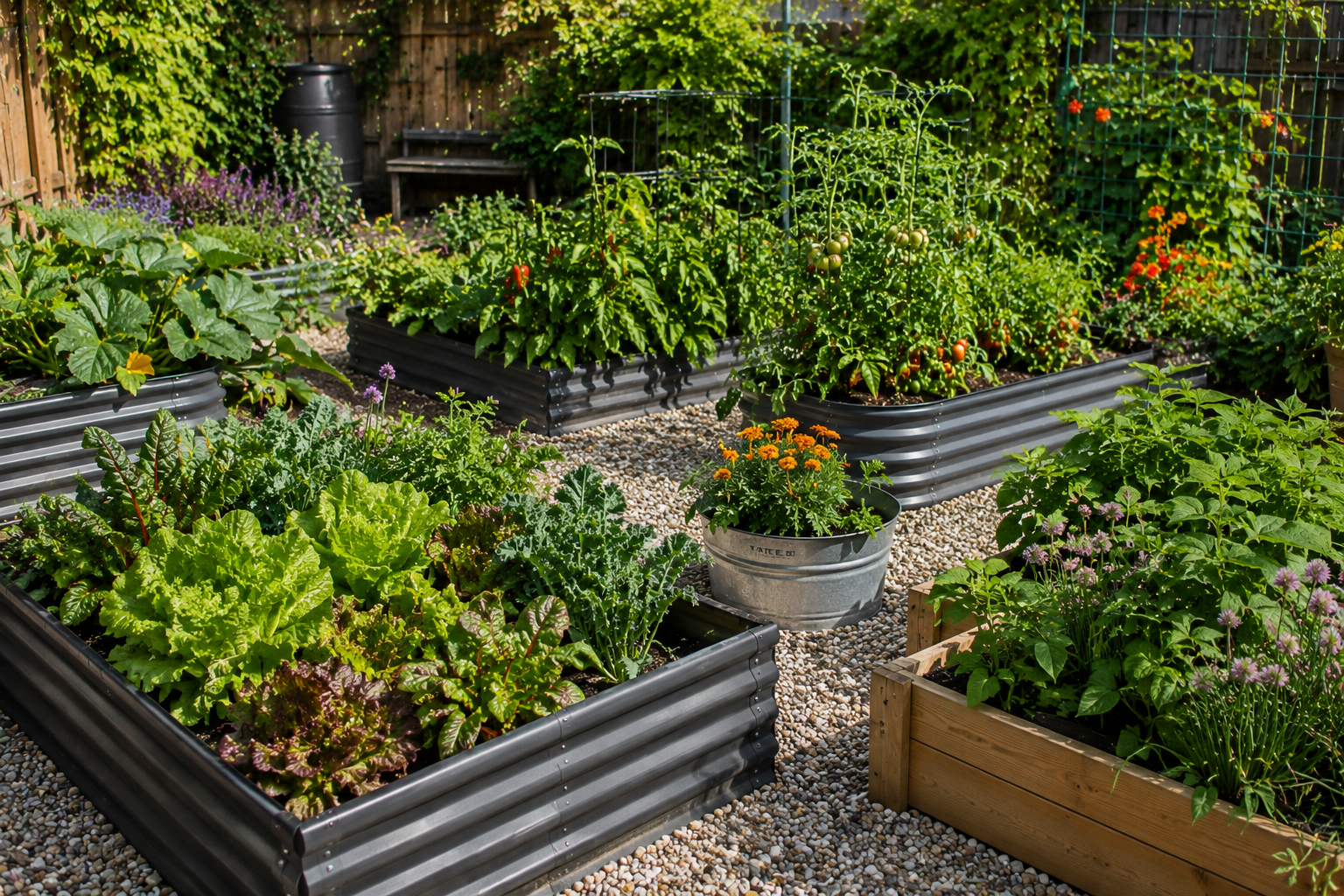
The key to a productive mixed bed is arranging vegetables according to their mature size rather than their size when planted.
Tall crops such as tomatoes and trellised cucumbers should be positioned so they don’t unnecessarily shade smaller vegetables.
Medium-sized peppers, kale, and chard can occupy the middle sections.
Compact crops such as radishes, green onions, and lettuce can fill smaller gaps and bed edges.
You can also think seasonally.
Early lettuce and radishes may finish before warm-season tomatoes reach their full size, allowing the same growing area to serve multiple crops during one year.
Raised beds can grow far more than a single row of tomatoes.
By combining vegetables with different heights, growth habits, and harvest periods, you can turn a relatively small growing area into a productive backyard food garden.
For beginners, tomatoes, lettuce, carrots, radishes, peppers, cucumbers, bush beans, kale, beets, Swiss chard, green onions, and zucchini provide an excellent starting point.
You don’t need to plant all twelve at once.
Start with the vegetables your household actually enjoys eating, learn how they behave in your garden, and expand from there.
A thoughtfully planned raised bed can provide fresh vegetables across multiple seasons while making excellent use of even a modest backyard space.