Newsletter Subscribe
Enter your email address below and subscribe to our newsletter


Raised Bed Gardening Made Simple
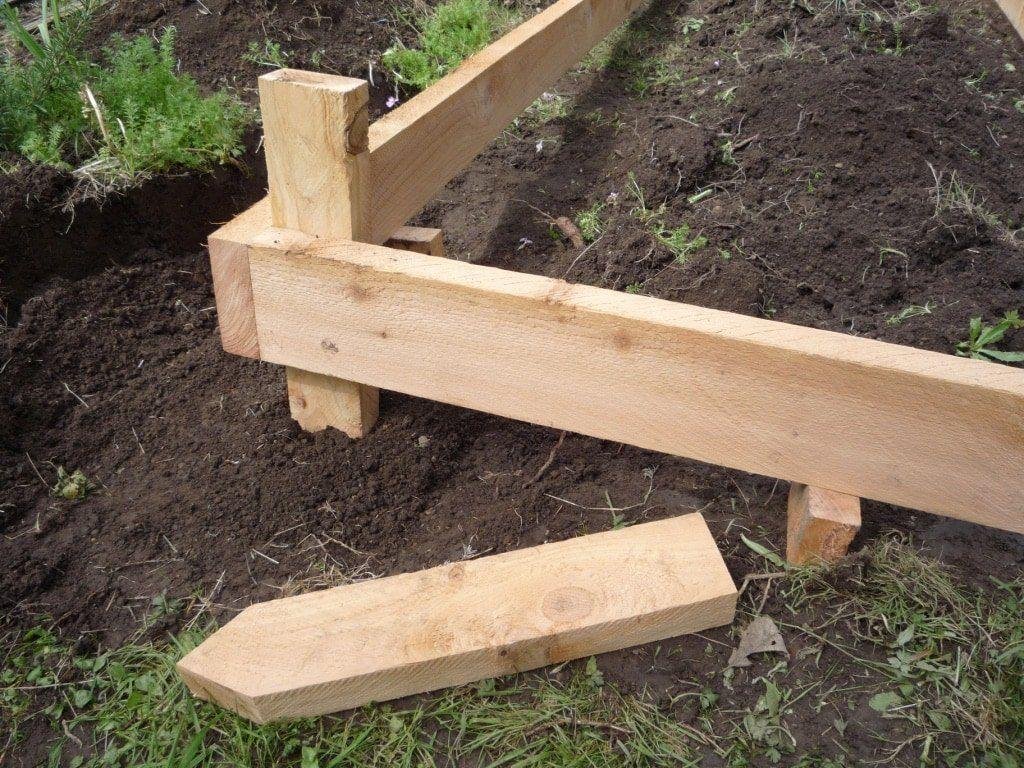
Building a raised garden bed on uneven ground can be challenging, especially when the soil surface slopes, dips, or contains loose material. Without proper preparation, a wooden or metal frame may lean, twist, or settle unevenly after being filled with soil.
Anchoring can help keep a raised bed in position, but it isn’t a substitute for a stable foundation.
The right method depends on the ground conditions, bed size, construction material, and whether the structure is installed on soil, gravel, or a hard surface.
Here’s how to secure a raised garden bed on uneven ground and create a stable growing area.
Before choosing an anchoring method, inspect the installation site.
Look for soft soil, exposed roots, loose gravel, shallow depressions, and signs of erosion.
Use a long spirit level or a level string to identify differences in ground height.
A small uneven area may require only minor surface preparation. A more pronounced slope may need a stepped foundation or a different bed design.
Avoid installing a heavy raised bed on unstable fill or soil that is actively moving downhill.
For a detailed guide to preparing the base, read our article on how to level the ground for a raised garden bed.
Different raised bed designs require different types of support.
Low wooden beds on firm ground may be stabilized with properly installed corner stakes.
Larger frames may need additional bracing to prevent the boards from bowing outward under soil pressure.
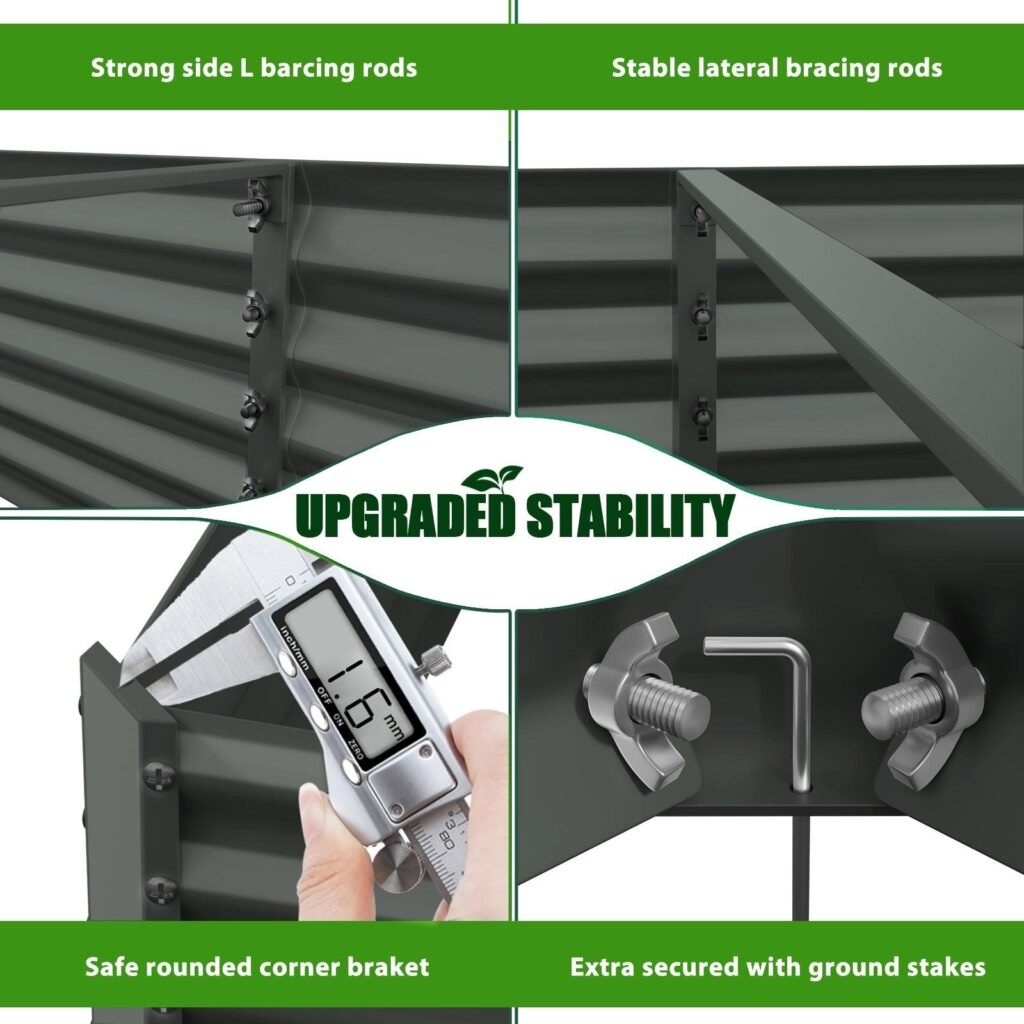
Some metal raised bed kits use internal crossbars or braces rather than separate ground anchors.
Elevated planters with legs require a stable, load-bearing base and may need anchoring according to the manufacturer’s instructions.
Always consider the weight of saturated soil, not just the empty frame.
| Anchoring Method | Best Application | Main Advantage | Important Limitation |
|---|---|---|---|
| Wooden corner stakes | Low wooden beds on firm soil | Simple and affordable | May decay over time |
| Metal ground stakes | Compatible frames on suitable soil | Strong positioning support | Must suit soil conditions |
| Internal cross braces | Long wooden or metal beds | Reduces outward bowing | Does not correct unstable ground |
| Level compacted foundation | Minor surface irregularities | Improves even support | Not suitable for unstable slopes |
| Manufacturer-approved brackets | Elevated planters or specialized kits | Matches intended design | Requires correct installation |
| Engineered foundation | Tall beds or significant slopes | Addresses structural loads | May require professional design |
The safest choice depends on the frame, soil conditions, and site exposure.
Once you’ve selected the location, remove weeds, debris, and loose surface material.
For minor unevenness, carefully adjust the ground beneath the frame until it rests evenly.
Use a spirit level to check the top edges in both directions.
Avoid placing small loose stones beneath individual corners as the only support. They can shift when the soil becomes wet.
If you need to excavate, work carefully and avoid undermining nearby structures or retaining walls.
The frame should sit securely before you add soil.
For a low wooden raised bed, corner stakes can help limit movement.
Position stakes beside the interior or exterior corners, depending on the frame design.
Drive them into firm, suitable soil using an appropriate tool.
Attach the stakes to the wooden boards with corrosion-resistant exterior fasteners.
Check that the stakes are straight and the frame remains level.
Do not assume a particular stake length or depth will work everywhere. Requirements depend on ground conditions, bed dimensions, and expected loads.
For large or tall beds, seek a more robust structural design.
Long raised beds can experience significant outward pressure when filled with wet soil.
Even if the corners are secure, unsupported sidewalls may gradually bow.
Internal cross braces, tie rods, or properly designed intermediate supports can help maintain the frame’s shape.
Follow the manufacturer’s instructions for metal raised bed kits.
For wooden frames, select braces and fasteners suitable for outdoor use.
Anchoring the corners alone may not prevent sidewall deformation.
Raised beds placed on gravel, patios, or concrete require a different approach.
Ground stakes may not be suitable when the surface is too shallow, loose, or impermeable.
For gravel installations, the underlying base must provide adequate support and drainage.
For concrete installations, use a planter or bed design intended for that surface. Any mechanical anchoring into concrete should use an appropriate system and account for utilities, waterproofing, and structural requirements.
Avoid drilling into patios or foundations without confirming that doing so is safe and permitted.
For more information about gravel installations, explore our guide on can you put a raised garden bed on gravel.
Before adding soil, inspect every corner and connection.
Confirm that the frame is level, braces are secure, and no part of the structure rocks under gentle pressure.
Fill the bed gradually with suitable growing soil.
Stop if the frame begins to twist, shift, or separate.
Remember that wet soil is substantially heavier than dry soil, so a frame that appears stable when empty may behave differently after watering.
Anchoring is not a one-time concern.
Rainfall, freeze-thaw cycles, soil settlement, and repeated watering can change ground conditions.
Check stakes, brackets, fasteners, and braces periodically.
Look for widening gaps, loose screws, tilted corners, or movement after storms.
Address minor problems before they develop into structural failures.
If the ground continues to settle or erode, investigate the underlying cause rather than simply adding more stakes.
One common mistake is trying to use anchors to correct a badly uneven foundation.
Another is relying on short stakes in loose or saturated soil.
Gardeners may also underestimate the pressure created by deep beds filled with wet soil.
Avoid using unsuitable fasteners, ignoring drainage, or attaching large trellises to frames that cannot safely support them.
For steep slopes or tall retaining-style beds, professional advice is the safer choice.
Anchoring a raised garden bed on uneven ground starts with proper site preparation.
Create a stable base, choose supports that match the frame, reinforce long sidewalls, and inspect connections regularly.
For simple low beds, corner stakes and appropriate bracing may be sufficient. More demanding installations require stronger foundations and carefully designed anchoring systems.
For more advice on raised bed construction, materials, and installation methods, explore our Raised Beds guides.