Newsletter Subscribe
Enter your email address below and subscribe to our newsletter


Raised Bed Gardening Made Simple
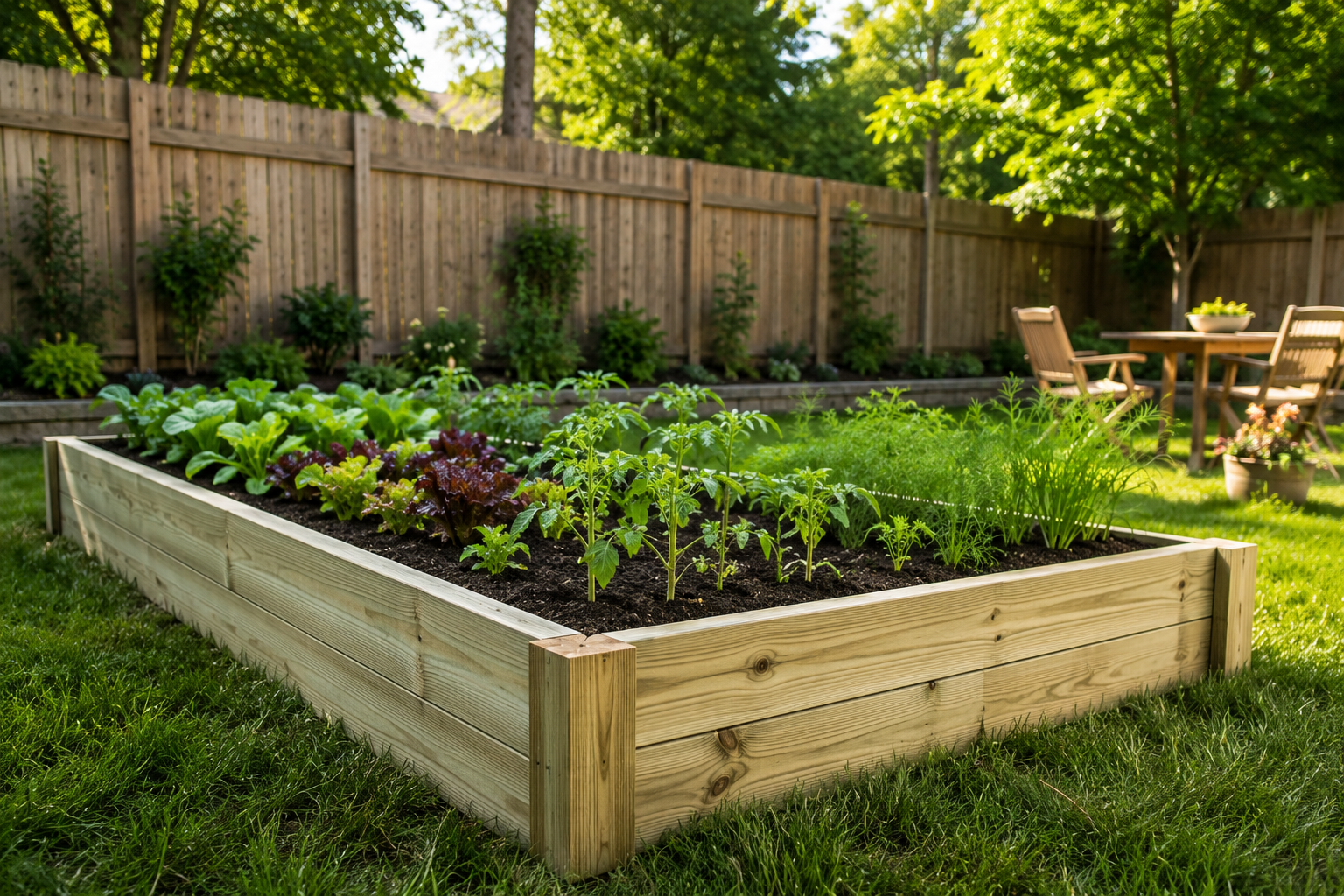
Building a raised garden bed directly on grass is a practical way to turn part of an existing lawn into a productive vegetable garden. Instead of removing large amounts of turf and digging deeply into the ground, you can create a new growing area above the lawn with relatively little excavation.
The key is to prevent grass from competing with your vegetables while giving the new bed enough growing depth, drainage, and stability.
With thoughtful preparation, a lawn can become the foundation for a productive raised garden bed.
Start by choosing the best part of your lawn for the new garden.
Most vegetables need several hours of direct sunlight, so observe the area throughout the day before building. Avoid locations that remain heavily shaded by buildings, fences, or large trees.
Drainage is also important.
Don’t place the bed in an area where water naturally collects after heavy rain. Although raised beds generally improve drainage compared with low-lying garden areas, a poorly chosen location can still create problems.
Think about accessibility as well.
A bed near a pathway, outdoor faucet, or frequently used part of the yard will be easier to maintain than one hidden in a distant corner.
Choose the dimensions before preparing the lawn.
A width of around 3 to 4 feet is convenient because you can usually reach the center from either side without stepping into the growing area.
The length is much more flexible.
For beginners, a smaller bed can be easier to manage and provides a good opportunity to understand how much space different vegetables actually require.
Leave enough space around the outside for walking, mowing, watering, and harvesting.
Use stakes, string, garden hose, or another simple marker to outline the bed.
Stand back and look at the shape from different angles.
This is the easiest time to adjust the position.
Check that the bed isn’t blocking a walkway or making it difficult to access other parts of the yard.
If you’re planning multiple raised beds, mark all of them before building the first one. This gives you a better idea of how much lawn will eventually be converted into garden space.
Mow the grass as short as practical before installing the bed.
Remove excess grass clippings from the area so you have a clean surface to work with.
You don’t necessarily need to remove every piece of turf.
The objective is to reduce the height of the grass and make it easier to suppress beneath the new growing area.
If the lawn contains aggressive weeds or invasive grasses, spend extra time dealing with them before construction.
Persistent plants are much easier to address before the bed is filled.
One of the most important steps is preventing grass from growing into the raised bed.
Several layers of plain, uncoated cardboard can be used as a temporary barrier beneath the growing area.
Overlap the pieces so there are no obvious gaps.
As the cardboard remains moist beneath the soil, it gradually breaks down while blocking light from the grass underneath.
Another option is to remove the turf completely, particularly if you’re dealing with aggressive grass or perennial weeds.
The right approach depends on the condition of the site.
Once the ground is prepared, assemble the raised bed frame.
Wood, galvanized steel, composite materials, and other suitable products can all work.
The frame needs to withstand the outward pressure created by the growing medium, especially after heavy rainfall.
Pay particular attention to the corners.
For larger or taller beds, additional supports may be necessary to prevent the sides from shifting or bowing.
A sturdy frame will save you from having to make structural repairs after the bed is already filled.
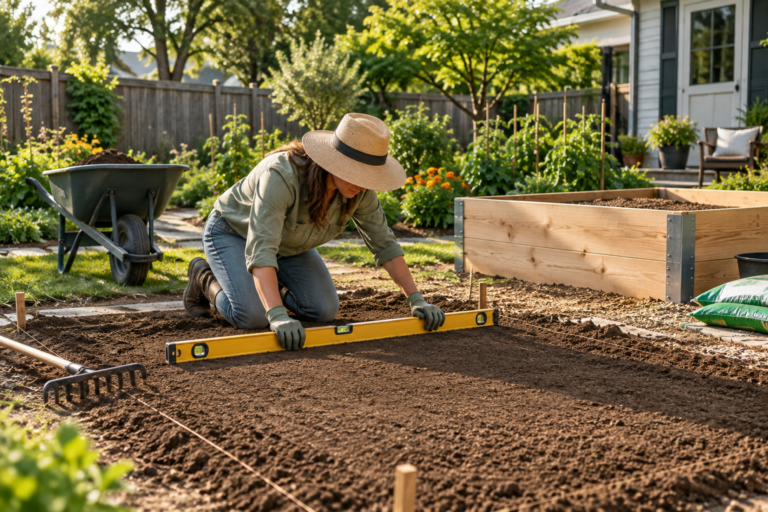
Before adding soil, check whether the frame sits reasonably level.
Use a spirit level across several sections of the top edge.
If one side is significantly higher, adjust the ground underneath the frame.
You don’t need laboratory-level precision, but a stable and reasonably even foundation makes the finished garden easier to maintain.
It also prevents soil from being noticeably deeper on one side.
Now add the growing medium.
The amount required depends on the dimensions and height of your raised bed.
For a deeper bed, you have more room for vegetable roots to develop without depending immediately on the soil beneath the lawn.
Use a quality growing mix suitable for vegetables rather than relying entirely on dense native soil.
A healthy growing medium should provide a balance between moisture retention, drainage, air space, and organic matter.
Don’t fill the bed completely to the very top.
Leave a small amount of space below the rim so watering doesn’t constantly wash soil over the sides.
After filling the raised bed, water the growing medium thoroughly.
Water slowly rather than flooding the surface.
As moisture moves through the material, small air pockets may disappear and the soil level can settle slightly.
Check the surface after several days.
If it has dropped considerably, add more growing material before planting.
This is easier to do now than after your vegetables have established roots.
The grass problem doesn’t completely disappear once the raised bed is built.
Grass growing outside the frame can spread toward the edges, especially if the surrounding lawn is vigorous.
Keep the perimeter trimmed regularly.
You can also create a defined pathway around the bed using mulch, gravel, pavers, or another suitable material.
A clean border makes mowing easier and reduces the chance of grass creeping into the growing area.
If you plan to grow climbing vegetables, install their supports before the plants become established.
Cucumbers, peas, pole beans, and some other crops can benefit from trellises or vertical structures.
Installing them early prevents you from disturbing roots later.
It also allows you to plan the position of taller crops so they don’t unnecessarily shade shorter vegetables.
A new raised bed can look surprisingly large when it is empty.
However, plants can become much larger than expected.
Check the mature size of every crop before planting.
Compact vegetables, herbs, and leafy greens can make good choices for smaller beds.
Larger crops should receive adequate spacing rather than being squeezed together simply to fill the garden.
Good spacing improves airflow and makes harvesting easier.
One mistake is building the bed before checking sunlight.
Another is making the bed too wide to reach comfortably.
Using poor-quality growing material can also create problems with drainage and plant growth.
It’s also important not to ignore the lawn underneath.
If aggressive grass is left uncontrolled, it may eventually find gaps around the edges or grow through inadequate barriers.
Finally, avoid filling the bed higher than necessary. A little space below the top edge helps keep soil and water contained.
Building a raised garden bed on grass doesn’t require completely removing your lawn.
With the right location, careful preparation, and an effective method for suppressing existing grass, you can create a productive growing area without extensive excavation.
Start by choosing a sunny, accessible location and marking the dimensions. Cut the grass short, deal with persistent weeds, and create an appropriate barrier before assembling the frame.
Then check the structure, add suitable growing material, and give the bed time to settle before planting.
The most important thing is to think about the garden as a complete system—not simply a box filled with soil.
Sunlight, drainage, access, plant spacing, grass control, and future maintenance all matter.
A well-planned raised bed built directly over a lawn can provide years of productive growing space while making much better use of an area that previously served only as grass.