Newsletter Subscribe
Enter your email address below and subscribe to our newsletter


Raised Bed Gardening Made Simple
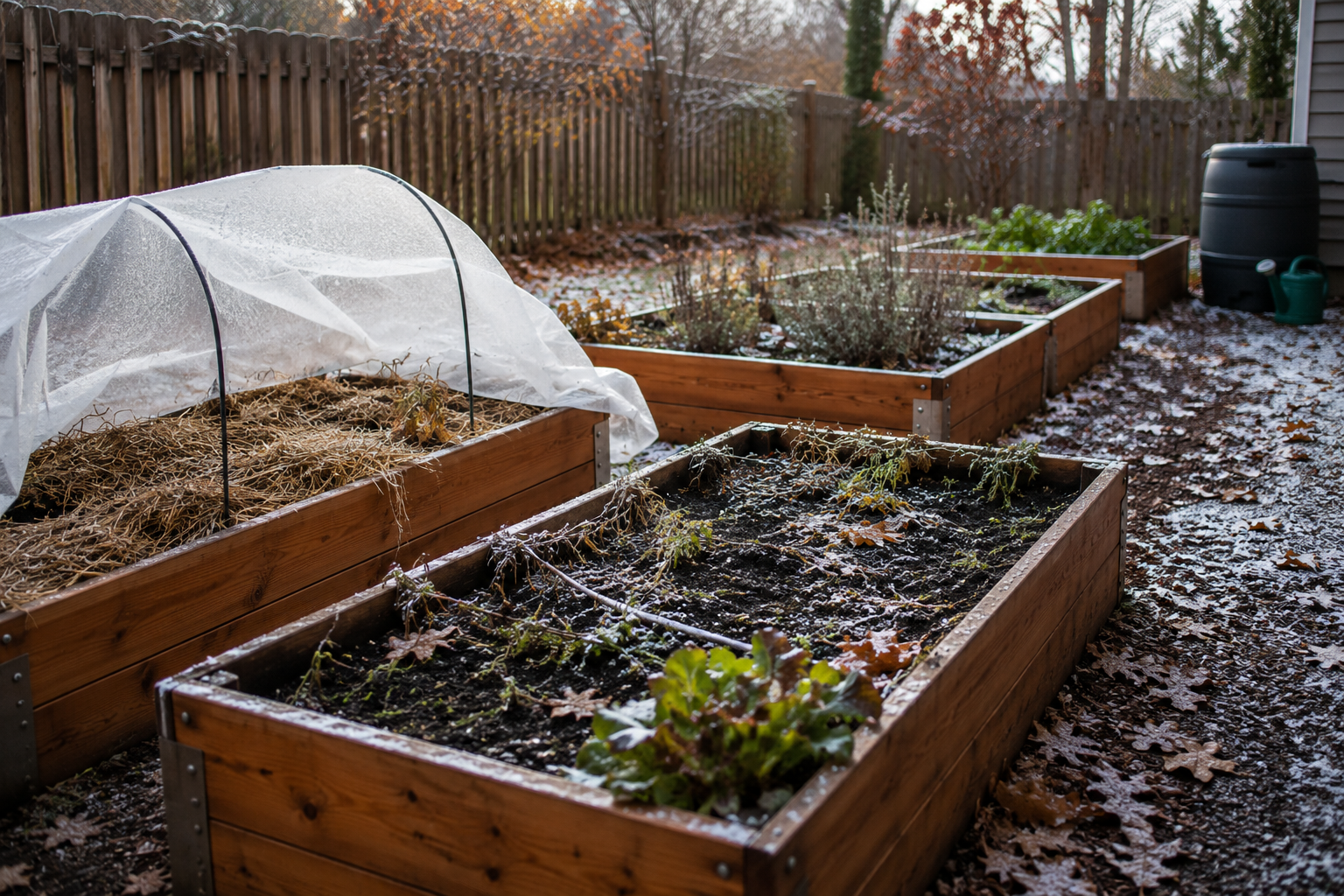
When the final vegetables have been harvested and cold nights begin arriving, it can be tempting to simply leave your raised garden beds alone until spring.
But a little work before winter can make a noticeable difference when the next growing season arrives.
Winter preparation isn’t about making the garden perfectly clean. The goal is to remove potential problems, protect exposed soil, preserve useful organic matter, and prevent winter weather from damaging your beds and irrigation equipment.
Here is a practical way to put your raised garden beds to rest for the season.
Start by collecting vegetables that are ready before consistently cold weather arrives.
Tomatoes, peppers, cucumbers, beans, and other warm-season crops generally decline as temperatures fall.
Some cool-season vegetables are more tolerant of cold weather. Kale, carrots, spinach, leeks, and certain other crops may remain productive later depending on the variety and your local climate.
Don’t automatically remove everything because the calendar says fall.
Check the cold tolerance of individual crops and decide which plants are worth keeping.
Once an annual vegetable has finished producing, remove the plant from the bed.
Tomato vines, cucumber plants, pepper stems, bean plants, and other seasonal crops can leave a surprising amount of material behind.
Healthy plant material may be suitable for composting.
Plants showing significant signs of disease deserve more caution. Instead of automatically adding questionable material to a home compost pile, dispose of it appropriately for your local situation.
Removing problematic plant material can reduce the amount of infected debris left around the garden over winter.
Look underneath foliage and around the edges of the bed.
You may find damaged tomatoes, forgotten cucumbers, overripe peppers, or other produce hidden near the soil.
Remove these before winter.
Decaying fruit can attract animals and may contain seeds that produce unwanted volunteer plants later.
This is also a good opportunity to collect broken labels, plastic clips, old ties, and other gardening materials that have accumulated during the season.
You don’t necessarily have to pull every healthy plant out by its roots.
For some finished annual crops, gardeners cut the plant near soil level and allow healthy roots to remain underground.
Those roots gradually decompose and contribute organic material while reducing unnecessary soil disturbance.
However, this isn’t appropriate for every situation.
If a plant had serious root disease or another problem that could remain in infected material, removing the affected roots may be more appropriate.
The condition of the plant should guide your decision.
Late-season weeds are easy to ignore because the vegetable-growing season is ending.
Unfortunately, allowing mature weeds to produce seeds can create considerably more work next year.
Remove weeds before winter, particularly those developing flowers or seed heads.
Pay attention to perennial weeds as well.
Removing as much of their root systems as practical can help prevent them from becoming established throughout the raised bed.
A relatively weed-free bed going into winter is easier to manage when spring arrives.
One of the most useful winter preparation steps is simply avoiding large areas of exposed soil.
Bare soil is more vulnerable to heavy rain, wind, erosion, and surface compaction.
After cleaning the bed, consider covering it with an appropriate organic mulch.
Depending on what is available in your area, options may include shredded leaves, clean straw, or partially decomposed organic material suitable for garden use.
You don’t need an enormous layer.
The purpose is to provide a protective surface while allowing the bed to remain manageable.
If you have enough time before severe winter weather arrives, a cover crop can be another option.
Cover crops are grown primarily to protect and improve the growing area rather than to provide a vegetable harvest.
Depending on your climate, gardeners may use crops such as winter rye, oats, field peas, or certain clovers.
The right choice depends heavily on local temperatures and when you plan to plant vegetables again.
Before sowing, understand how the crop will be terminated in spring. Some cover crops are much easier to manage than others.
Preparing for winter doesn’t always mean ending the harvest.
In some climates, cold-tolerant vegetables can continue growing with additional protection.
Row covers, low tunnels, cold frames, or other season-extension methods may help protect suitable crops from light frost and cold winds.
The amount of protection required depends on the vegetable and local conditions.
Remember that winter sunlight is weaker and days are shorter. Even protected plants may grow much more slowly than they did during summer.
The goal is often to preserve existing crops rather than encourage rapid new growth.
This step is easy to forget.
If your raised beds use drip irrigation, hoses, timers, filters, or watering equipment, prepare them before prolonged freezing temperatures arrive.
Disconnect equipment that shouldn’t remain outdoors and drain trapped water where appropriate.
Water left inside certain hoses, fittings, and irrigation components can freeze and expand, potentially causing cracks or leaks.
Store removable timers and sensitive components according to the manufacturer’s recommendations.
A few minutes of winterization can prevent discovering broken irrigation equipment next spring.
Wooden beds deserve a quick inspection before winter.
Look for boards that are beginning to split, corners that have become loose, or sections showing significant deterioration.
You don’t necessarily need to rebuild the bed immediately.
But identifying weak areas before months of rain, snow, or freeze-thaw cycles makes it easier to plan repairs.
Avoid applying unsuitable chemical treatments to interior surfaces that contact vegetable-growing soil.
If protection or finishing is necessary, choose products appropriate for your particular garden application.
Galvanized steel and other metal raised beds require relatively little seasonal maintenance, but they’re still worth checking.
Make sure bolts, screws, braces, and corner connections remain secure.
Inspect edges for accidental damage and look for areas where the structure has shifted.
If your bed has been pushed outward by soil pressure, addressing the problem while the garden is relatively empty may be easier than waiting until spring planting.
Not every support structure needs to stay outside all winter.
Remove lightweight trellises, plant cages, stakes, clips, netting, and other accessories if severe winter weather could damage them.
Clean reusable items before storage.
Permanent arches or heavy trellises can usually remain in place if they’re designed for outdoor exposure, but check that they are securely anchored.
Winter wind can put considerable pressure on large garden structures.
Not necessarily.
Some gardeners use tarps or other covers, but completely sealing a raised bed isn’t automatically better.
Organic mulch or an appropriate cover crop can often provide soil protection while still allowing natural moisture and biological activity.
If you use a synthetic cover, make sure you understand why you’re using it and secure it properly against winter wind.
The goal isn’t to keep every drop of rain or snow away from the soil.
It’s to protect the bed without creating unnecessary problems.
Preparing raised garden beds for winter doesn’t require completely emptying them or replacing the soil.
Start by harvesting remaining crops and removing spent or unhealthy plants. Clear fallen fruit and weeds, then protect exposed soil with mulch or an appropriate cover crop.
If you’re continuing to grow cold-tolerant vegetables, prepare frost protection before temperatures suddenly drop.
Don’t forget the equipment surrounding the garden either. Drain irrigation components, inspect wooden or metal bed structures, and store vulnerable trellises and accessories.
A raised garden bed may look inactive during winter, but what happens during those quiet months can influence how easily your next growing season begins.
Spend a little time closing the garden properly in fall, and you’ll have far less cleanup waiting for you when warmer weather returns.