Newsletter Subscribe
Enter your email address below and subscribe to our newsletter


Raised Bed Gardening Made Simple
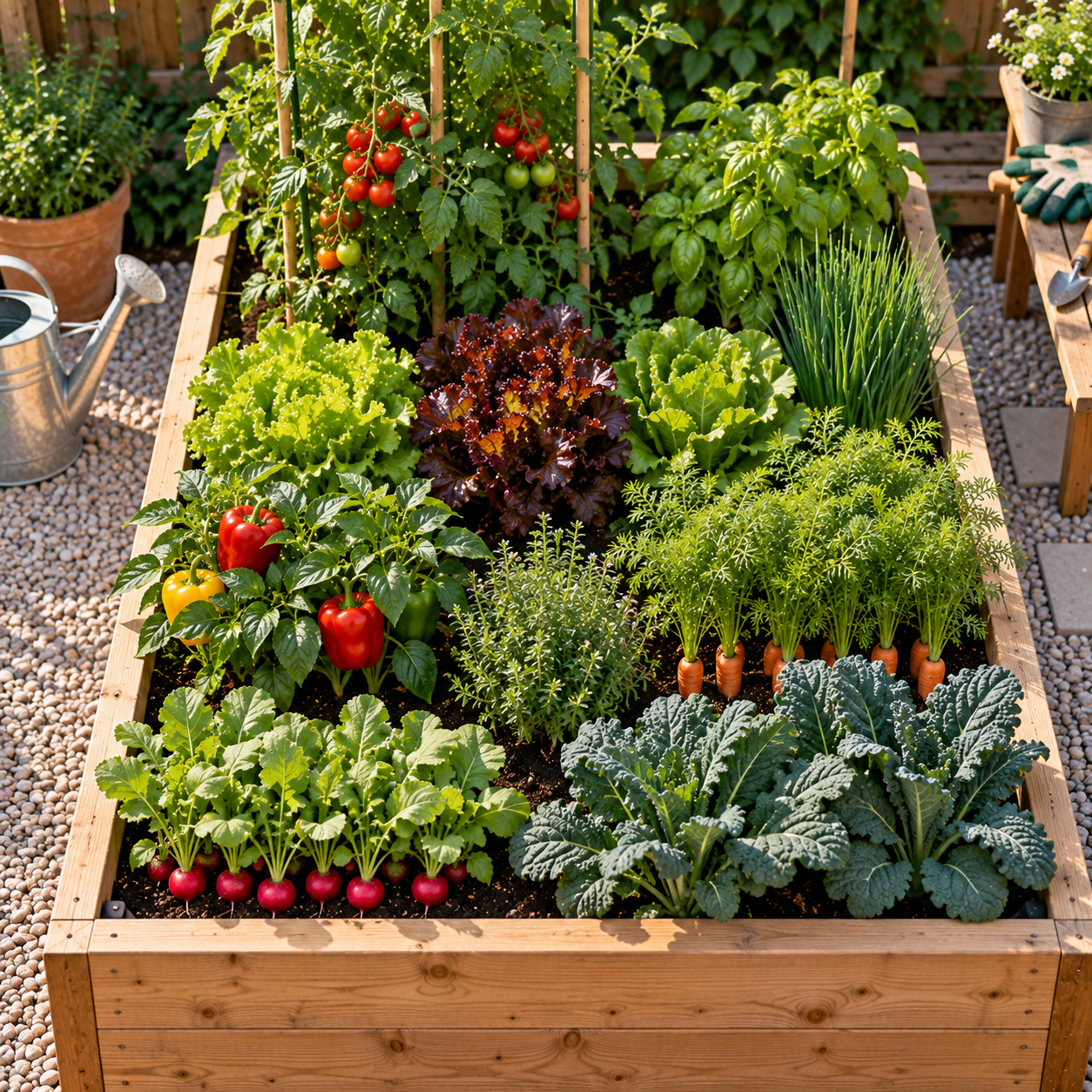
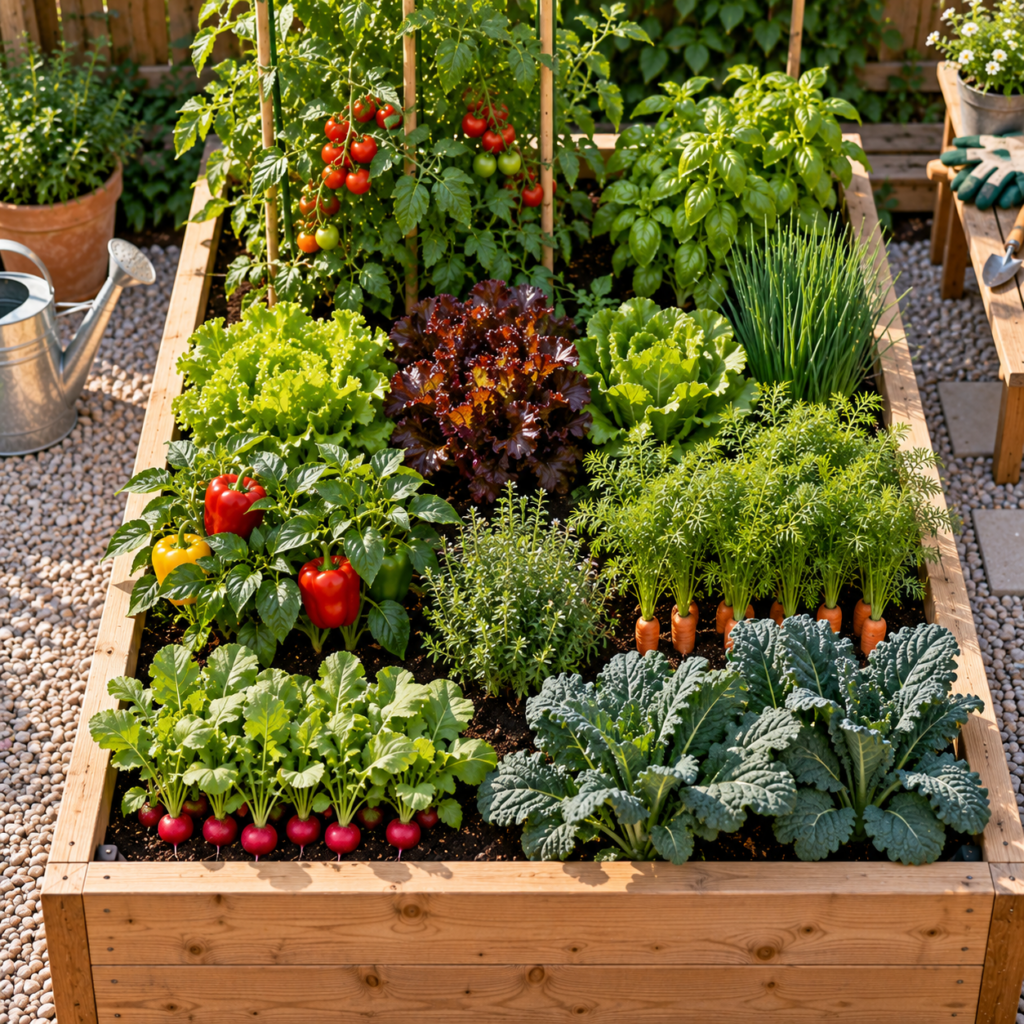
A raised garden bed gives you a defined growing space, but deciding where each vegetable belongs can be surprisingly challenging. Should tomatoes go in the middle? Can lettuce grow beside peppers? How much room should you leave between different crops?
The best arrangement isn’t necessarily the one that fits the most plants. It’s one that gives vegetables enough sunlight, root space, airflow, and easy access for harvesting.
Here’s how to organize vegetables in a raised garden bed so every crop has room to grow.
One of the most common planting mistakes is arranging vegetables based on the size of young seedlings.
A small tomato transplant can eventually become a large plant that shades nearby vegetables. Zucchini and squash can also spread well beyond their original planting area.
Before planting, check the mature height and width of each crop.
Group compact vegetables together and reserve larger sections for plants that need more space.
For example, lettuce and radishes generally fit into smaller areas, while tomatoes and peppers need more room.
Planning around mature plant size helps prevent overcrowding later in the season.
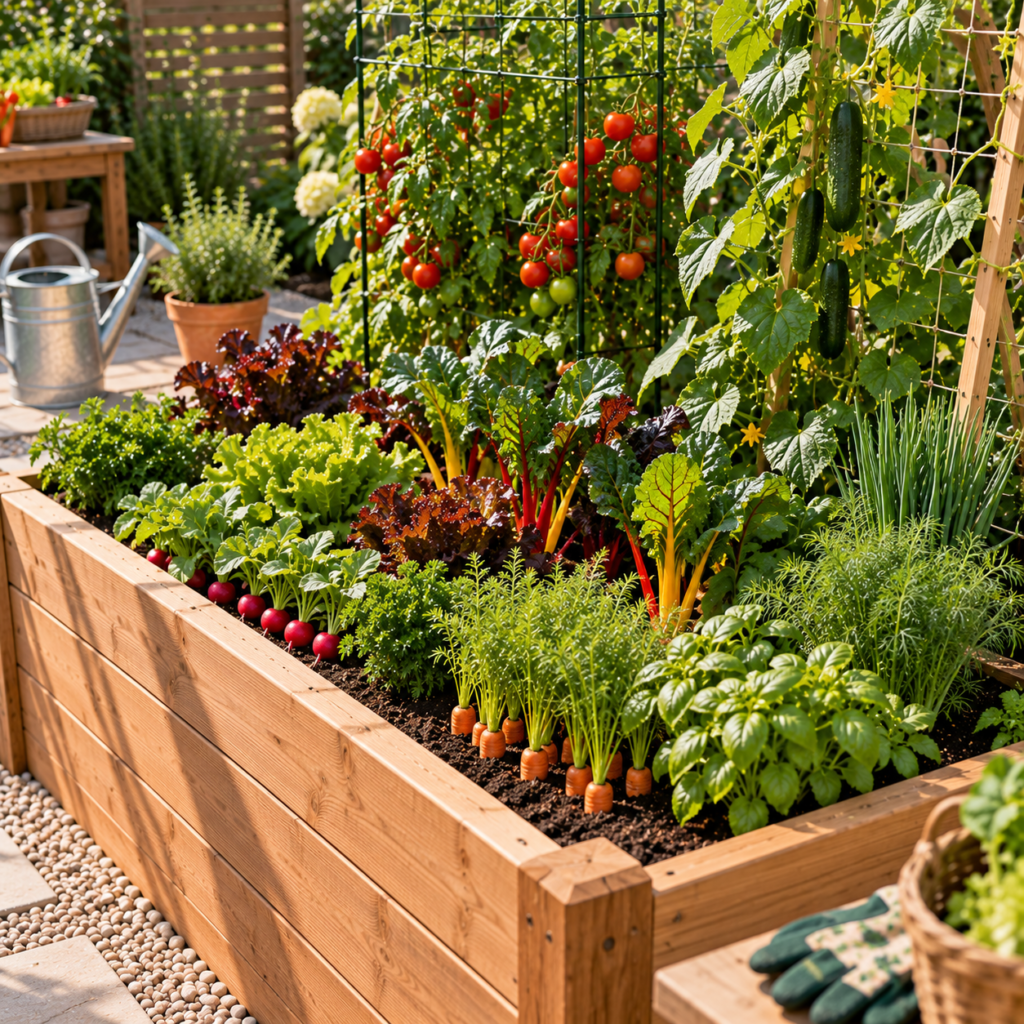
Plant height plays an important role in raised bed organization.
In many Northern Hemisphere gardens, placing taller crops along the northern side of a bed helps reduce shading of shorter vegetables.
Tomatoes, pole beans, and trellised cucumbers are common examples of taller crops.
Smaller plants such as lettuce, radishes, and low-growing herbs can occupy sunnier spaces toward the front.
However, sunlight patterns vary depending on fences, buildings, trees, and the season.
Observe your garden before deciding where taller plants should grow.
Vegetables sharing similar sunlight, watering, and soil requirements are often easier to manage together.
For example, tomatoes and peppers both prefer warm conditions and plenty of sunlight.
Lettuce, spinach, and radishes generally perform better during cooler growing periods.
Grouping compatible crops can simplify watering and seasonal maintenance.
However, avoid assuming that every vegetable in the same group needs identical care. Individual varieties and local growing conditions still matter.
You don’t need complicated software to organize a raised bed.
A basic sketch can help you visualize plant placement before planting.
For example, a 4 × 8-foot bed might contain:
The exact number of plants depends on the varieties, recommended spacing, and how large they become.
Avoid filling every empty space immediately. Young plants need room to develop.
For more detailed spacing strategies, see our guide on how to maximize growing space in a raised garden bed.
Vegetables grow in different ways, and your arrangement should reflect those differences.
Some crops grow upright, others form compact heads, and some spread across the soil.
A useful way to organize your raised bed is to group plants according to how they occupy space.
| Vegetable Type | Examples | Recommended Placement | Main Consideration |
|---|---|---|---|
| Tall upright crops | Tomatoes, trellised beans | Back or northern side | Prevent excessive shading |
| Medium-height crops | Peppers, kale | Middle sections | Allow mature spacing |
| Low-growing crops | Lettuce, spinach | Front or accessible edges | Easy harvesting |
| Root vegetables | Carrots, radishes | Open soil sections | Adequate soil depth |
| Climbing vegetables | Cucumbers, peas | Along sturdy trellises | Support and sunlight |
| Spreading crops | Zucchini, squash | Large open sections | Avoid overcrowding |
Use this table as a starting point, then adjust the arrangement to match your garden’s sunlight and access points.
Some vegetables need attention more often than others.
Lettuce, herbs, and other frequently harvested crops are easier to manage when planted near accessible edges.
Larger vegetables that require occasional harvesting can occupy less convenient areas, provided they remain reachable.
Avoid placing thorny, sprawling, or heavily trellised plants where they block access to neighboring crops.
A well-organized raised bed should make watering, pruning, and harvesting comfortable.
Overcrowding can create unnecessary competition for sunlight, water, and nutrients.
Dense foliage may also reduce airflow and create conditions favorable to certain plant diseases.
Follow recommended spacing for each vegetable, especially larger crops such as tomatoes and peppers.
Remember that leaves and stems will spread as plants mature.
Leaving enough room between plants makes it easier to inspect them for pests, remove damaged foliage, and harvest vegetables without disturbing neighboring crops.
Raised bed organization doesn’t end after planting.
As early crops finish, new growing space becomes available.
For example, after harvesting spring radishes, you may be able to plant another suitable vegetable if the remaining growing season allows.
You can also remove finished crops and refresh the planting area before adding new seedlings.
If you’re planning multiple growing seasons, our guide on how to plan crop rotation in raised garden beds explains how to organize crop families over time.
Avoid these common problems:
A simple planting plan can prevent many of these issues before they affect your harvest.
Organizing vegetables in a raised garden bed is about creating the right growing conditions for each crop.
Start with mature plant size, consider sunlight and plant height, group compatible vegetables, and leave enough room for healthy growth.
Keep frequently harvested crops accessible and adjust your arrangement as the season changes.
With thoughtful planning, even a single raised bed can become an organized and productive vegetable garden.
For more practical vegetable planting advice, crop combinations, and seasonal growing techniques, explore our Growing Guides.