Newsletter Subscribe
Enter your email address below and subscribe to our newsletter


Raised Bed Gardening Made Simple
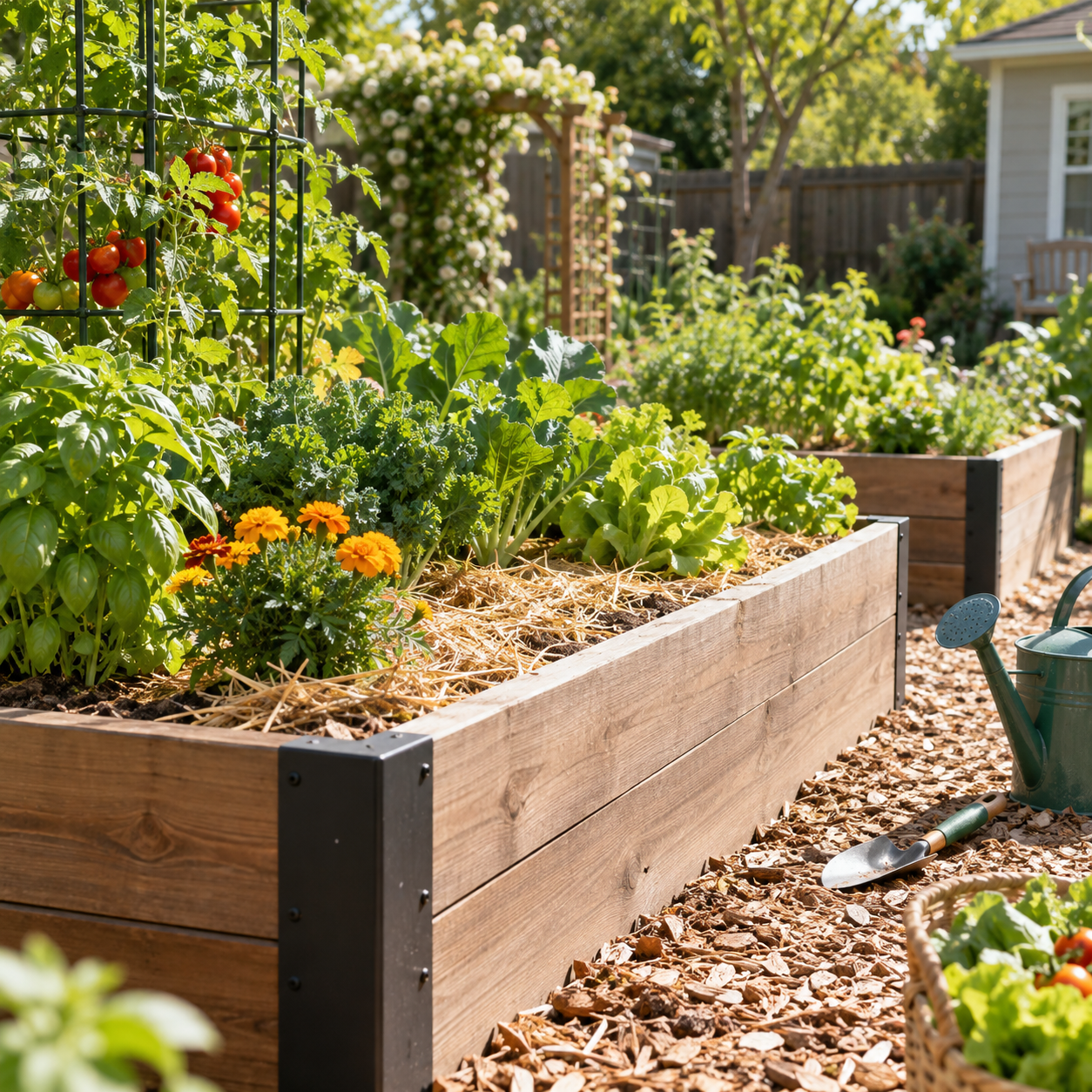
Raised garden beds make weed control easier than traditional in-ground gardens, but they are not completely weed-free. Weed seeds can arrive through compost, garden soil, wind, birds, tools, or even the root systems of nearby plants.
The good news is that a raised bed usually gives you much more control over the growing environment. Instead of waiting until weeds become established, the most effective approach is to prevent them from gaining a foothold in the first place.
Here are practical ways to keep weeds under control without making your raised bed difficult to maintain.
Weed prevention should begin before you fill or plant a new raised bed.
If you are installing a bed over an existing lawn or weedy area, cut the vegetation as low as possible and remove aggressive perennial weeds. Pay particular attention to plants that spread through underground roots or rhizomes.
Simply covering established perennial weeds with soil may not stop them permanently.
For beds placed over soil or grass, a layer of plain, non-glossy cardboard can help suppress existing vegetation while still allowing organic material to break down over time.
Avoid relying on an impermeable plastic sheet underneath a vegetable bed because it can interfere with drainage.
Sometimes the weeds in a raised bed do not come from underneath at all—they arrive with the soil.
Poorly finished compost, contaminated topsoil, or reused garden soil can contain weed seeds.
When filling a bed, use materials from a reliable source and inspect bulk soil before adding it. Properly processed compost is generally preferable to unfinished material containing visible weed roots or seeds.
This will not guarantee a weed-free garden, but it can significantly reduce the number of weeds you have to deal with later.
Mulching is one of the simplest ways to suppress weeds in an established raised bed.
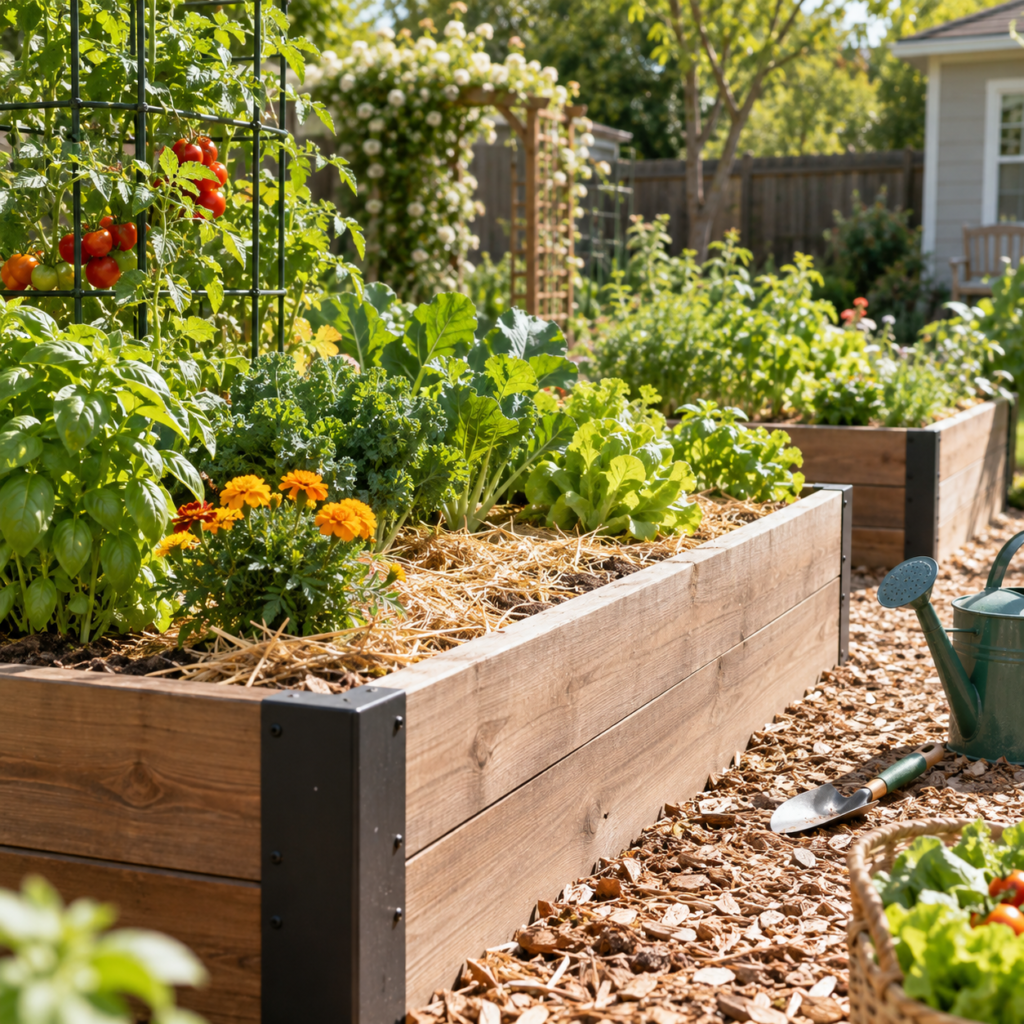
A layer of mulch reduces the amount of light reaching the soil surface, making it more difficult for many weed seeds to germinate. Mulch also helps retain soil moisture and reduces surface temperature fluctuations.
Suitable materials include:
For many raised beds, approximately 2–3 inches (5–7.5 cm) of mulch is a practical starting point.
Keep mulch slightly away from the stems of young vegetables rather than piling it directly against them.
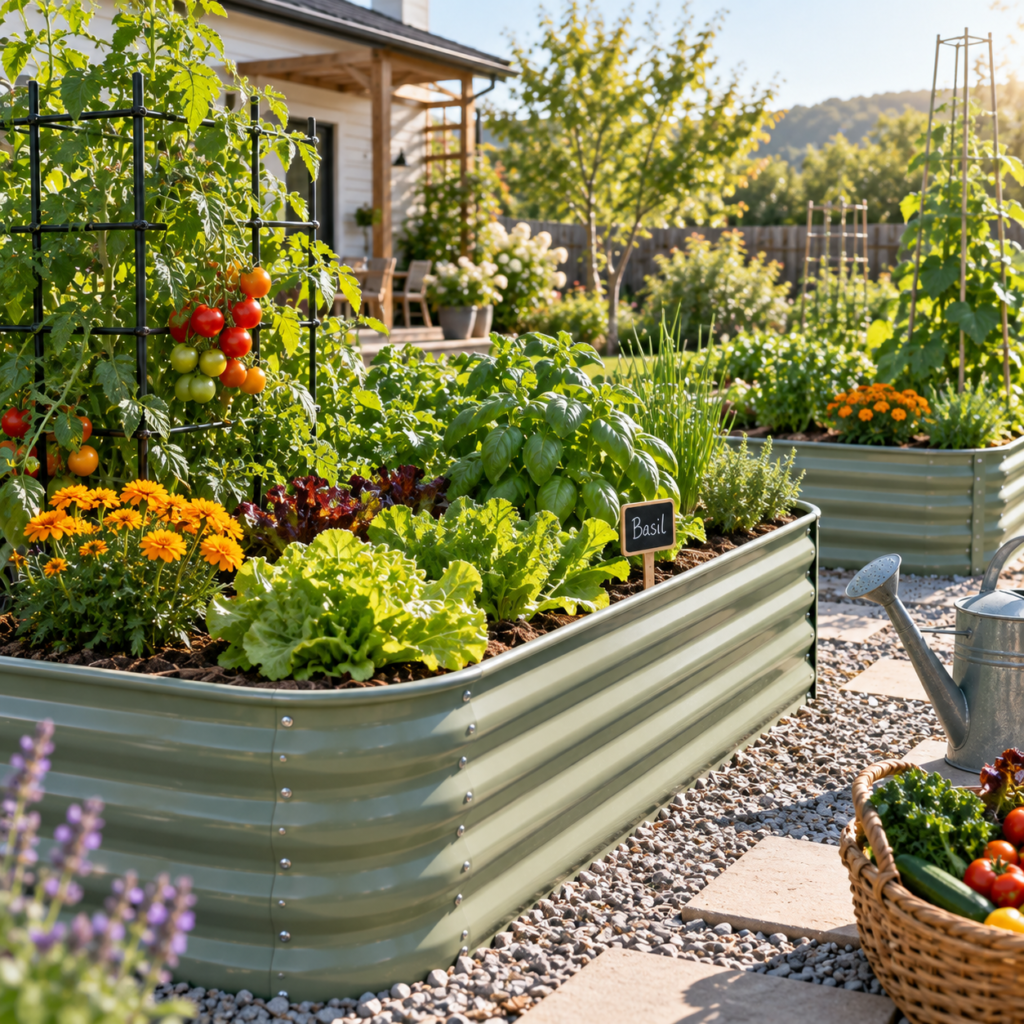
Large areas of bare soil create opportunities for weeds.
Once vegetables become established, their leaves can shade the soil and make conditions less favorable for weed seedlings. This does not mean overcrowding your plants.
Follow the recommended spacing for each crop, but use the available growing area efficiently.
Companion planting can also help fill otherwise unused spaces. For example, smaller leafy greens or herbs may sometimes be grown around larger crops when their light, water, and root requirements are compatible.
A few minutes of early weed control is usually easier than dealing with mature weeds later.
Inspect your raised beds regularly and pull weeds when they are young. Small seedlings generally have shallow roots and can often be removed without disturbing nearby vegetables.
After watering or rainfall, the soil is usually softer, making rooted weeds easier to remove completely.
Try to remove the entire root system when dealing with perennial weeds. Simply breaking off the visible foliage may allow them to return.
One mature weed can create far more work later if it is allowed to flower and produce seeds.
This matters not only inside the raised bed but also around it.
Keep pathways, bed edges, fence lines, and nearby garden areas reasonably weed-free. Seeds from surrounding weeds can easily be carried into raised beds by wind or animals.
Think of weed management as controlling the entire immediate growing area rather than only the soil inside the bed.
Landscape fabric can be useful in certain situations, particularly around raised beds and underneath pathways.
Inside a vegetable raised bed, however, permanent fabric layers are not always ideal. They can complicate future digging, soil refreshing, deep-rooted crops, and long-term maintenance.
For many home gardens, cardboard, mulch, clean soil, and regular maintenance provide a more flexible approach.
| Method | Best Use | Main Benefit | Consideration |
|---|---|---|---|
| Cardboard | Under new beds | Suppresses existing grass and weeds | Breaks down over time |
| Organic mulch | Soil surface | Blocks light and conserves moisture | Needs periodic replenishment |
| Hand weeding | Small new weeds | Precise and inexpensive | Requires regular checking |
| Dense planting | Established beds | Reduces exposed soil | Avoid overcrowding crops |
| Landscape fabric | Paths around beds | Helps suppress pathway weeds | Less convenient inside growing soil |
| Clean soil/compost | New or refreshed beds | Reduces introduced weed seeds | Source quality matters |
Raised beds are easiest to maintain when weed control becomes a small, regular task rather than an occasional major cleanup.
When watering or harvesting, take a moment to inspect the soil surface. Pull new weeds before they become established and replace mulch when the soil begins to show through.
At the end of the growing season, remove weeds before they produce seed and clean up unwanted vegetation around the bed.
Not necessarily.
The goal is not to maintain perfectly bare soil every day. A few small weeds are rarely a disaster. The important thing is preventing weeds from becoming large enough to compete significantly with crops for water, nutrients, light, and growing space—or from producing seeds that create future problems.
A combination of clean soil, mulch, appropriate plant spacing, early removal, and regular observation is usually more practical than relying on one weed-control product.
Protecting raised garden beds from weeds is mostly about prevention.
Start with a clean site, avoid introducing contaminated soil, cover exposed soil with organic mulch, use growing space efficiently, and remove weeds while they are still small. Pay attention to the area surrounding the bed as well, since many weeds arrive from nearby plants rather than growing up from underneath.
With these habits in place, weed control becomes a small part of routine garden maintenance instead of a major seasonal chore.