Newsletter Subscribe
Enter your email address below and subscribe to our newsletter
Raised Bed Gardening Made Simple
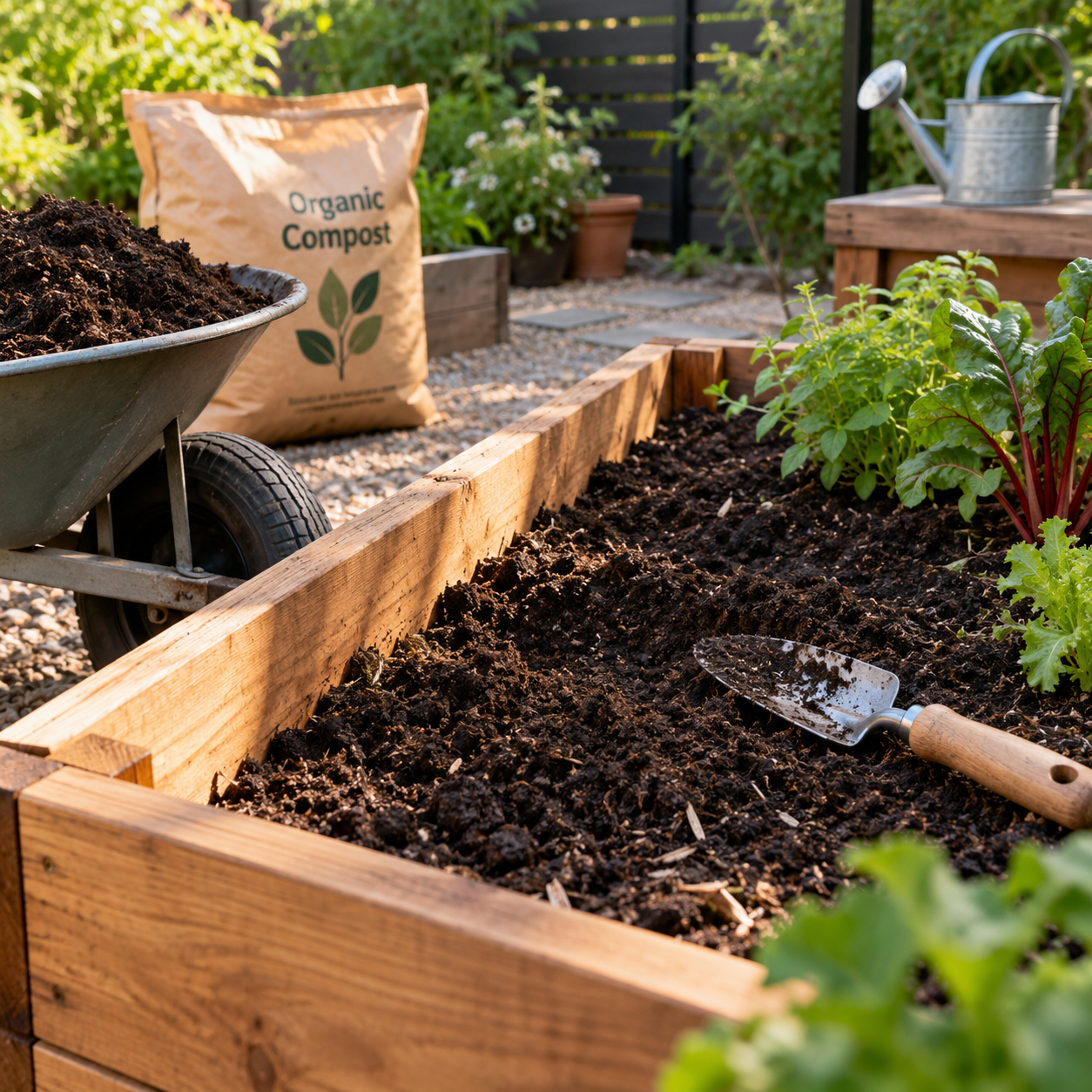
If you’ve been growing vegetables in the same raised garden bed for several years, you may wonder whether it’s time to replace the soil. Perhaps your plants aren’t growing as vigorously as before, the soil level has dropped, or water doesn’t drain as easily as it once did.
The good news is that healthy raised bed soil usually doesn’t need to be replaced every year. In many cases, adding compost, correcting nutrient imbalances, or improving drainage is enough to keep the growing area productive.
Knowing when to refresh soil and when to replace it can save money, reduce waste, and help maintain a healthier garden.
Unlike potting mix in small containers, soil in an open-bottom raised garden bed can remain productive for many years.
Soil contains mineral particles, organic matter, microorganisms, air, and water. While nutrients are used by plants and organic matter gradually decomposes, the entire soil volume doesn’t automatically become unsuitable for growing vegetables.
Most established raised beds benefit more from regular maintenance than complete soil replacement.
However, certain problems may justify removing some or all of the existing soil.
Healthy garden soil should allow water, air, and roots to move through it.
Over time, compaction can develop from working wet soil, repeated pressure, or unsuitable growing materials.
Signs may include slow water infiltration, poor root development, and a hard surface.
Before replacing the soil, try improving its structure with mature compost and gentle loosening when conditions are appropriate.
Avoid stepping directly inside raised beds, as repeated foot traffic can increase compaction.
If the soil remains severely compacted despite corrective measures, partial replacement may be worth considering.
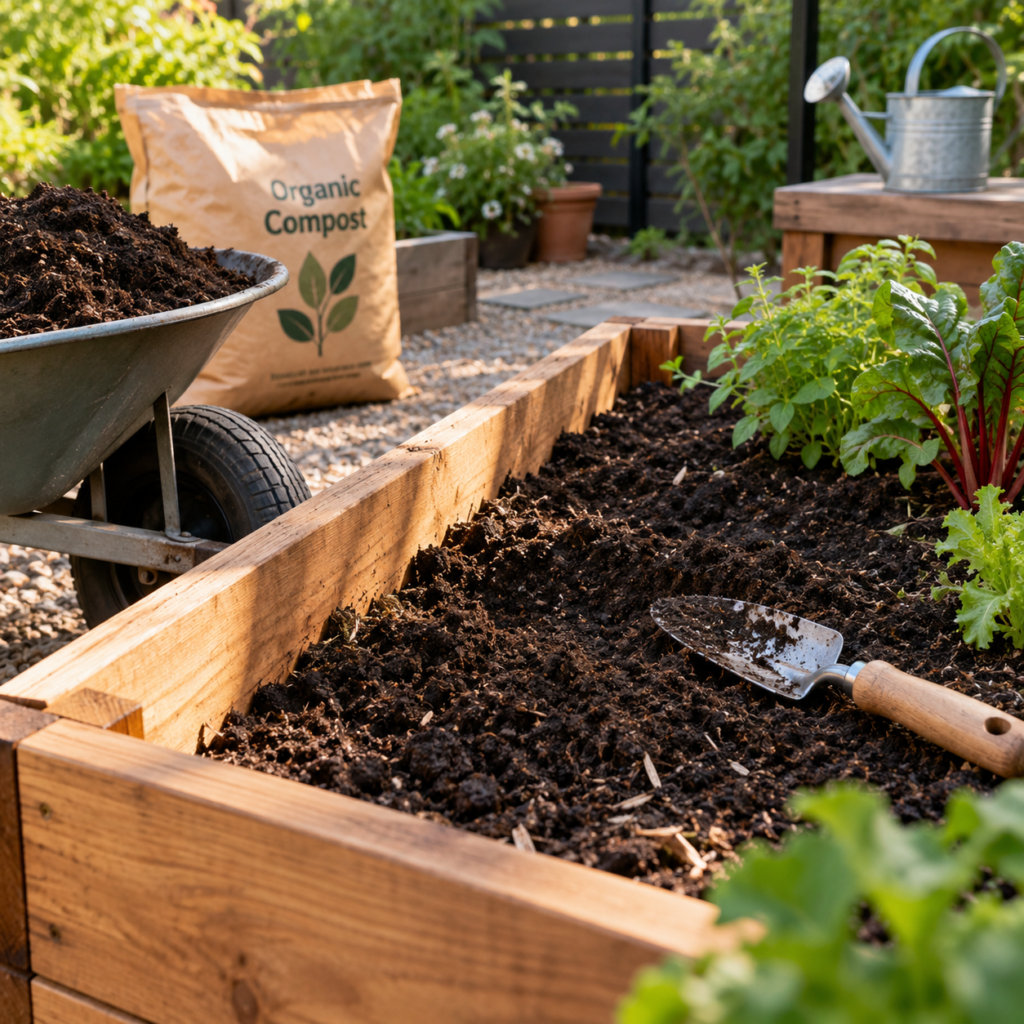
Waterlogged soil can reduce oxygen around plant roots and contribute to poor growth.
If water remains pooled after irrigation or rainfall, investigate the drainage problem.
Check whether the bed has an impermeable bottom, compacted layers, or poorly draining ground beneath it.
Replacing soil without correcting the underlying drainage issue may not solve the problem.
Where appropriate, improving soil structure and removing drainage obstructions may be more effective than complete replacement.
Yellowing leaves, slow growth, and disappointing harvests sometimes lead gardeners to assume their soil is exhausted.
However, these symptoms can result from nutrient deficiencies, excessive nutrients, incorrect pH, watering problems, or plant diseases.
A soil test can help identify nutrient levels and pH before you make changes.
If the soil is structurally sound, targeted amendments are usually more practical than replacing everything.
For guidance on choosing suitable growing materials, read our article on best soil for raised garden beds.
Suspected contamination is one of the strongest reasons to consider soil replacement.
Potential sources include certain industrial residues, spills, or unsuitable materials introduced into the growing area.
If contamination is suspected, stop growing edible crops in the affected soil until the risk has been properly assessed.
Contact a qualified soil-testing laboratory or local agricultural extension service for guidance.
Depending on the contaminant, removing affected soil or avoiding food production in that location may be necessary.
Simply adding compost or fresh soil on top may not make contaminated soil safe.
| Soil Condition | Recommended Action | Full Replacement Needed? |
|---|---|---|
| Soil level has dropped | Add suitable soil and compost | Usually no |
| Mild compaction | Improve structure and avoid foot traffic | Usually no |
| Low nutrient levels | Soil test and amend appropriately | Usually no |
| Poor drainage | Identify and correct drainage restrictions | Not always |
| Persistent soilborne disease | Identify pathogen and seek specific guidance | Sometimes |
| Confirmed contamination | Follow professional remediation advice | May be necessary |
| Healthy, productive soil | Continue regular maintenance | No |
The correct solution depends on the underlying problem rather than the age of the soil.
Some plant diseases can persist in soil between growing seasons.
If the same crops repeatedly develop similar symptoms, investigate whether a soilborne pathogen is involved.
Changing plant families, selecting resistant varieties, improving drainage, and removing infected plant debris may help manage certain diseases.
However, crop rotation alone cannot eliminate every persistent pathogen.
Soil replacement may be considered in specific situations, but diagnosis should come first.
For most healthy raised beds, seasonal soil maintenance is straightforward.
Remove finished annual crops and unwanted weeds, then inspect the soil surface.
If the soil level has settled, top it up with suitable growing soil.
A modest application of mature compost can replenish organic matter and improve soil structure.
Avoid adding excessive compost or fertilizer, especially when soil testing indicates adequate nutrient levels.
For a broader maintenance approach, explore our guide on how to refresh an old raised garden bed.
If replacement is genuinely necessary, early spring or fall is often convenient because beds may be empty between crops.
Choose a time when the soil isn’t saturated and when work won’t disturb established plants.
Remove affected soil carefully and dispose of it according to the reason for replacement and local requirements.
Refill the bed with suitable, uncontaminated growing soil, then check drainage and nutrient conditions before planting.
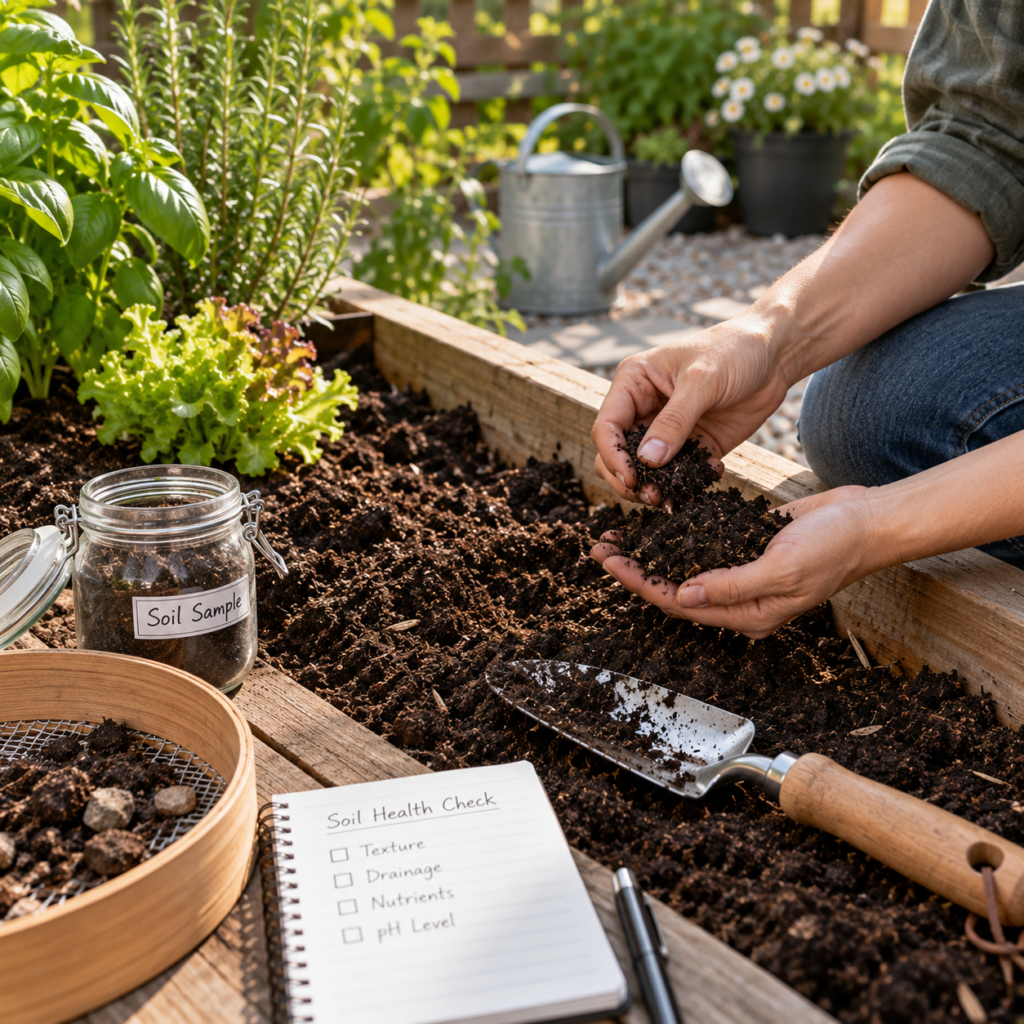
Inspect soil conditions throughout the growing season.
Check moisture regularly, observe how water drains, and watch for changes in plant growth.
Periodic soil testing can help guide fertilizer and amendment decisions.
Keep simple records of compost additions, fertilizer use, crop performance, and any recurring problems.
These observations can help you maintain productive soil without unnecessary replacement.
Raised garden bed soil doesn’t have a fixed expiration date.
Healthy soil can support vegetables for many years when managed properly. Most problems can be addressed through compost additions, drainage improvements, or targeted nutrient management.
Complete soil replacement should generally be reserved for situations where the existing soil is unsafe or cannot be restored through practical measures.
For more advice on soil preparation, compost, drainage, and maintaining healthy growing conditions, explore our Soil & Compost guides.