Newsletter Subscribe
Enter your email address below and subscribe to our newsletter


Raised Bed Gardening Made Simple
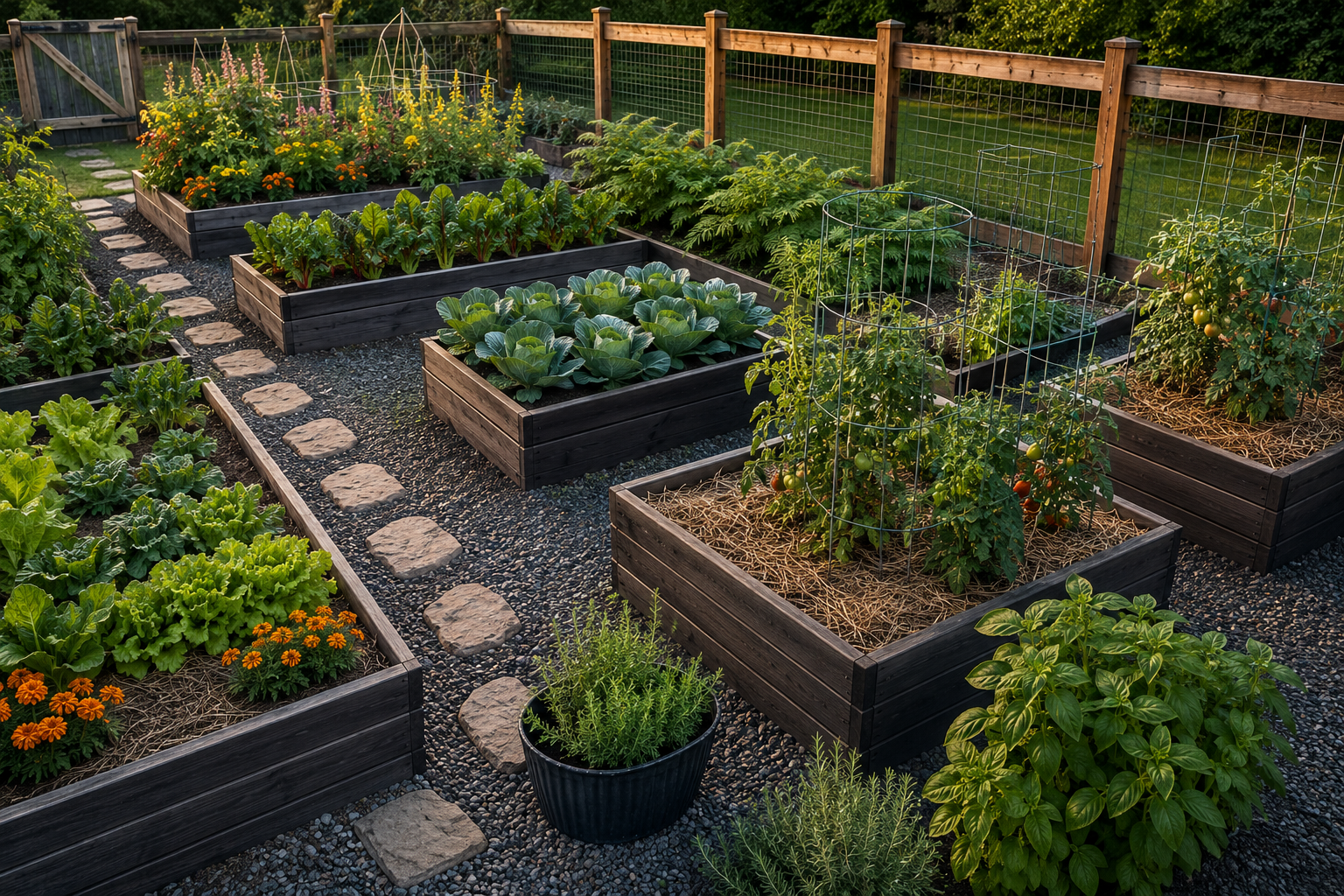
Designing a raised garden bed layout is about more than deciding where to place a box. A well-planned layout can make planting easier, improve sunlight exposure, simplify watering and harvesting, and help you get more vegetables from the same amount of space. Whether you are creating your first raised bed or reorganizing an existing garden, a little planning before planting can make a big difference.
This guide explains how to design a practical raised garden bed layout that works for your space, plants, and gardening habits.
Before choosing the size or shape of your garden beds, look carefully at the area you have available. Measure the garden and note permanent features such as fences, walls, patios, trees, sheds, and outdoor structures.
Try to choose an area that receives plenty of direct sunlight. Most vegetables grow best with around six to eight hours of sunlight each day, although some leafy greens can tolerate partial shade.
Also think about how you will move around the garden. A beautiful layout can quickly become inconvenient if you cannot comfortably reach the plants.
Rectangular raised beds are popular because they are simple to build and easy to organize. However, you do not have to limit yourself to one shape.
Depending on your yard, you might use:
For most home gardens, keeping the beds relatively simple makes maintenance easier. Avoid creating narrow corners or complicated shapes that waste growing space.
One of the most important layout principles is accessibility.
A raised bed should be designed so you can reach the plants without stepping into the soil. For many gardeners, a width of about 3 to 4 feet is comfortable when the bed can be accessed from both sides.
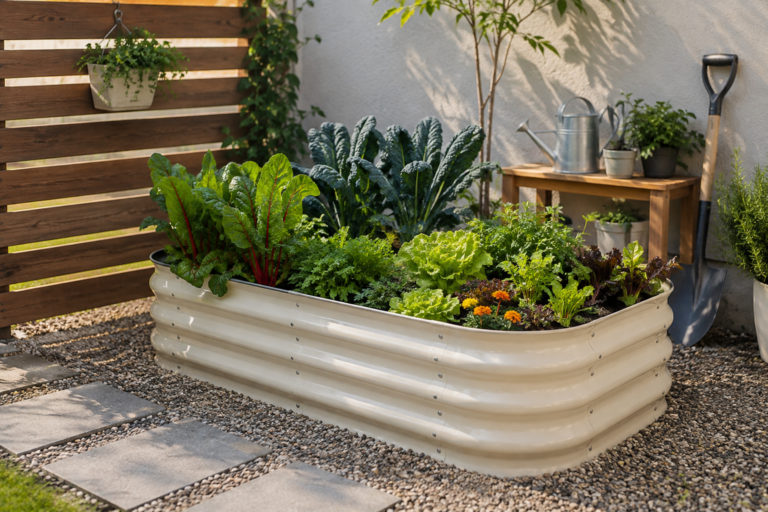
If the bed is against a wall or fence and can only be reached from one side, make it narrower. A width of around 2 feet may be more practical.
The goal is simple: you should be able to reach the center of the bed comfortably from the outside.
Paths are easy to overlook when designing a raised garden layout. However, they are essential for carrying tools, harvesting vegetables, removing weeds, and maintaining plants.
Leave enough space between beds for comfortable movement. If you regularly use a garden cart or wheelbarrow, make the main pathway wide enough for it to pass through.
You can use grass, gravel, wood chips, pavers, or other suitable materials for pathways. A defined path also helps keep soil and mulch from spreading into surrounding areas.
Plant height should influence where you place different crops.
Tall plants such as tomatoes, corn, trellised cucumbers, and climbing beans can cast significant shadows. If possible, position taller crops where they will not block sunlight from shorter plants.
A useful approach is to place tall crops toward the north side of the garden and shorter vegetables toward the south. This can help distribute sunlight more evenly throughout the growing area.
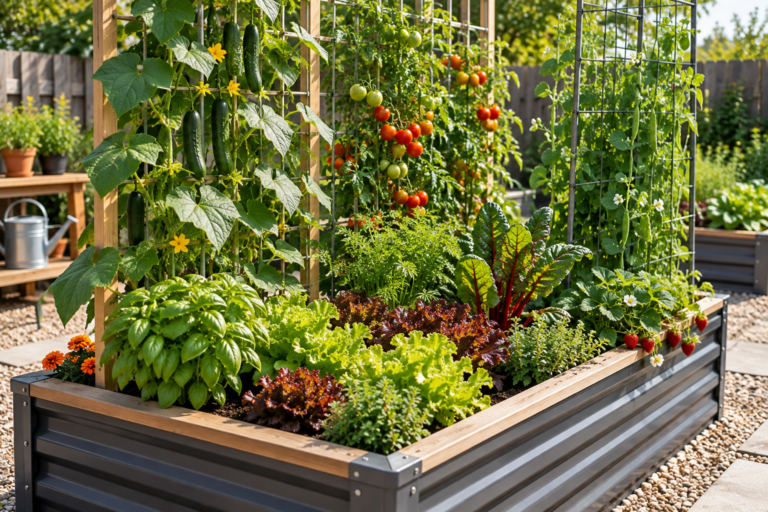
Vertical supports can also be incorporated into the layout for climbing plants, allowing you to use upward space instead of taking up additional ground area.
Instead of placing vegetables randomly, organize plants according to their growing requirements.
For example, you can create one section for sun-loving fruiting crops, another for leafy greens, and another for herbs. Plants with similar watering, feeding, and sunlight requirements can be easier to manage when grouped together.
This approach can also make your daily gardening routine more efficient because you can care for several similar plants at the same time.
A common mistake is designing a garden based on the size of young plants.
Seedlings may look small when you plant them, but many vegetables become much larger as they mature. Tomatoes can become wide and bushy, zucchini needs considerable room, and climbing crops may spread across a trellis.
Check the mature size of each plant before deciding where it belongs. Avoid overcrowding simply because an empty space looks available in the beginning.
A raised garden bed layout does not have to be completely flat.
Trellises can be placed at the back or ends of beds to support cucumbers, beans, peas, small melons, and other climbing plants. Vertical growing can increase productivity without requiring a larger garden footprint.
Make sure a trellis does not create unwanted shade for nearby sun-loving plants. Its position should be considered when planning the entire layout rather than added as an afterthought.
Your garden layout should work for you throughout the entire growing season.
Consider where you will store garden tools, how you will bring soil or compost into the area, and how easily you can access every bed. Leave enough open space around the garden for pruning, harvesting, and seasonal cleanup.
It is also useful to keep frequently harvested crops in convenient locations. Herbs, salad greens, and other crops you pick regularly can be positioned closer to the house or along an easily accessible path.
Before building or planting, make a quick sketch of your proposed layout. It does not need to be artistic or perfectly scaled.
Mark the location of each raised bed, pathway, trellis, and major plant group. Then write down which crops will be planted in each section.
A simple map makes it easier to identify potential problems before you spend time and money building the garden.
A successful raised garden bed layout should balance sunlight, accessibility, plant spacing, pathways, and future growth. Instead of trying to fit as many plants as possible into a small area, focus on creating a garden that is easy to reach and maintain.
Start with the space you have, choose practical bed dimensions, organize plants according to their height and growing requirements, and leave enough room for comfortable movement. With a thoughtful layout, even a relatively small backyard can become an organized and productive growing space.