Newsletter Subscribe
Enter your email address below and subscribe to our newsletter


Raised Bed Gardening Made Simple
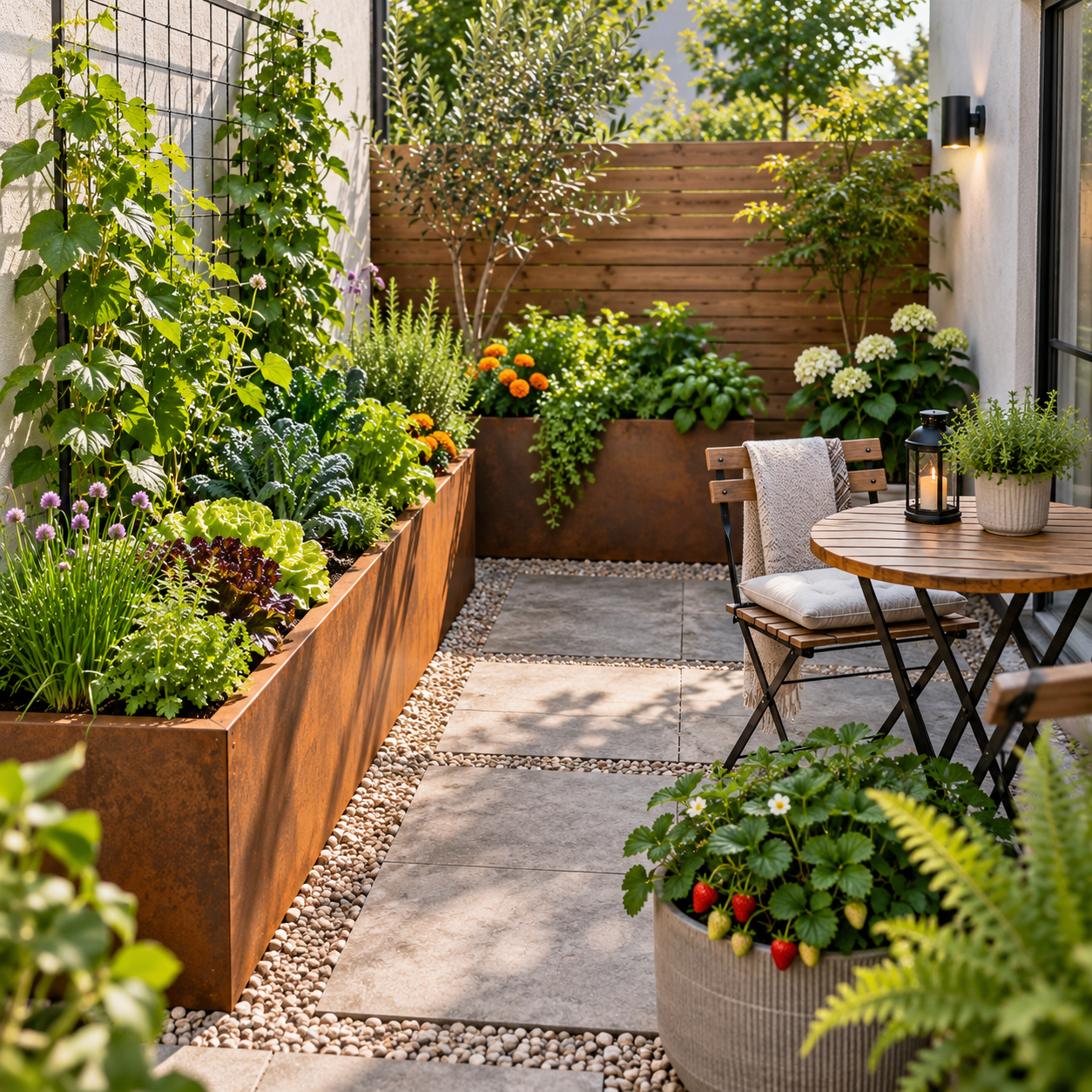
A small outdoor space can still become a beautiful and productive vegetable garden. Whether you’re working with a narrow backyard, a compact patio, or a modest patch of lawn, raised garden beds can help you organize plants without sacrificing the entire area.
The key is to think beyond simply fitting a garden bed into an empty corner. A successful small-space garden should balance growing room, sunlight, accessibility, and the way you actually use your backyard.
Here are practical ideas for creating a raised bed garden that feels spacious, organized, and easy to maintain.
When space is limited, starting with one raised bed is often more effective than installing several small planters immediately.
Choose a location that receives sufficient sunlight and is convenient for watering. Most fruiting vegetables prefer at least six to eight hours of direct sunlight daily, while some leafy greens tolerate partial shade.
A rectangular bed measuring approximately 3 × 4 feet provides a useful starting point for many small gardens.
Keep enough space around the bed to reach your plants comfortably. If the bed sits against a fence, a narrower design may be easier to maintain.
Starting small also lets you observe how sunlight, drainage, and seasonal changes affect the growing area before expanding.
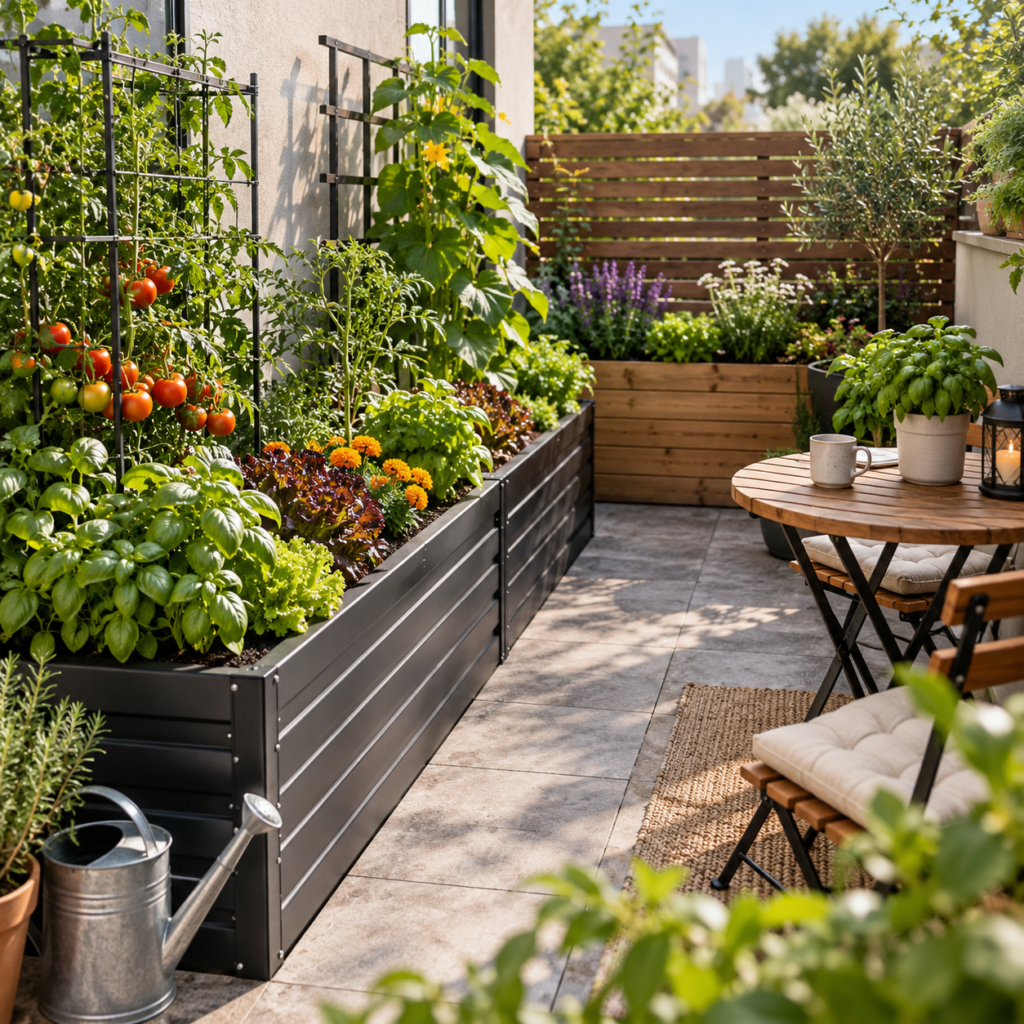
One effective way to preserve open space is to position raised beds along the perimeter of your yard.
Instead of placing a large planter in the center, use a narrow bed beside a fence or patio edge.
This arrangement keeps the middle of the backyard available for walking, seating, or other outdoor activities.
Low-growing vegetables and herbs can be planted near the front, while taller crops can be positioned where they won’t shade neighboring plants.
For a cohesive appearance, choose bed materials that complement existing fences, decking, or patio furniture.
A compact garden becomes more flexible when plants can grow upward.
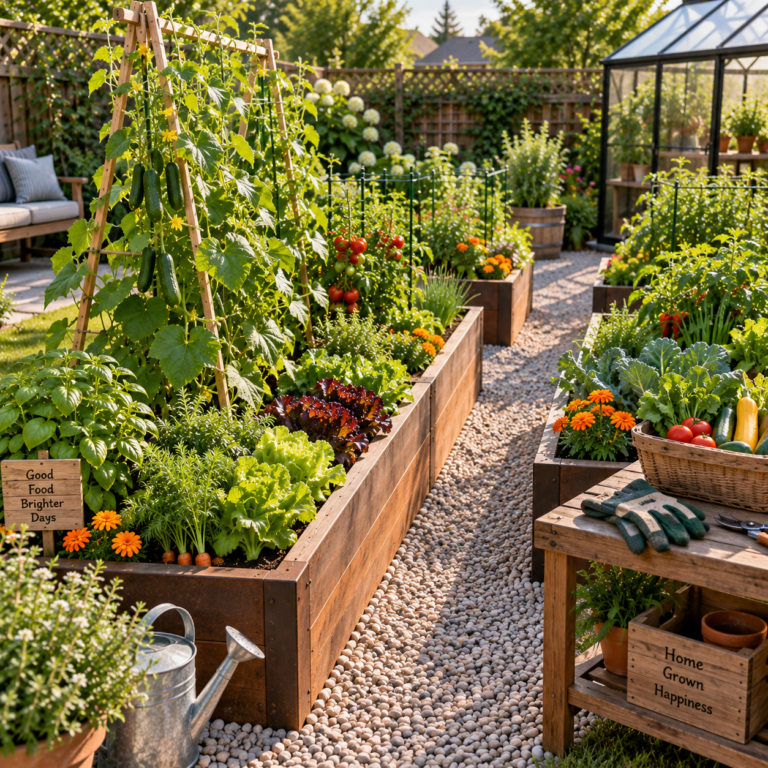
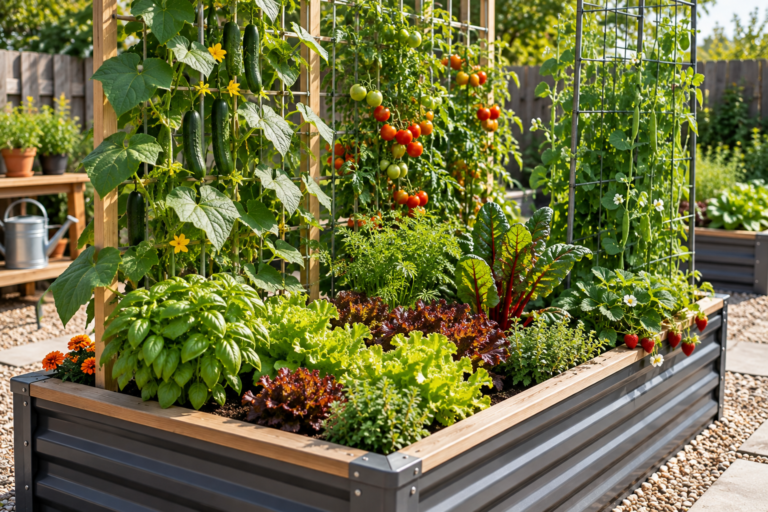
A simple trellis attached securely to a raised bed can support climbing vegetables such as cucumbers, peas, and pole beans.
Vertical growing reduces the amount of horizontal space these crops occupy and can make harvesting easier.
Position supports carefully to avoid shading sun-loving plants.
You can also combine climbing crops with smaller vegetables, provided each plant has sufficient root space, nutrients, and airflow.
For additional planting strategies, see our guide on maximizing growing space in a raised garden bed.
Raised beds don’t have to look like separate gardening equipment.
In a small backyard, they can become part of the outdoor living space.
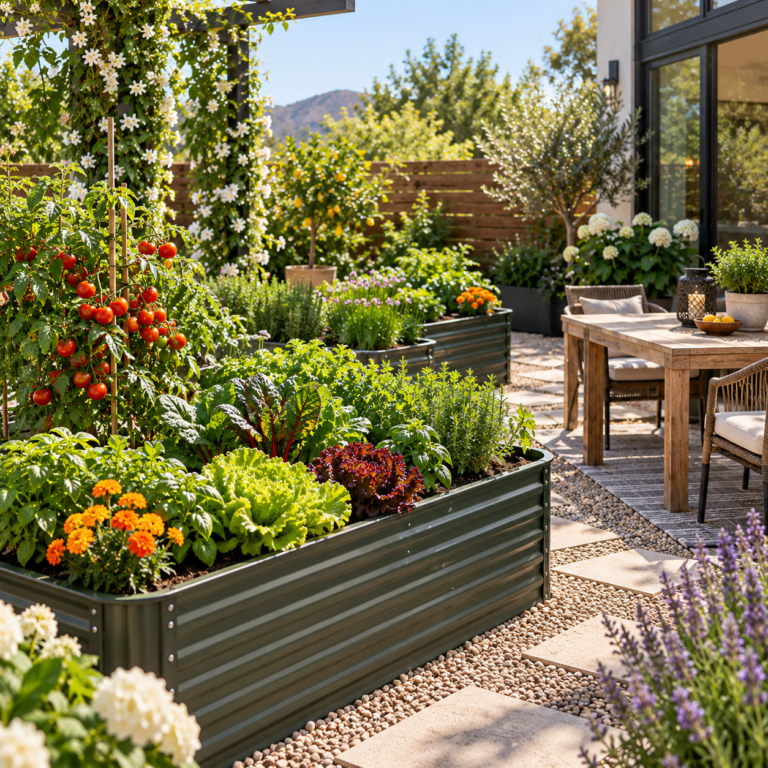
Consider positioning a compact wooden or metal bed beside a patio, using similar colors and materials to create a consistent appearance.
Herbs such as basil, parsley, thyme, and chives are useful choices near an outdoor kitchen or seating area.
Avoid placing beds where watering runoff could create slippery surfaces or damage nearby structures.
The goal is to make the garden feel like a natural extension of your backyard rather than an obstacle.
Plant selection matters as much as the garden bed itself.
Compact vegetables, leafy greens, herbs, and suitable bush varieties can make better use of limited growing space than large, sprawling crops.
Consider the mature size of each plant before deciding how many seedlings to add.
For example, lettuce and radishes generally require less space than full-sized tomato plants or sprawling squash.
Succession planting can also improve productivity. After harvesting a short-season crop, you may be able to grow another vegetable in the same space.
Different spaces call for different arrangements.
| Garden Space | Recommended Design | Suitable Plants |
|---|---|---|
| Narrow side yard | Long, slim raised bed | Herbs, lettuce, radishes |
| Small patio | Compact elevated planter | Herbs, strawberries, greens |
| Backyard corner | Two connected-looking rectangular beds | Leafy greens, peppers |
| Small sunny lawn | One central rectangular bed | Tomatoes, lettuce, herbs |
| Fence boundary | Narrow bed with trellis | Cucumbers, beans, peas |
| Compact courtyard | Raised bed with nearby containers | Herbs, greens, compact peppers |
Choose the arrangement that leaves comfortable access rather than simply maximizing planting area.
A small garden should reduce your workload, not create unnecessary maintenance.
Leave enough room for watering, harvesting, and removing weeds. Use mulch to reduce exposed soil and help conserve moisture.
If your backyard has an irregular shape, sketch the layout before purchasing materials.
Include existing doors, fences, drainage routes, and walking areas.
For more detailed planning advice, read our article on designing a raised garden bed layout.

Small gardens benefit from thoughtful details.
A few flowering plants, attractive edging, or coordinated containers can make raised beds feel more intentional.
Marigolds, calendula, and other suitable flowers can add color, while herbs contribute fragrance and texture.
However, avoid filling every available corner with decorations.
A simple combination of healthy plants, clean pathways, and well-maintained beds often creates a more attractive result than an overly complicated design.
Raised garden beds offer plenty of possibilities for small outdoor spaces, but thoughtful placement is more important than the number of beds you install.
Start with a manageable growing area, use backyard boundaries efficiently, consider vertical supports, and choose crops suited to the available space.
By combining practical growing decisions with a simple design, even a compact backyard can become an enjoyable and productive garden.
For more small backyard inspiration, creative planting arrangements, and practical outdoor ideas, explore our Garden Ideas guides.