Newsletter Subscribe
Enter your email address below and subscribe to our newsletter


Raised Bed Gardening Made Simple
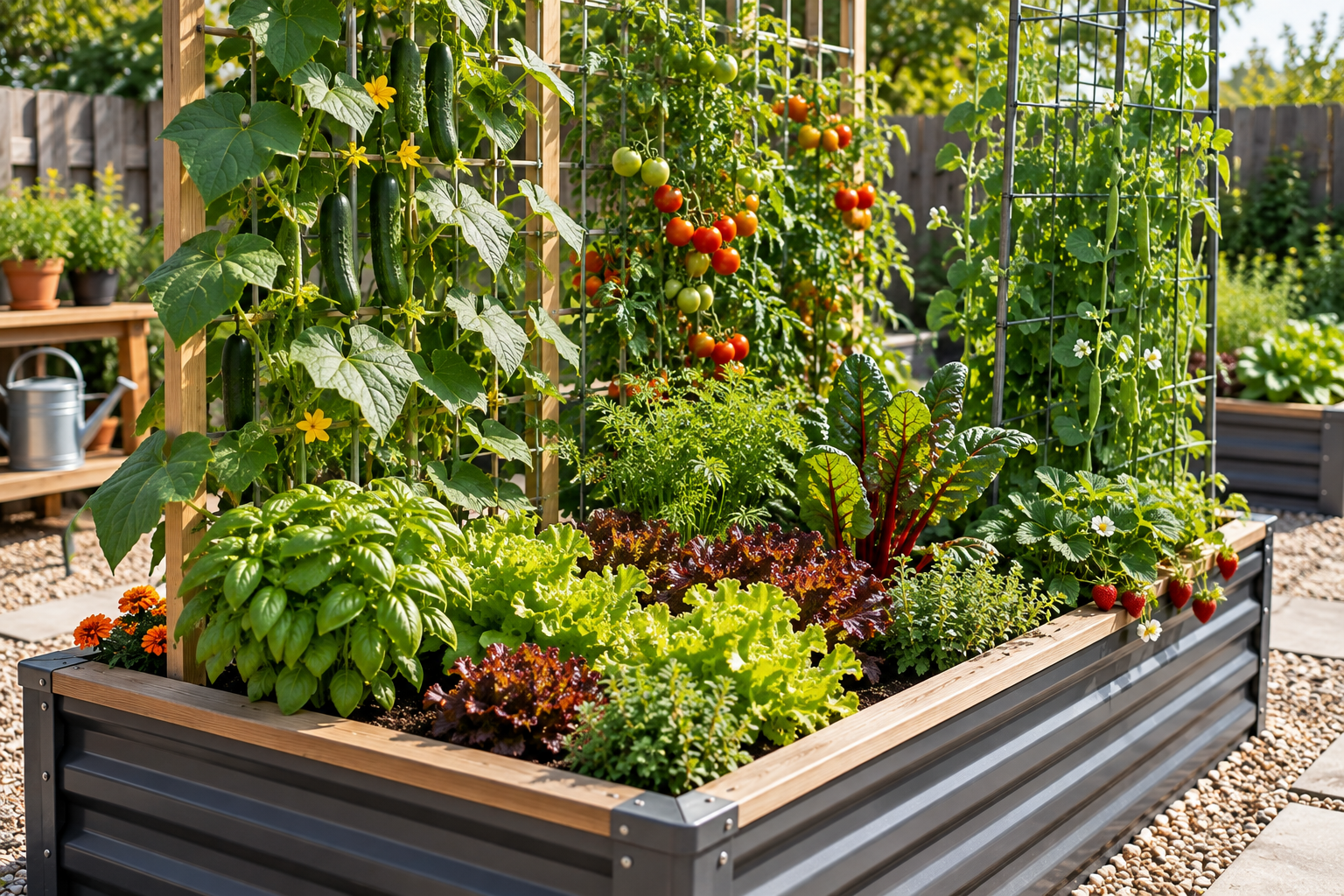
A raised garden bed may have a limited footprint, but that does not mean its harvest has to be small. With thoughtful crop selection and better use of vertical and temporary spaces, even a compact bed can produce vegetables and herbs throughout much of the growing season.
The key is not simply squeezing more plants into the soil. Overcrowding can create competition for sunlight, moisture, and nutrients. Instead, the goal is to use the available space more efficiently while still giving each plant enough room to develop.
Here are practical ways to maximize growing space in a raised garden bed without making it difficult to maintain.
Vertical gardening is one of the most effective ways to increase the usable growing area of a raised bed.
Instead of allowing climbing crops to spread across the soil, train them upward on a trellis.
Good candidates include:
Install the trellis along one side of the bed so you can still reach the other plants easily.
Consider the direction of sunlight as well. Tall vines should not create unnecessary shade over vegetables that require full sun.
A strong vertical structure can turn a relatively small section of soil into several feet of productive growing space.
Not every vegetable needs to become enormous.
Many seed companies offer compact, bush, patio, or dwarf varieties developed for smaller gardens and containers.
For example, a bush cucumber generally requires less horizontal space than a vigorous traditional vine. Compact tomato and pepper varieties can also fit more comfortably into smaller beds.
When buying seeds, check the expected mature size rather than focusing only on the vegetable type.
Two varieties of the same crop can have very different space requirements.
A productive raised bed should not remain empty for weeks after a crop is harvested.
Succession planting means replacing finished vegetables with another crop during the same growing season.
For example, early spring radishes may be harvested before warm-season vegetables need their full space. Later in the year, quick-growing greens can sometimes replace crops that have finished producing.
The exact sequence depends on your climate and growing season.
Keep basic records of planting and harvest dates. Over time, this makes it easier to identify periods when valuable bed space is sitting unused.
Some vegetables occupy the garden for months, while others are ready to harvest relatively quickly.
You can sometimes use the temporary open space around slow-growing plants for faster crops.
For example, young tomato plants do not immediately occupy their entire mature footprint. Small leafy vegetables or radishes may be able to grow nearby early in the season and be harvested before the tomatoes become large.
This technique requires planning.
The temporary crop should be removed before competition becomes significant.
Think about how large each vegetable will become—not just how large it is on planting day.
The edges of a raised garden bed are often underused.
Smaller plants can sometimes be positioned near the perimeter where their leaves can extend slightly beyond the frame.
Herbs and compact leafy vegetables are particularly useful in these areas.
Possible edge crops include:
Avoid planting vegetables with large root systems too close to the edge if the bed becomes very hot or dries quickly there.
The goal is to use overlooked areas without creating overcrowding.
You do not always need to wait for an entire plant to reach maximum size before harvesting it.
Some leafy vegetables can be harvested using a “cut-and-come-again” approach.
Instead of removing the whole plant, harvest mature outer leaves while allowing the center to continue growing.
This works with certain types of:
Gradual harvesting can provide repeated yields from the same small planting area.
Follow the appropriate harvesting method for the specific variety you are growing.
Large vegetables can quickly dominate a small raised bed.
Pumpkins, sprawling squash, melons, and vigorous cucumbers may cover neighboring plants if allowed to grow freely.
That does not necessarily mean you cannot grow them.
Where appropriate, vines can be trained toward the outside of the bed or supported vertically with a sufficiently strong structure.
However, be realistic about available space.
Sometimes replacing one extremely large plant with several compact crops produces a more useful harvest for a small household garden.
One of the easiest mistakes to make is judging spacing based on seedlings.
A six-inch tomato transplant looks tiny in a large raised bed. Several weeks later, that same plant may occupy a substantial area.
Before planting, consider the mature width and height of every crop.
Position taller vegetables where they are less likely to shade shorter plants.
Place compact crops in smaller gaps and reserve open areas for vegetables that will eventually spread.
Planning around mature size helps you use space efficiently without creating an overcrowded garden later.
Harvesting often creates small openings rather than an entirely empty bed.
Use these gaps.
If one lettuce plant is harvested, you may be able to sow another quick crop in its place. If early peas finish producing, their area can potentially support another vegetable suited to warmer weather.
Keep a few packets of fast-growing seeds available so you can respond when planting space becomes available.
Small gaps can add up to significant additional production over an entire season.
Maximizing growing space does not have to stop at the frame.
If the surrounding pathway or patio has unused sunny areas, containers can complement the raised bed.
Herbs, strawberries, small peppers, and compact vegetables can often grow successfully in pots.
This allows the main raised bed to be reserved for crops that benefit most from deeper or more continuous soil space.
Containers can also be moved when sunlight patterns change during the season.
Efficient planting and overcrowding are not the same thing.
Putting too many vegetables into one bed can reduce airflow and make harvesting, watering, and inspecting plants more difficult.
Follow reasonable spacing recommendations and adjust them according to the mature size of each variety.
A smaller number of healthy plants can sometimes produce more usable food than a crowded bed full of struggling plants.
Learning how to maximize growing space in a raised garden bed is about using the available area more intelligently rather than simply planting more.
Grow climbing vegetables vertically, choose compact varieties, use succession planting, take advantage of temporary gaps, and position crops according to their mature size.
You can also use bed edges, gradual harvesting, and nearby containers to increase production without expanding the raised bed itself.
With thoughtful planning, even a relatively small raised garden bed can support a surprising variety of vegetables and herbs throughout the season.