Newsletter Subscribe
Enter your email address below and subscribe to our newsletter


Raised Bed Gardening Made Simple
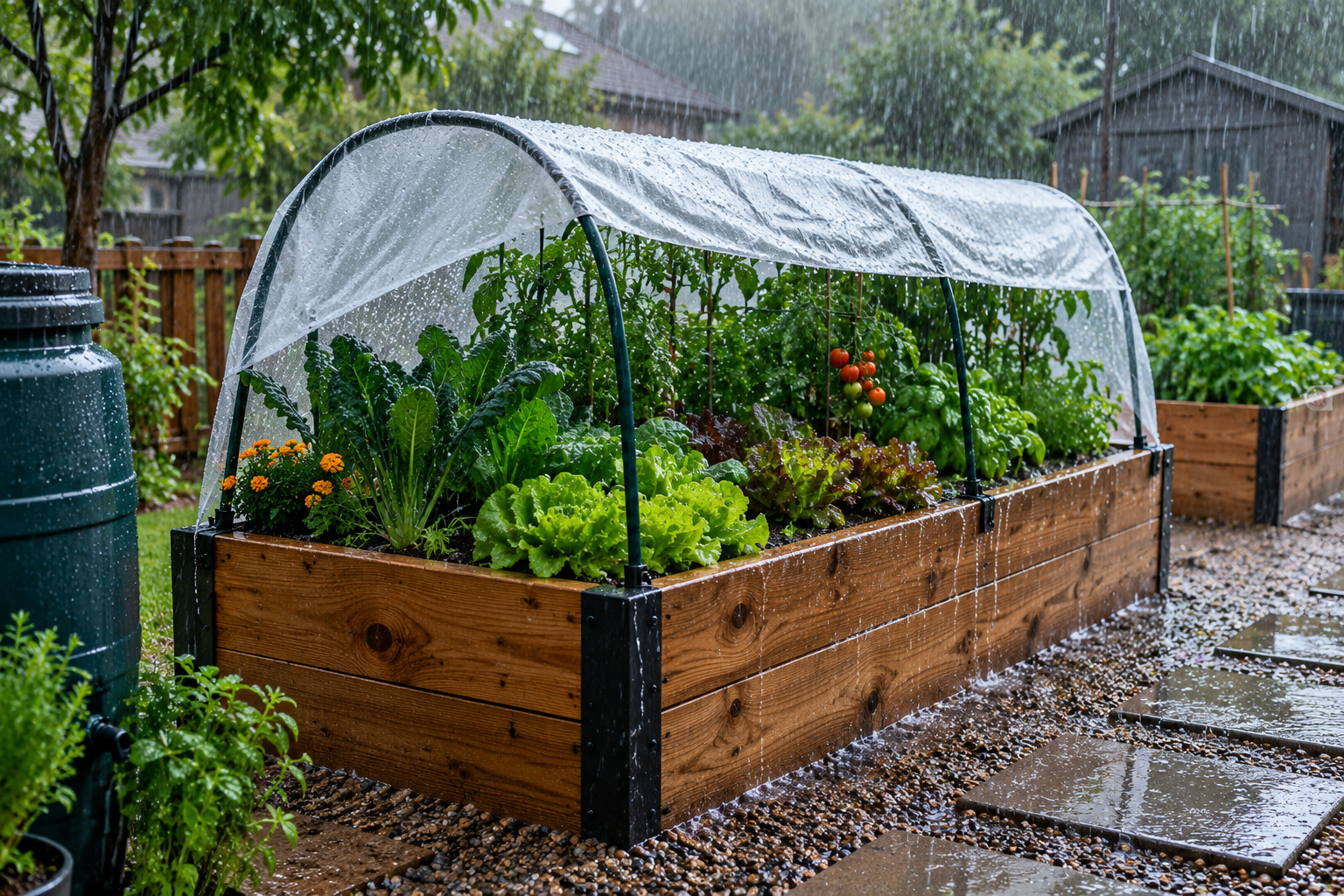
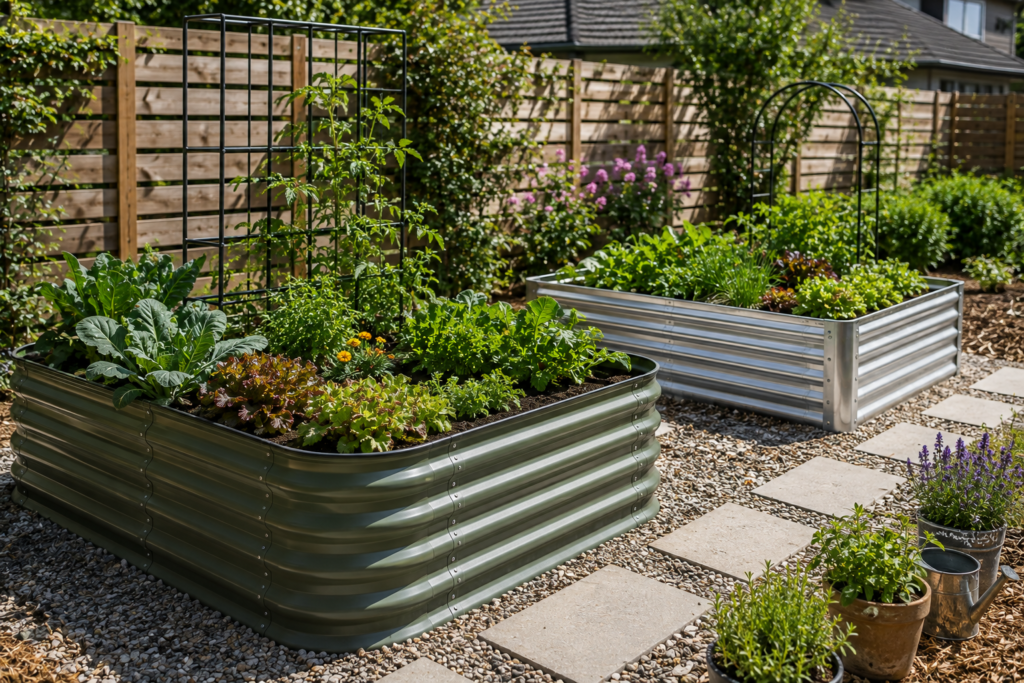
Raised garden beds generally handle wet weather better than poorly drained in-ground gardens, but several days of intense rain can still cause problems.
Excess water can saturate the root zone, wash soil from the bed, flatten seedlings, expose roots, damage fruit, and create conditions that favor certain plant diseases.
Fortunately, most rain damage can be reduced with preparation.
The goal is not to keep every drop of rain out of your raised bed. Instead, focus on helping excess water drain away efficiently while protecting soil and plants from the physical force of heavy rainfall.
Here are practical ways to protect a raised garden bed before, during, and after a major rain event.
Drainage is your first line of defense.
Utah State University Extension recommends ensuring that water can drain freely through raised-bed soil and away from the plant root zone.
After normal watering, observe your bed.
If water remains pooled on the surface for a long period or the soil stays saturated for days, investigate the cause before the next storm.
Possible problems include compacted soil, a blocked bottom, heavy clay-rich soil, or a raised bed positioned over an area where water naturally collects.
Do not automatically assume that adding gravel to the surface will solve the problem. The important issue is how water moves through the entire soil profile and exits the bed.
Soil structure determines how quickly water can move through a raised bed.
Very dense soil may drain slowly, while an excessively light mix can behave differently and may dry too quickly after storms pass.
University of Minnesota Extension recommends a raised-bed mixture containing roughly one-half to two-thirds topsoil and one-third to one-half plant-based compost, while cautioning against unsuitable extremes such as very clay-heavy soil.
Oregon State University Extension similarly recommends incorporating organic matter into heavy, slow-draining soils.
The goal is a workable, well-structured soil—not simply adding as much compost as possible.
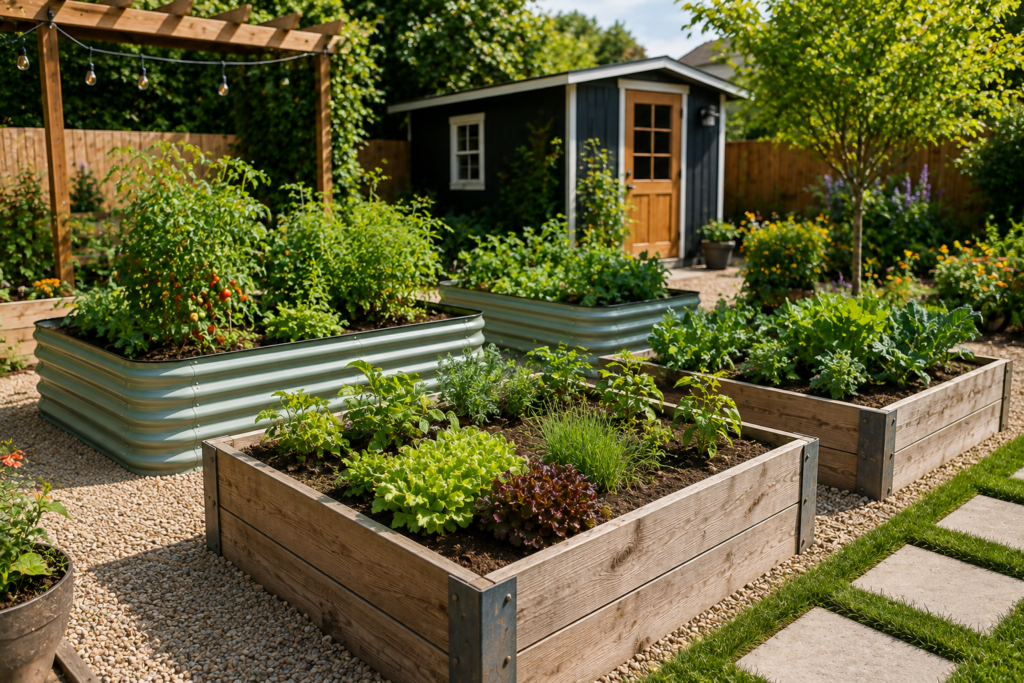
Heavy raindrops hitting exposed soil can disturb the surface and contribute to erosion and splashing.
A layer of organic mulch provides physical protection between rainfall and the soil.
Suitable materials may include:
Apply mulch around established plants without piling it directly against stems.
Mulch also changes how quickly soil loses moisture, so after a rainy period, check soil moisture before resuming irrigation.
| Problem | Warning Sign | Recommended Action | Avoid |
|---|---|---|---|
| Waterlogging | Water remains pooled | Improve drainage and soil structure | Adding more irrigation |
| Soil erosion | Soil moves toward bed edges | Apply organic mulch | Leaving soil completely bare |
| Seedling damage | Young plants flattened | Use temporary rain protection | Sealing plants without ventilation |
| Soil splash | Mud appears on lower leaves | Mulch exposed soil | Allowing leaves to rest on wet soil |
| Overflow | Water spills over one section | Check drainage and bed level | Blocking drainage outlets |
| Saturated soil after rain | Soil remains wet below surface | Pause irrigation and monitor | Watering on a fixed schedule |
Use this table as a diagnostic guide rather than a substitute for observing your own soil, climate, and plants.
One of the simplest mistakes during rainy weather is leaving irrigation on its normal schedule.
If significant rain has already saturated the bed, additional irrigation may unnecessarily prolong wet conditions.
Check the soil rather than relying only on the calendar.
Oregon State University Extension recommends checking moisture below the surface; surface appearance alone does not always tell you whether the root zone needs water.
If the soil is already moist, wait.
Resume irrigation when plants actually need it.
For especially vulnerable crops, a temporary cover can reduce the direct impact of prolonged rainfall.
A simple hoop structure over the raised bed can support horticultural plastic or another appropriate waterproof covering.
Oregon State University Extension describes low tunnels as structures that can protect crops from high rainfall, particularly during cool, wet spring and fall conditions.
However, do not completely seal the bed.
Plants still need ventilation, and heat can accumulate quickly under plastic when sunshine returns.
The cover should also be sloped or curved so rain runs off rather than collecting overhead.
Sometimes the rain falling directly into the bed is not the real problem.
A nearby roof, shed, patio, driveway, or other hard surface can concentrate a much larger volume of water into one area.
Observe the garden during rainfall.
If water from a downspout or roof edge is flowing toward the raised bed, redirect that runoff away from the growing area.
This is especially important when beds are positioned beside houses, garages, or sheds.
Wet soil is heavy.
During prolonged rainfall, a large raised bed frame must support the combined weight of saturated soil, plants, and water.
Oregon State University Extension recommends reinforcement for framed beds longer than about 6 feet or taller than about 18 inches, using measures such as anchored stakes or cross supports to resist outward soil pressure.
Periodically inspect wooden boards, screws, corner joints, metal panels, and braces.
A slightly loose frame may become a much bigger problem after several days of heavy rain.
After a storm, resist the temptation to step inside the raised bed to inspect plants.
Wet soil is particularly vulnerable to compaction.
One advantage of raised-bed gardening is that plants can normally be reached from surrounding pathways without stepping on the growing area. OSU recommends keeping foot traffic in paths rather than compacting prepared bed soil.
Wait until conditions improve before doing unnecessary soil work.
Once heavy rain stops, inspect the garden carefully.
Look for:
Exposed roots: Gently replace displaced soil around plants.
Flattened seedlings: Carefully support them rather than pulling aggressively on wet stems.
Damaged leaves: Remove severely broken or decaying material with clean tools when appropriate.
Standing water: Determine why it is not draining.
Eroded areas: Replace lost soil and protect the surface with mulch.
Also check tomatoes and other supported plants because wet soil and strong winds can loosen stakes or trellises.
Wet leaves and persistent humidity can create favorable conditions for several plant diseases.
University of Minnesota Extension recommends watering close to the soil rather than unnecessarily wetting foliage, partly because this can help reduce disease problems.
After extended rain, improve airflow where possible.
Avoid aggressively pruning plants while they are soaking wet, but once conditions allow, remove badly damaged material and keep dense growth from becoming unnecessarily congested.
Continue monitoring plants over the following days rather than assuming that surviving the storm means there will be no later problems.
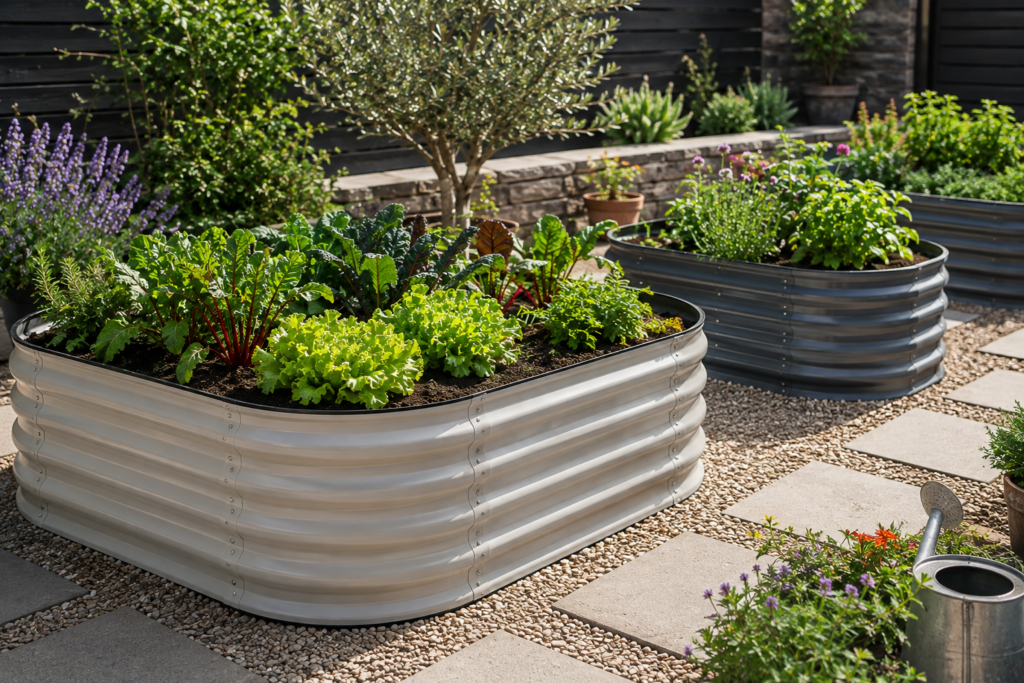
One severe storm does not necessarily mean your entire raised-bed system needs rebuilding.
First observe what happened.
If water drained away reasonably quickly and the plants recovered, major structural changes may not be necessary.
But if standing water repeatedly remains after rainfall, treat it as a drainage problem rather than an isolated weather event.
USU notes that organic matter can improve drainage in fine-textured soils, while raised beds themselves are one strategy for keeping part of the root system above poorly drained native ground.
Learning how to protect raised garden beds from heavy rain is mostly about preparation rather than emergency fixes during a storm.
Start with well-structured, freely draining soil. Protect exposed soil with mulch, stop unnecessary irrigation when rain arrives, redirect concentrated runoff, and use temporary covers when vulnerable crops genuinely need protection.
After the storm, inspect the bed for standing water, erosion, structural damage, exposed roots, and damaged plants.
Most importantly, pay attention to how quickly your raised bed recovers.
A healthy raised bed does not need to remain dry during heavy rain—it needs to shed excess water effectively while keeping enough air in the root zone for plants to recover.