Newsletter Subscribe
Enter your email address below and subscribe to our newsletter


Raised Bed Gardening Made Simple
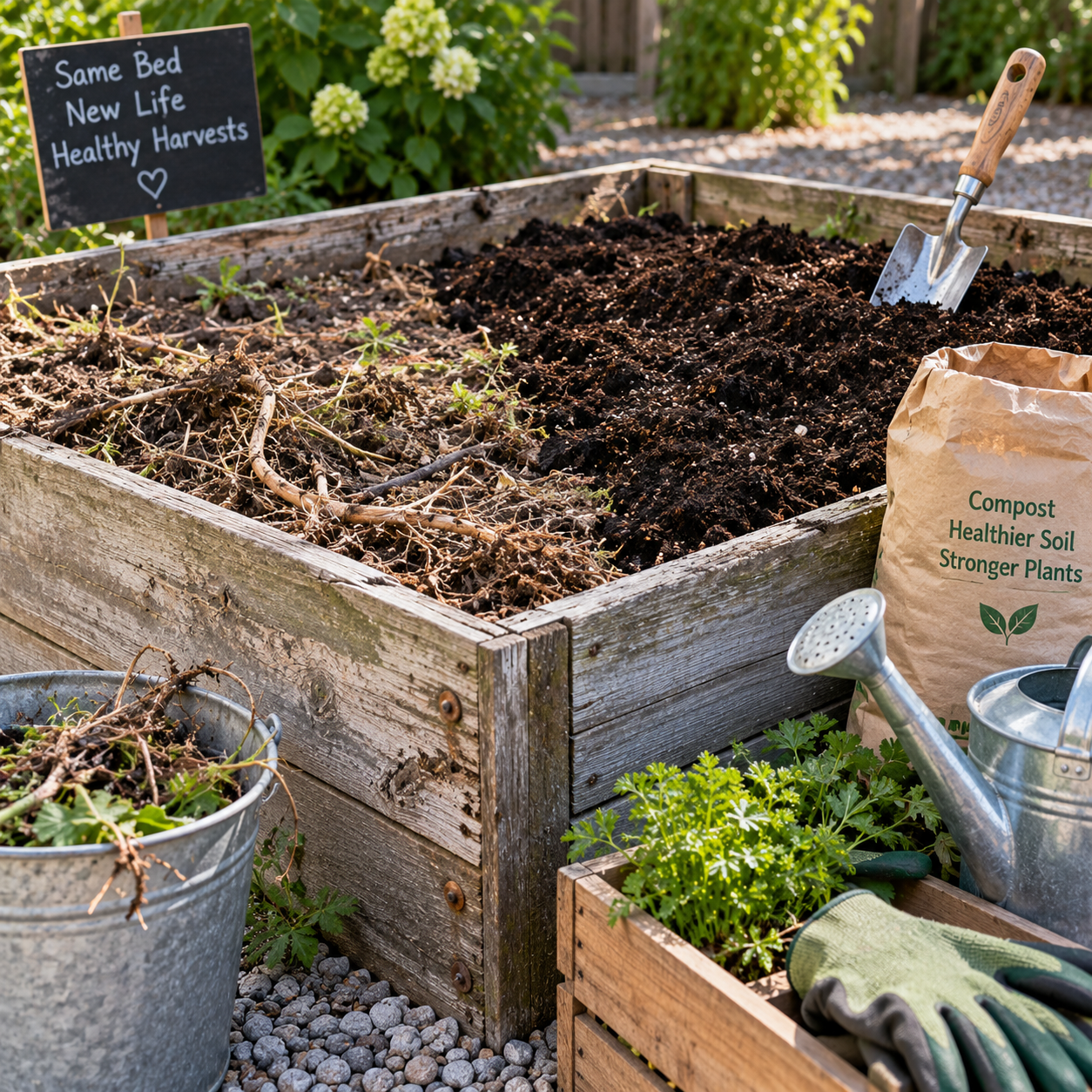
An old raised garden bed doesn’t necessarily need to be replaced. Even after several growing seasons, a weathered frame and tired-looking soil can often be restored with a little maintenance.
You may notice that the soil level has dropped, weeds are appearing more frequently, or vegetables aren’t growing as vigorously as they once did. Wooden boards may also show signs of wear, while metal beds can develop loose connections or damaged coatings.
Before spending money on a new raised bed, take time to inspect what you already have. A few practical improvements may be enough to prepare it for another productive growing season.
Start by clearing the bed of finished crops, fallen leaves, weeds, and unwanted plant material.
Remove roots from large annual vegetables where practical, especially if they interfere with preparing the soil.
Healthy plant debris can often be composted. However, plants affected by serious diseases should be handled according to local extension guidance, since some pathogens may survive ordinary backyard composting.
Check corners and edges carefully for perennial weeds or roots that could regrow.
Once the surface is clear, you’ll have a better view of the bed’s condition.
Before adding new soil, examine the structure.
For wooden raised beds, look for soft or rotting boards, loose fasteners, separating corners, and areas where soil is escaping.
Metal beds should be checked for sharp edges, loose bolts, corrosion, and damaged panels.
Minor problems may only require tightening hardware or replacing a board. More serious structural damage may require rebuilding part of the frame.
Don’t fill a bed with fresh soil until you’re confident it can safely support the weight, particularly when wet.
For wooden bed maintenance, see our guide on how to extend the life of a wooden raised garden bed
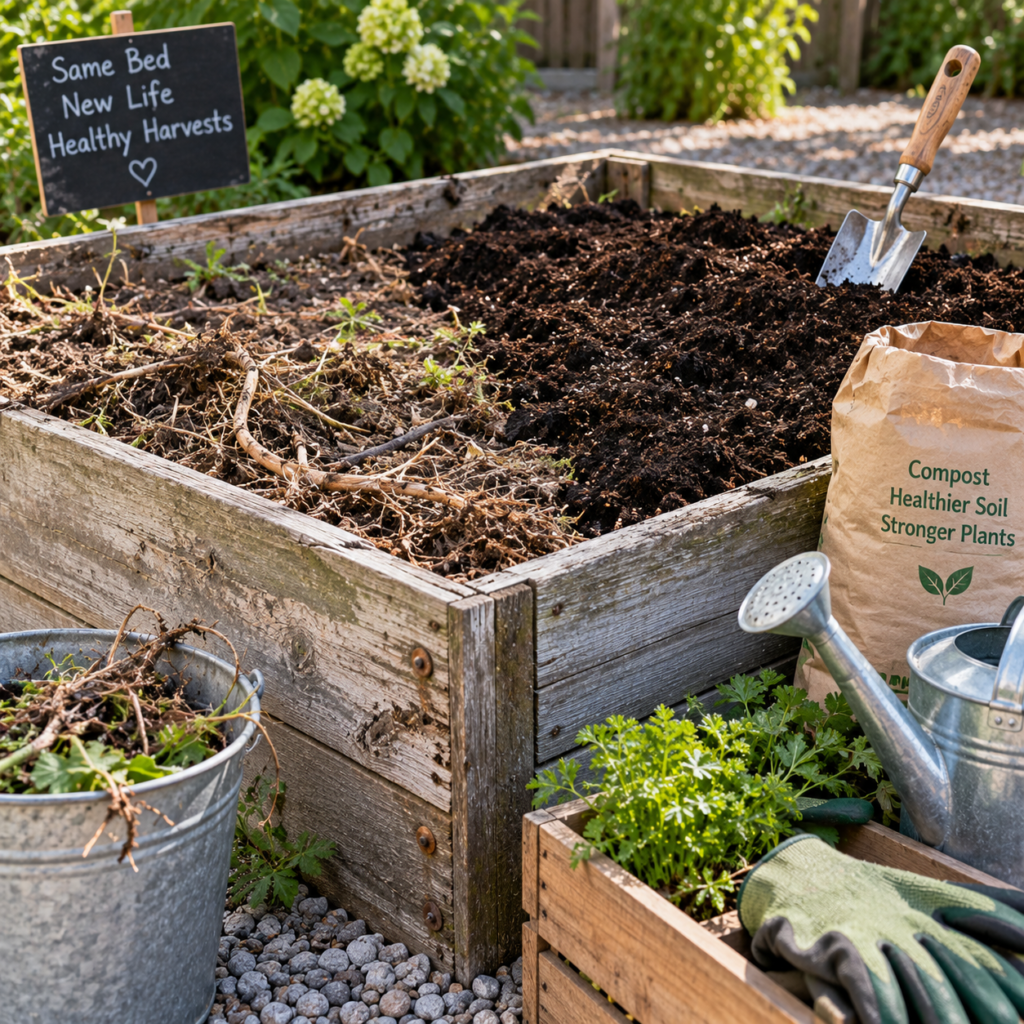
Old raised bed soil doesn’t automatically become unusable.
However, repeated planting, organic matter decomposition, and watering can change its structure and nutrient levels.
Examine the soil before adding amendments.
Does water soak in easily? Is the soil unusually compacted? Are roots growing normally?
If vegetables have struggled for several seasons, consider a soil test to check pH and nutrient levels.
Avoid adding large amounts of fertilizer without knowing what the soil needs.
Mature compost can be useful when refreshing raised bed soil.
It contributes organic matter and may improve soil structure, water retention, and biological activity.
Spread a modest layer of finished compost over the surface and gently incorporate it into the upper soil if needed.
Avoid excessive digging, especially when the soil is wet.
If the bed has settled significantly, you may also need additional suitable growing soil to restore the desired planting level.
For more information about soil preparation, explore our guide on best soil for raised garden beds.
Poor drainage can cause problems even in raised beds.
If water remains pooled for extended periods, investigate the cause before planting.
Compacted soil, blocked drainage openings, or poorly draining ground beneath the bed may contribute to the problem.
Gently loosen compacted areas where appropriate and make sure water has a suitable route to escape.
Avoid lining the entire bottom with impermeable plastic, which can trap water around plant roots.
| Problem | Possible Cause | Recommended Action |
|---|---|---|
| Soil level has dropped | Settling and organic matter decomposition | Top up with suitable soil |
| Poor vegetable growth | Nutrient imbalance or other growing conditions | Test soil and investigate |
| Water pooling | Compaction or restricted drainage | Improve drainage |
| Frequent weeds | Exposed soil and weed seeds | Remove weeds and add mulch |
| Rotting wooden boards | Prolonged moisture exposure | Replace damaged boards |
| Loose metal panels | Aging fasteners or movement | Tighten or replace hardware |
| Hard soil surface | Compaction or crusting | Loosen carefully and add organic matter |
Not every raised bed requires all these repairs. Focus on the problems you actually observe.
After improving the soil, consider adding an appropriate mulch layer.
Clean straw, shredded leaves, and other suitable organic materials can help reduce moisture loss, protect the soil surface, and suppress some weed growth.
Keep mulch away from direct contact with plant stems.
If you’re preparing the bed for spring planting, allow the soil to warm sufficiently before applying a thick layer around warm-season crops.
Mulch can be replenished as it decomposes.
Once the bed is repaired and the soil is ready, decide what to grow next.
Review the vegetables planted in previous seasons and note any recurring pest or disease problems.
Where practical, avoid repeatedly growing crops from the same plant family in a bed with known soilborne disease issues.
Choose vegetables suited to your climate, sunlight, and available growing space.
If the bed is newly refreshed, starting with a manageable planting plan makes it easier to monitor soil moisture and plant performance.
Refreshing isn’t always the best option.
If wooden boards are severely rotten, metal panels have become unsafe, or the structure can no longer hold soil securely, replacement may be more practical.
Suspected chemical contamination also requires proper investigation rather than simply adding compost.
For beds with sound frames and generally healthy soil, routine maintenance is often sufficient.
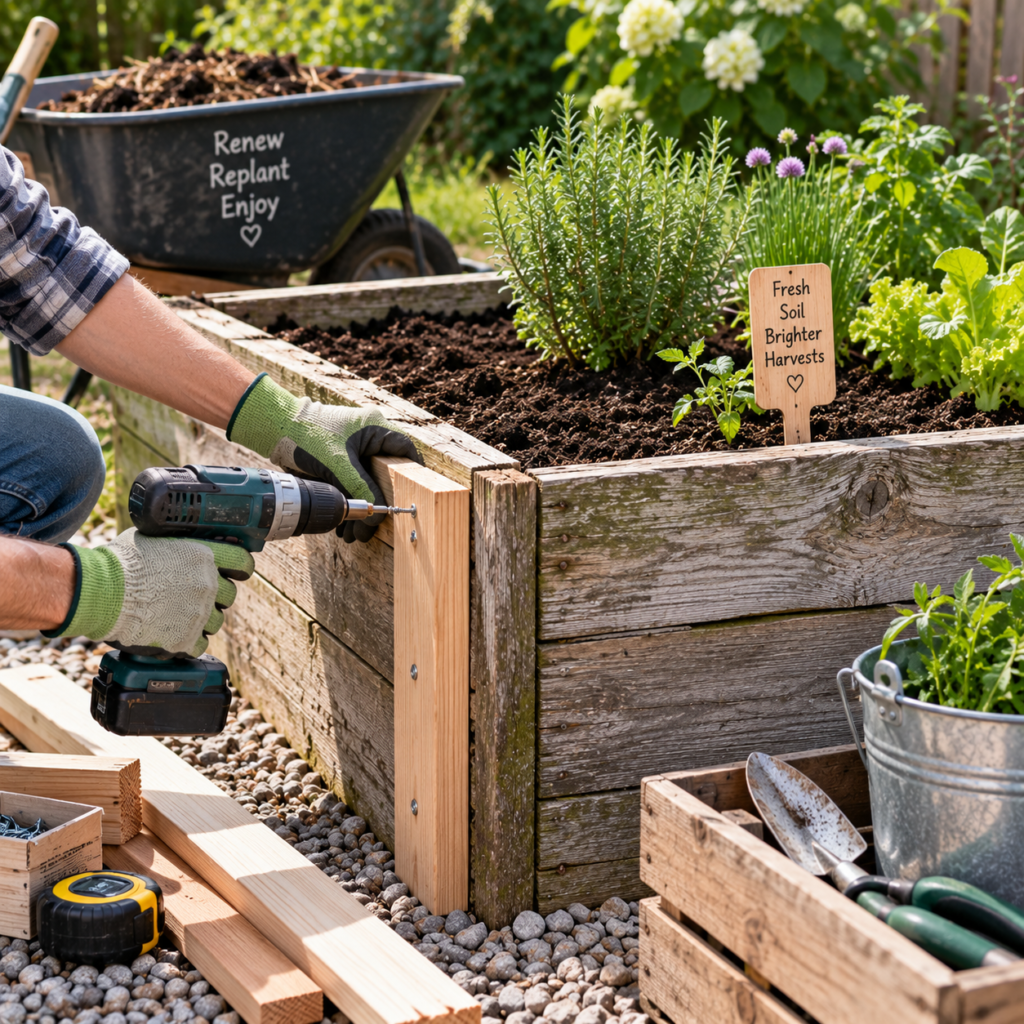
Refreshing an old raised garden bed is usually simpler than starting from scratch.
Remove old debris, inspect the frame, assess the soil, add organic matter where needed, and correct drainage problems before planting.
Regular maintenance can extend the useful life of your raised bed and help create better conditions for future vegetables.
For more practical advice on seasonal maintenance, watering, soil protection, and raised bed repairs, explore our Garden Care guides.