Newsletter Subscribe
Enter your email address below and subscribe to our newsletter


Raised Bed Gardening Made Simple
Category: Raised Bed Guides
Suggested URL: /are-wooden-raised-garden-beds-safe-for-vegetables/
Primary Keyword: Are Wooden Raised Garden Beds Safe for Vegetables
SEO Title: Are Wooden Raised Garden Beds Safe for Vegetables?
Meta Description: Are wooden raised garden beds safe for growing vegetables? Learn which woods to choose, what materials to avoid, and how to build a safe and productive vegetable garden.
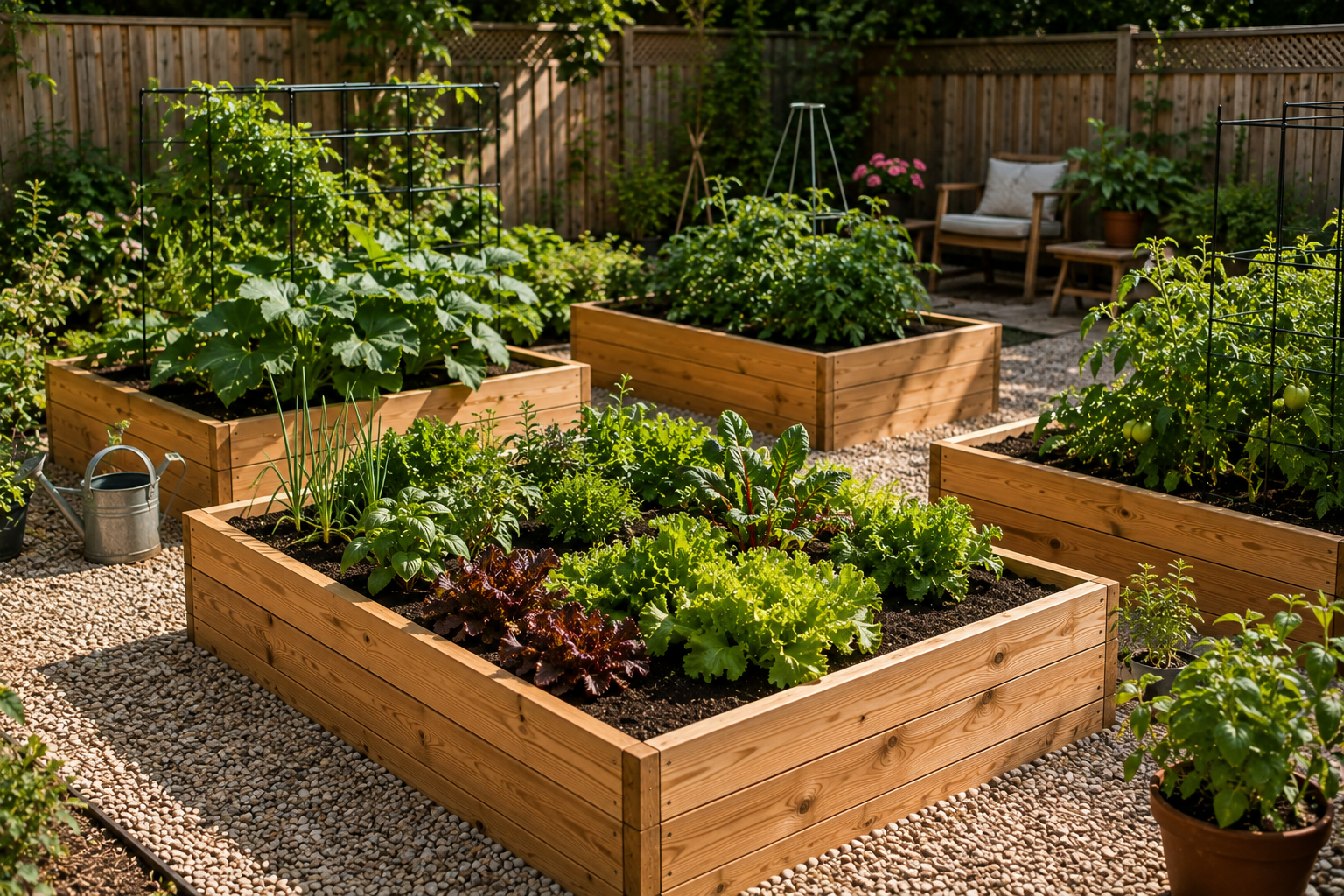
Wooden raised garden beds are a favorite among home gardeners because they look natural, are easy to build, and fit beautifully into almost any backyard. But when you’re growing tomatoes, lettuce, carrots, herbs, and other food crops, an important question often comes up:
Is the wood surrounding your vegetables actually safe?
In most cases, wooden raised beds can be an excellent choice for growing vegetables. The key is knowing what type of wood you’re using and whether it has been treated, painted, stained, or previously used for another purpose.
Here’s what gardeners should consider before building or buying a wooden vegetable bed.
Wood is particularly practical for raised beds because it is easy to cut, drill, repair, and customize.
Unlike prefabricated beds with fixed dimensions, a wooden frame can be built specifically for your available space.
You can create:
Wood also has a softer, more traditional appearance than metal, helping vegetable gardens blend naturally into lawns and landscaped backyards.
The material itself isn’t usually the main concern. What matters is which wood and finish you choose.
Cedar is one of the most popular materials for vegetable raised beds.
It is commonly selected because it performs well outdoors and has natural characteristics that help it resist decay better than many inexpensive softwoods.
For gardeners who want to avoid unnecessary chemical treatments, untreated cedar is an appealing option.
Cedar also ages attractively. Fresh boards may begin with warm reddish or golden tones and gradually weather toward gray when left unfinished.
Its main disadvantage is price.
Cedar can cost considerably more than basic lumber, particularly when building several large beds.
However, gardeners planning a long-term backyard setup may find the additional initial cost worthwhile.
Pine and fir are also commonly used for raised garden beds.
They are generally more affordable than cedar and widely available, making them practical for gardeners on a budget.
Untreated pine or fir can be used for vegetable beds, although these woods may deteriorate faster when constantly exposed to moist soil.
That doesn’t mean they are poor choices.
If you’re building your first garden and don’t know whether you’ll keep the same layout permanently, an inexpensive wooden bed may make more sense than investing heavily from the beginning.
The important distinction is between the wood species and any treatment applied to the wood.
Pressure-treated lumber deserves more careful consideration.
Modern treated lumber is different from some older treated wood products, and formulations vary by location and manufacturer.
If you’re considering treated lumber for an edible garden, don’t make assumptions based on appearance alone.
Check the product label or manufacturer’s technical information to determine:
What preservative was used?
What applications is the lumber intended for?
Does the manufacturer provide guidance for garden use?
If you prefer a simpler approach, untreated cedar or another untreated wood suitable for outdoor construction removes much of this uncertainty.
Reclaimed materials can make garden projects look rustic and environmentally friendly, but unknown lumber isn’t always appropriate around edible crops.
Old boards may previously have been:
Railroad ties and utility-related timbers are particularly poor materials to select casually for a vegetable garden because their treatment history may involve strong preservatives.
Reusing wood is worthwhile when you know its origin.
If you don’t know what happened to a piece of lumber during its previous life, use it for a non-food landscaping project instead.
Painting can change the appearance of a raised bed and potentially protect exterior wood surfaces, but product selection matters.
Don’t grab leftover paint from your garage simply because you already have it.
If you want to paint, stain, or seal your vegetable bed, research the specific product and follow the manufacturer’s instructions regarding intended applications.
Another option is leaving suitable wood unfinished.
Cedar, for example, is often allowed to weather naturally without decorative coatings.
A weathered appearance does not necessarily mean the bed has stopped functioning.
Some gardeners line the interior walls of wooden beds to reduce direct contact between damp soil and wood.
A liner may help protect the sides, but it should not create a waterproof container that traps excess water around plant roots.
Drainage remains essential.
For ground-level beds, keeping the bottom open allows water to move downward and gives plant roots the opportunity to reach the underlying soil.
If you decide to use an interior barrier, choose the material carefully and preserve adequate drainage.
The material surrounding the soil is only one part of the garden.
Once you’ve selected appropriate lumber, your attention should shift toward the growing environment.
Healthy vegetables depend much more heavily on:
Good soil structure
Organic matter
Adequate sunlight
Reliable drainage
Appropriate watering
Plant nutrition
Correct spacing
A beautiful cedar frame filled with poor, compacted soil will not perform as well as a simple bed filled with a healthy growing medium.
Wooden beds can support an enormous variety of edible plants.
For a sunny backyard, consider combining crops with different growth habits.
Place taller tomatoes where they won’t shade smaller plants and provide sturdy support.
Lettuce is excellent for filling open spaces during cooler parts of the growing season.
A loose, stone-free growing medium helps roots develop more evenly.
Their relatively compact shape makes peppers easy to incorporate into mixed beds.
Train cucumber vines onto a trellis instead of allowing them to cover the entire bed.
Basil, parsley, thyme, cilantro, and other culinary herbs can be planted near bed edges for convenient harvesting.
Before putting soil into a new wooden bed, ask:
| Question | What to Check |
|---|---|
| Do I know the wood species? | Look for clearly identified lumber |
| Is it treated? | Check labels and specifications |
| Is it reclaimed? | Know its previous use |
| Is there old paint? | Avoid unknown coatings |
| Am I applying a finish? | Verify its intended application |
| Can the bed drain? | Avoid trapping excess water |
This simple process eliminates much of the uncertainty surrounding wooden vegetable beds.
So, are wooden raised garden beds safe for vegetables?
Yes—wooden beds can be a practical and attractive choice for growing edible plants when you select the materials carefully.
Untreated cedar is one of the simplest options for gardeners looking for a durable, natural material. Untreated pine and fir can provide more affordable alternatives, although their outdoor lifespan may differ.
Be more cautious with pressure-treated lumber, painted boards, and reclaimed materials of unknown origin. When information is unclear, check the manufacturer’s documentation or choose a material with a known history.
Once you’ve selected suitable wood, focus on what matters most to your plants: healthy soil, sunlight, drainage, water, and good garden care.
A thoughtfully built wooden raised bed can provide a beautiful and productive home for vegetables for many growing seasons.