Newsletter Subscribe
Enter your email address below and subscribe to our newsletter


Raised Bed Gardening Made Simple
Category: Buying Guides
Suggested URL: /galvanized-steel-vs-aluminum-raised-garden-beds/
Primary Keyword: Galvanized Steel vs Aluminum Raised Garden Beds
SEO Title: Galvanized Steel vs Aluminum Raised Garden Beds
Meta Description: Compare galvanized steel vs aluminum raised garden beds. Learn the differences in durability, weight, corrosion resistance, cost, maintenance, and design to choose the best material for your garden.
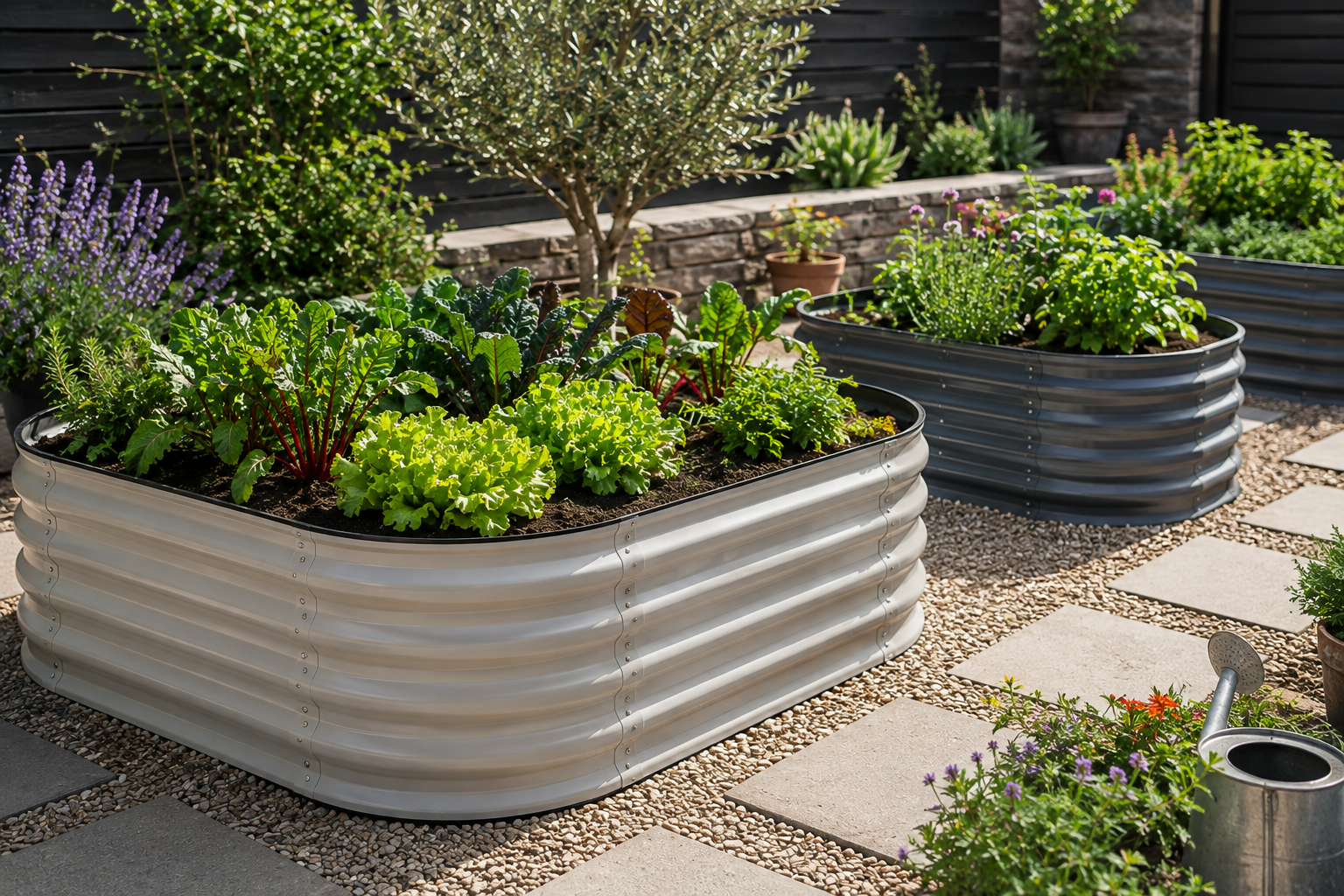
Metal raised garden beds are becoming a popular alternative to traditional wooden beds. They offer a clean appearance, require relatively little maintenance, and can work well for vegetables, herbs, flowers, and other backyard plants.
However, not every metal raised bed is made from the same material.
Two options you may encounter are galvanized steel and aluminum. Both can create durable garden beds, but they differ significantly in strength, weight, corrosion resistance, price, and overall construction.
If you’re deciding between the two, here’s what you should know before buying.
Galvanized steel is steel that has been coated with a protective layer of zinc. The zinc helps protect the underlying steel against corrosion and makes galvanized steel suitable for many outdoor applications.
It has become especially popular for modern raised garden beds.
Because steel is relatively strong, manufacturers can create large beds using thin panels while still maintaining good structural stability.
Galvanized steel is particularly attractive for gardeners who want a permanent-looking vegetable garden without the concerns about rot associated with wooden beds.
Aluminum is naturally lightweight and develops a protective oxide layer that helps it resist corrosion.
Unlike steel, aluminum does not rust in the traditional sense.
Its light weight can make aluminum garden beds easier to transport, assemble, reposition, or disassemble.
However, aluminum is generally softer than steel. The strength of an aluminum raised bed therefore depends heavily on panel thickness and structural design.
Aluminum may be especially useful when weight and corrosion resistance are major priorities.
Both materials can last for years when properly manufactured.
However, galvanized steel generally offers greater strength and rigidity. This can be important because raised-bed walls must hold back a large amount of soil.
Wet soil is surprisingly heavy.
Long garden beds with weak panels can bow outward over time, particularly when they are deep.
Aluminum can also provide excellent durability, but thinner aluminum panels may be more vulnerable to dents or bending.
When comparing products, don’t evaluate the material alone. Look at panel thickness, reinforcement, corner construction, and overall design.
Best for Strength: Galvanized Steel
Aluminum has an important natural advantage: it doesn’t rust like ordinary steel.
Instead, its surface naturally develops an oxide layer that helps protect the material.
Galvanized steel relies on its zinc coating for corrosion protection. A quality galvanized bed can provide excellent outdoor performance, but damage to protective coatings may eventually expose the underlying steel.
For normal backyard conditions, both materials can work well.
In environments where corrosion resistance is the highest priority, aluminum has an advantage.
Best for Corrosion Resistance: Aluminum
Aluminum is significantly lighter than steel.
This makes aluminum beds convenient if you:
However, once either bed is filled with soil, moving it is no longer practical.
For a permanent backyard garden, the difference in weight may therefore matter mainly during installation.
Best for Weight: Aluminum
From a plant-growing perspective, either material can work very well.
Your vegetables care much more about the conditions inside the bed than the material surrounding them.
Important factors include:
Tomatoes, peppers, lettuce, cucumbers, carrots, strawberries, and herbs can all grow successfully in either galvanized steel or aluminum raised beds.
Winner: Tie
Because both materials conduct heat, gardeners sometimes worry about metal beds becoming too hot during summer.
The exposed panels can certainly become warm in direct sunlight. However, the temperature of the exterior surface doesn’t necessarily represent the temperature throughout the entire soil volume.
During hot weather, focus on maintaining consistent soil moisture.
Adding mulch can reduce evaporation and help stabilize conditions around plant roots.
In particularly hot climates, regularly check soil moisture and consider drip irrigation.
Both materials fit modern backyard landscapes.
Galvanized steel often has a more substantial, industrial appearance and is available in many painted or coated finishes.
Aluminum can provide a lightweight, clean, contemporary appearance.
The better option depends entirely on your landscaping style.
For a traditional garden, wood may still look more natural. For a modern backyard, both galvanized steel and aluminum are excellent choices.
Prices vary significantly by manufacturer, size, construction, coating, and accessories.
In many cases, galvanized steel provides a strong balance between cost and structural strength, which helps explain why it is widely used for raised garden beds.
Aluminum products can cost more because of the material itself and the amount of aluminum required to create sufficient structural strength.
Instead of comparing purchase price alone, consider:
Price + durability + size + warranty + construction quality
The cheapest garden bed isn’t always the best long-term value.
| Feature | Galvanized Steel | Aluminum |
|---|---|---|
| Strength | Excellent | Good |
| Corrosion Resistance | Excellent | Excellent |
| Weight | Heavier | Very Light |
| Maintenance | Low | Low |
| Modern Appearance | Excellent | Excellent |
| Modular Options | Widely Available | Available |
| Dent Resistance | Better | Depends on Thickness |
| Vegetable Growing | Excellent | Excellent |
Choose galvanized steel if you want:
Choose aluminum if you want:
For most backyard gardeners, galvanized steel is our preferred all-around choice because it combines strength, corrosion resistance, availability, and value.
It’s especially suitable for larger vegetable beds where the walls need to support significant soil pressure.
Aluminum is still an excellent alternative. Its low weight and natural corrosion resistance make it particularly attractive for gardeners who prioritize easy handling and minimal maintenance.
Whichever material you choose, don’t focus on metal type alone. A well-designed aluminum bed can outperform a poorly constructed steel one.
Check the panel thickness, reinforcement, edges, fasteners, coating, dimensions, and warranty before buying.
Ultimately, healthy soil, adequate depth, good drainage, sunlight, and proper watering will have a much greater impact on your vegetables than whether your raised garden bed is made from galvanized steel or aluminum.