Newsletter Subscribe
Enter your email address below and subscribe to our newsletter


Raised Bed Gardening Made Simple
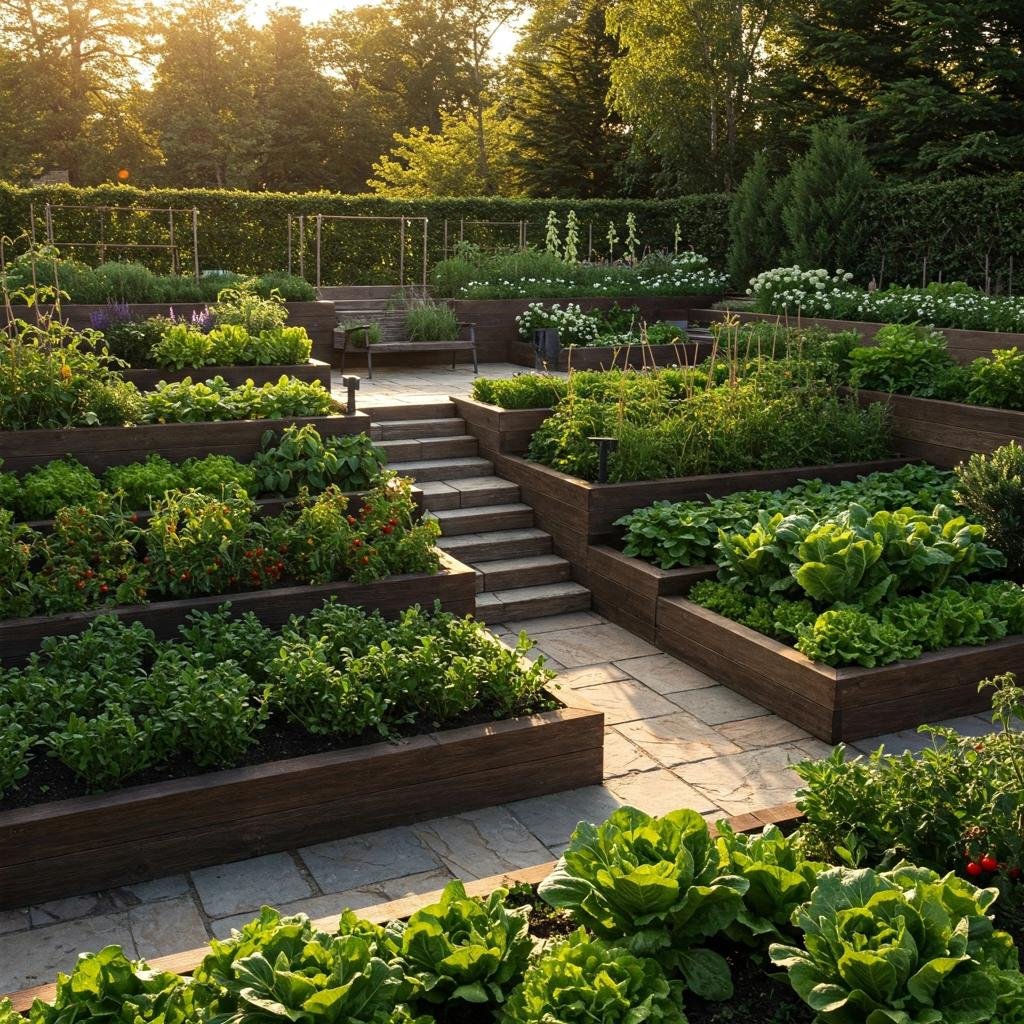
A sloped backyard doesn’t have to stop you from growing fresh vegetables. With the right planning, you can turn uneven ground into a productive garden using raised beds.
However, building on a slope requires more preparation than installing a garden bed on flat ground. Poorly positioned frames may shift, soil can wash downhill, and uneven planting surfaces can make watering difficult.
The key is creating a stable, level growing area while managing water runoff safely.
Here’s how to build a raised garden bed on a slope, from measuring the ground to filling the finished structure.
Before purchasing materials, examine the area where you want to build.
Look for changes in elevation, signs of erosion, existing drainage paths, and nearby structures.
Choose a location that receives approximately six to eight hours of direct sunlight for most fruiting vegetables.
Avoid areas where stormwater flows rapidly downhill or collects after rainfall.
For steep slopes, unstable soil, or locations requiring retaining walls, consult a qualified professional before excavation.
Small backyard raised beds and structural hillside retaining systems are not the same project.
You can estimate the slope using a tape measure, stakes, string, and a spirit level.
Place one stake uphill and another downhill.
Stretch a string horizontally between them and use the level to confirm that it is straight.
Measure the horizontal distance between the stakes and the vertical difference between the level string and the ground.
For example, a 12-inch elevation change across 8 feet of horizontal distance represents a slope of approximately 12.5%.
This measurement helps you determine whether minor leveling is sufficient or whether a stepped design would be more practical.
Not every raised bed design works equally well on sloped ground.
For gentle slopes, a small framed bed installed on a level base may be sufficient.
For more noticeable slopes, stepped raised beds arranged across the hillside are often more practical.
Positioning beds along the contour helps reduce downhill water movement.
Avoid installing a long, narrow bed directly downhill, where runoff can become concentrated.
| Design | Best For | Main Advantage | Consideration |
|---|---|---|---|
| Level rectangular bed | Gentle slopes | Simple construction | Requires minor ground preparation |
| Stepped raised beds | Moderate slopes | Creates separate level growing areas | More measuring and materials |
| Contour-aligned beds | Sloping gardens | Helps manage runoff | Requires careful positioning |
| Terraced garden | Larger elevation changes | Creates usable planting platforms | May require engineered retaining walls |
| Elevated planter on supports | Suitable stable locations | Keeps growing surface accessible | Requires a load-rated, securely anchored structure |
For most small DIY projects, a short rectangular bed on a properly prepared, level base is a practical starting point.
Mark the planned bed position with stakes and string.
Remove vegetation and loose debris from the installation area.
For a gentle slope, carefully excavate the uphill side to create a level foundation rather than simply placing the frame on loose fill.
Use a spirit level to check the base from front to back and side to side.
Avoid extensive excavation that could destabilize the hillside.
If you’re unfamiliar with preparing uneven ground, read our guide on how to level the ground for a raised garden bed.
Choose suitable materials such as naturally durable wood, garden-grade metal, or appropriately designed composite boards.
Measure and cut the frame components according to your chosen dimensions.
Assemble the structure using suitable exterior fasteners and reinforce corners where necessary.
Place the frame on the prepared foundation and check that the top edges are level.
For wooden beds, use stakes or braces where appropriate to prevent movement and outward bowing.
Remember that wet soil is heavy. Taller beds and substantial retaining structures require more careful engineering than ordinary low garden frames.
Water management is especially important on a slope.
Heavy rain can move downhill quickly, carrying loose soil and mulch.
An open-bottom raised bed generally allows water to enter the underlying soil, provided the ground drains adequately.
Avoid lining the entire bottom with waterproof plastic.
Inspect surrounding runoff patterns and make sure water is not directed toward your home, neighboring properties, or unstable slopes.
Where erosion is a concern, seek appropriate drainage guidance before constructing the bed.
Once the structure is secure, add suitable growing soil.
A mixture of quality topsoil and mature compost often provides a practical starting point.
Avoid filling the entire bed with unfinished organic material, which may settle substantially as it decomposes.
Add soil gradually and check that the frame remains stable.
Leave a small gap below the top edge to help contain mulch and irrigation water.
For guidance on choosing suitable materials, explore our article on best soil for raised garden beds.
Exposed soil on sloping ground is vulnerable to heavy rainfall.
Apply appropriate organic mulch around established vegetables to reduce surface erosion and moisture loss.
Mulch surrounding pathways where practical, and avoid leaving disturbed soil exposed.
For stepped gardens, maintain stable paths between beds.
Inspect the downhill edges after heavy rain for signs of movement, soil leakage, or developing channels.
Correct small problems early before they become more difficult to manage.
After construction, choose crops suited to your climate and growing conditions.
Lettuce, spinach, radishes, herbs, peppers, and compact tomato varieties can all work well in appropriately sized raised beds.
Consider plant height and sunlight exposure when arranging vegetables.
Install trellises securely, especially where wind exposure is greater.
Water gently after planting to avoid washing loose soil toward the downhill edge.
Avoid building directly on an unstable slope, using loose soil as the only support beneath a heavy frame, or ignoring existing runoff channels.
Another mistake is constructing a long bed downhill without considering erosion.
Don’t assume that adding more soil will correct an unstable foundation.
Finally, avoid treating a tall retaining wall as a simple raised bed project. Structural safety must come first.
Building a raised garden bed on a slope is possible with careful planning.
Measure the elevation change, select a suitable design, prepare a stable foundation, and keep the growing surface level.
Pay particular attention to drainage, erosion control, and the weight of wet soil.
For gentle slopes, a small level bed may be all you need. More challenging sites may require terracing and professional guidance.
For more advice on raised bed construction, dimensions, materials, and backyard gardening projects, explore our Raised Beds guides.