Newsletter Subscribe
Enter your email address below and subscribe to our newsletter


Raised Bed Gardening Made Simple
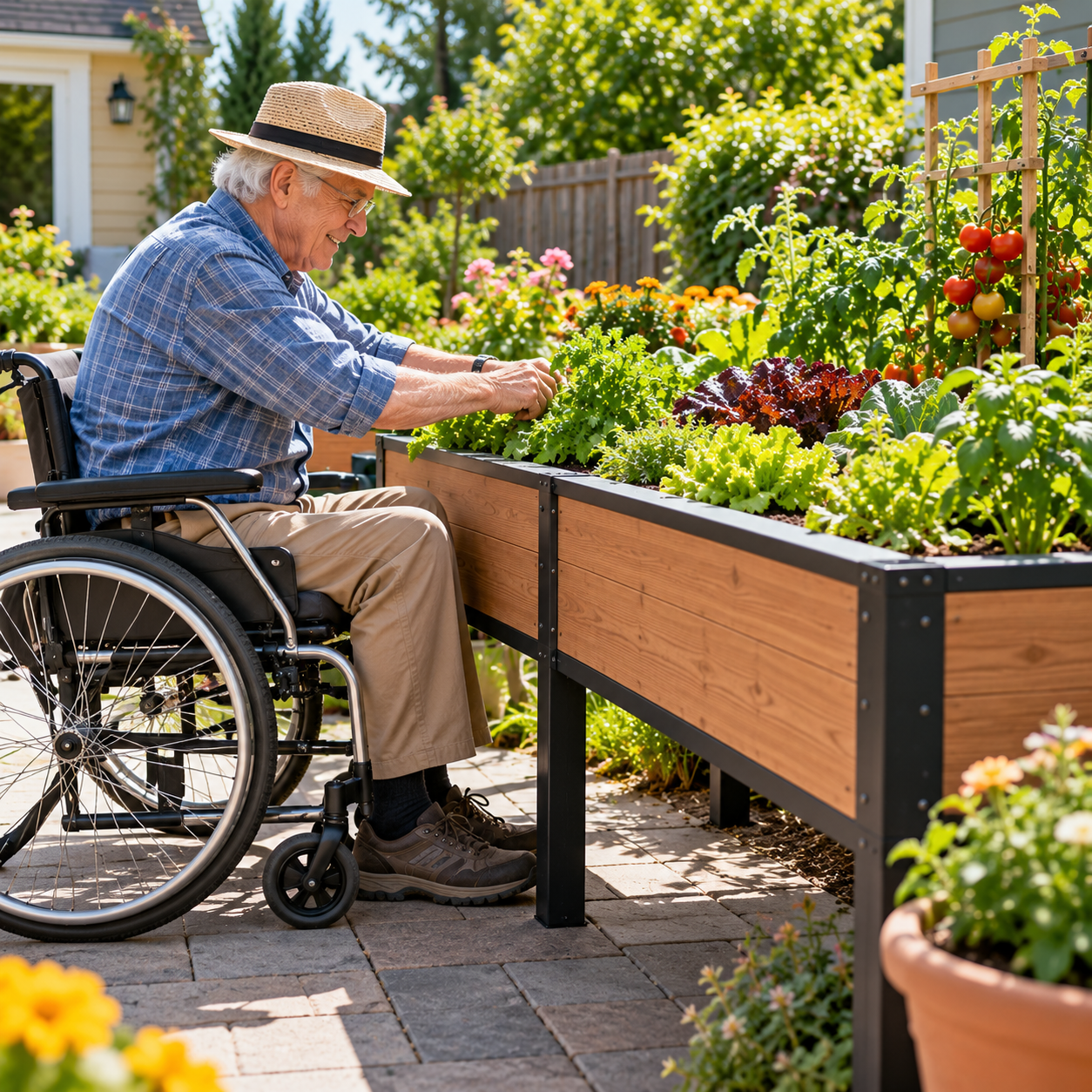
Gardening should be enjoyable, not an activity that leaves you struggling to bend, kneel, or reach your vegetables. For older adults who love growing flowers, herbs, and fresh produce, choosing the right raised garden bed height can make everyday gardening more comfortable.
However, there isn’t one perfect height for everyone. A comfortable raised bed depends on your height, mobility, preferred gardening position, and how easily you can reach the plants.
This guide explains how to choose a practical raised garden bed height for seniors, whether you prefer standing, sitting, or gardening from a wheelchair.
Traditional in-ground gardening often involves repeated bending, kneeling, and getting up from ground level.
Raised garden beds bring the growing surface closer to your hands, potentially reducing some of these movements.
A properly designed bed can make watering, planting, weeding, and harvesting more manageable.
However, a bed that is too tall may require uncomfortable shoulder movements, while one that is too wide can force you to lean forward.
The goal is to create a growing space that fits your body rather than choosing a height based only on appearance.

For seniors who prefer standing while gardening, a raised bed approximately 30–36 inches high can be a useful starting point.
This brings the growing surface closer to waist level for many adults, reducing the need to bend toward the ground.
However, shorter gardeners may prefer a lower bed, while taller gardeners may benefit from additional height.
Before purchasing, stand beside a table or other stable surface at the proposed height.
Imagine planting seedlings, removing weeds, and reaching across the soil.
Your shoulders should remain relaxed, and you shouldn’t need to lean excessively.
Some gardeners prefer working from a chair or garden stool.
For seated gardening, beds approximately 24–30 inches high may be suitable, depending on the chair height and individual reach.
The most important factor is whether you can comfortably reach the soil without twisting or stretching.
A stable chair and firm, level ground are also important.
If the planter has an enclosed base, make sure its frame doesn’t prevent you from getting close enough to work.
| Gardening Position | Suggested Starting Height | Main Advantage | Important Consideration |
|---|---|---|---|
| Standing, shorter gardener | 28–32 inches | Reduces bending | Check comfortable hand position |
| Standing, average or taller gardener | 32–36 inches | Convenient working height | Avoid excessive shoulder lifting |
| Seated on a chair | 24–30 inches | Less standing required | Match chair and reach |
| Wheelchair gardening | Around 24–30 inches | Improved access when properly designed | Check knee clearance and approach |
| Traditional low raised bed | 12–18 inches | Lower setup cost | More bending may be required |
These are approximate planning ranges, not universal accessibility standards. Test the proposed dimensions with the person who will use the garden.
Wheelchair-accessible raised beds require more than the correct height.
The planter should allow the gardener to approach comfortably and reach the growing area.
Table-style elevated planters can provide knee and foot clearance underneath.
Other designs allow access from the side, provided plants remain within comfortable reach.
Check the space beneath the planter, wheelchair armrests, footrests, and the thickness of the growing container.
Smooth, stable pathways are also important for safe movement around the garden.
If several people will use the garden, consider different bed heights to accommodate individual needs.
Height alone doesn’t determine whether a raised bed is comfortable.
A bed that is too wide can make gardening difficult even when its height is ideal.
For beds accessible from both sides, widths of approximately 3–4 feet are common.
For beds accessible from only one side, a narrower width of around 18–24 inches may be more practical.
Gardeners with limited reach may need even narrower planting areas.
Always test whether you can comfortably reach the farthest plants without leaning across the frame.
Raised bed height and growing soil depth are not necessarily the same.
An elevated planter may stand 32 inches above the ground while containing only 12 inches of soil.
This can reduce the amount of soil required, but the planter must have adequate structural support and drainage.
Different vegetables also need different rooting depths.
Lettuce, herbs, and some compact vegetables may grow well in shallower containers, while larger crops often benefit from deeper soil.
For more information about soil requirements, read our guide on how deep a raised garden bed should be.
Raised garden beds are available in wood, metal, composite materials, and other designs.
Choose a structure that is stable, durable, and suitable for outdoor conditions.
Rounded or smooth edges can make the bed more comfortable to work around.
Some wooden beds include a wide top ledge that provides a convenient place to rest tools or briefly sit, provided the structure is designed to support that weight.
Avoid sharp metal edges, exposed screws, and unstable frames.
Even a well-designed raised bed becomes inconvenient when surrounding pathways are narrow or uneven.
Allow enough room to move around the garden with tools, watering equipment, or mobility aids.
Firm, level, slip-resistant surfaces are generally easier to navigate than loose gravel or muddy ground.
Keep hoses, pots, and tools away from walking routes.
For additional planning advice, explore our article on how far apart raised garden beds should be.

Before investing in a tall raised bed, create a simple mock-up using a sturdy table or other suitable surface.
Test common activities such as planting, watering, and harvesting.
Consider whether the gardener can comfortably reach the center and whether the structure leaves enough room for movement.
A few minutes of testing can help prevent choosing an expensive bed that is uncomfortable to use.
The best raised garden bed height for seniors depends on personal comfort, mobility, and gardening habits.
For many standing gardeners, a height around 30–36 inches is worth considering. Seated gardeners may benefit from lower or specially designed elevated planters.
However, width, accessibility, soil depth, and pathway design are just as important as height.
Choose a bed that makes gardening easier without requiring unnecessary stretching or bending.
For more advice on choosing raised bed dimensions, construction materials, and accessible garden designs, explore our Raised Beds guides.