Newsletter Subscribe
Enter your email address below and subscribe to our newsletter

Raised Bed Gardening Made Simple
Category: Garden Care
Suggested URL: /best-soil-for-raised-garden-beds/
Primary Keyword: Best Soil for Raised Garden Beds
SEO Title: Best Soil for Raised Garden Beds: The Perfect Soil Mix
Meta Description: Discover the best soil for raised garden beds. Learn how to create a balanced soil mix for vegetables using topsoil, compost, organic matter, and drainage-friendly ingredients.
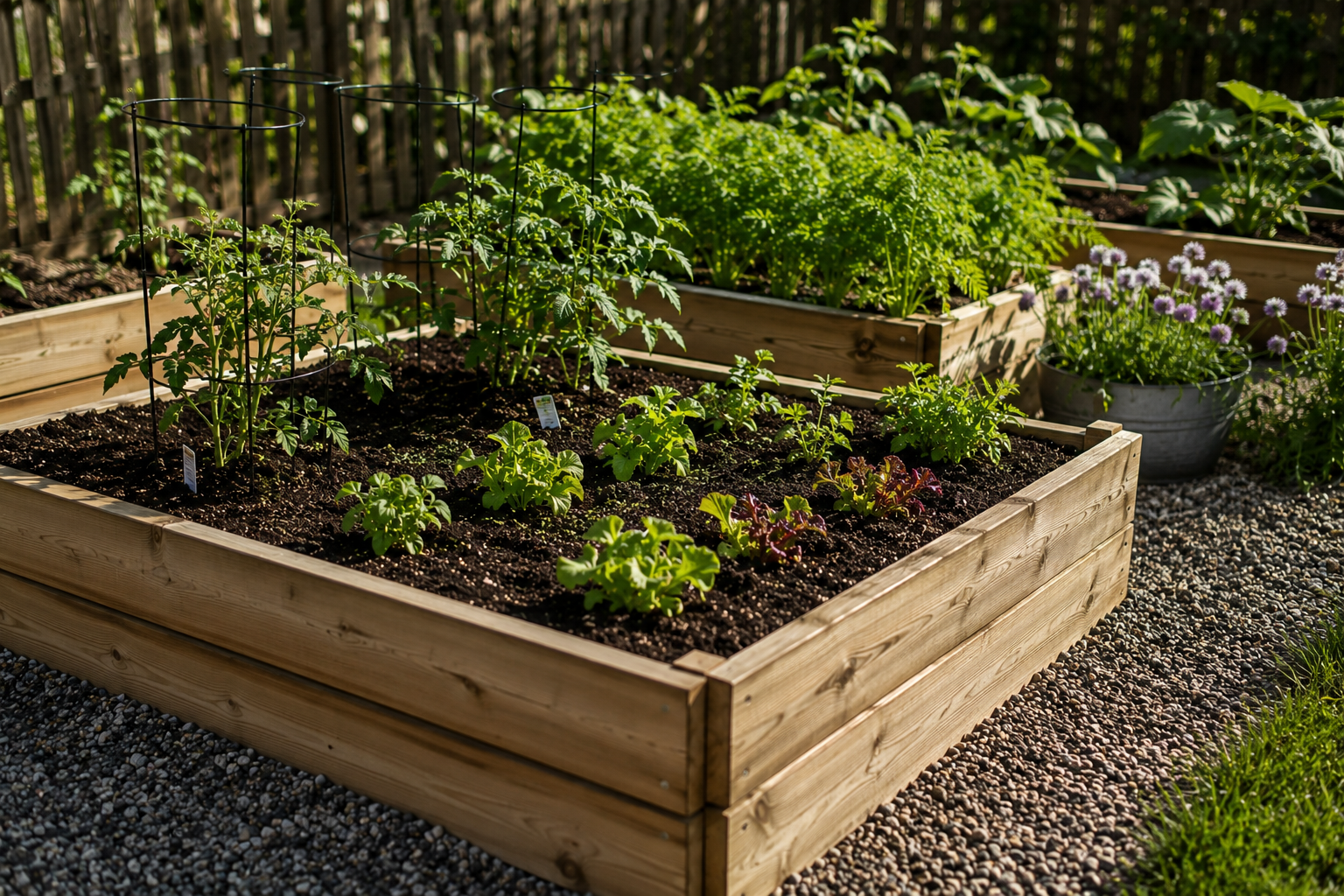
The success of a raised garden bed starts below the surface. You can buy a beautiful cedar or galvanized steel bed, place it in the sun, and choose healthy seedlings—but poor soil can still lead to disappointing results.
Raised-bed soil needs to do several jobs at once. It should hold enough moisture for plant roots, drain excess water, provide nutrients, and remain loose enough for roots to spread.
Instead of searching for one magical bag of soil, it is better to understand what makes a balanced growing medium.
The best soil should have a loose, crumbly texture.
When watered, it should absorb moisture rather than immediately forming puddles. At the same time, water shouldn’t disappear so quickly that plants become dry again within a short period.
Good raised-bed soil needs a balance of:
This balance is particularly important in raised beds because their soil environment is more contained than an in-ground garden.
There are many recipes available, but complicated mixtures aren’t always necessary.
A practical starting point is:
40–50% quality topsoil
30–40% finished compost
10–20% materials that improve structure and aeration
These numbers should be treated as a starting point rather than a strict formula. The characteristics of locally available topsoil and compost can vary significantly.
If your mixture feels heavy and sticky, it may need improved structure. If it dries extremely quickly, it may need more moisture-holding organic matter.
The goal is to create the right physical environment rather than follow percentages perfectly.
Topsoil provides much of the mineral structure in a raised-bed mixture.
Quality topsoil can help give the bed stability while providing a long-term foundation for roots.
However, products labeled “topsoil” are not all the same.
Before buying in bulk, inspect the material when possible. Avoid soil containing excessive rocks, construction debris, large roots, or other unwanted material.
Extremely heavy clay soil can become dense inside a bed, while very sandy material may struggle to retain water.
Good topsoil should be workable and relatively clean.
Compost is one of the most valuable ingredients you can add to a vegetable garden.
Finished compost contributes organic matter and can help improve the soil’s physical structure.
It also supports the biological processes taking place beneath your plants.
You can use homemade compost or purchase it from a reliable supplier.
Good finished compost generally has a dark, earthy appearance and should no longer strongly resemble the original ingredients.
However, more compost is not always better.
Filling an entire raised bed with compost can create an unbalanced growing environment. Use it as an important component of the soil rather than the only component.
Plant roots need oxygen.
When soil becomes heavily compacted, air spaces disappear and roots may struggle to develop normally.
Depending on your starting materials, amendments such as coco coir, aged organic matter, or other suitable horticultural materials can help improve structure.
The exact amendment matters less than the result.
After mixing, the soil should be easy to dig with your hand or a small garden tool without feeling like a dense block.
Avoid repeatedly walking or placing heavy objects inside the bed after filling it.
One of the advantages of raised-bed gardening is being able to work from the surrounding pathways and keep the growing area relatively uncompacted.
Different vegetables have slightly different preferences, but a balanced general-purpose raised-bed mixture works for many popular crops.
These productive plants benefit from fertile soil containing organic matter while still draining effectively.
Leafy vegetables appreciate soil that remains consistently moist without becoming waterlogged.
Root crops perform best in loose soil without large stones or heavily compacted sections that can interfere with root development.
Cucumbers grow quickly and benefit from fertile soil with reliable moisture.
Many common culinary herbs grow successfully in general raised-bed soil, although individual species may have different moisture preferences.
If you’re growing several crops together, aim for balanced soil rather than trying to create a completely different mixture for every plant.
Potting mix is designed primarily for containers and can work well in smaller planters.
However, filling a large raised bed entirely with premium potting mix can become unnecessarily expensive.
Raised beds usually contain much more volume than traditional pots.
For a large backyard bed, combining quality soil with compost and suitable amendments is often a more practical approach.
Save specialized potting mixes for containers where their lightweight properties are particularly useful.
Soil pH influences how available certain nutrients are to plants.
Many common vegetables prefer soil that is slightly acidic to near neutral, although ideal conditions vary by crop.
Instead of trying to change pH based on appearance or guesswork, consider testing your soil.
Home testing kits can provide basic information, while laboratory soil testing can give you a more detailed picture.
Testing is especially worthwhile if plants repeatedly struggle despite good sunlight and watering.
Your plants will provide useful clues.
Healthy raised-bed soil should allow water to soak in reasonably evenly, remain workable, and support consistent plant growth.
Watch for warning signs such as:
Persistent puddles – The soil may be too dense or drainage may be poor.
Extremely rapid drying – The mixture may not hold enough moisture.
Hard surface crusting – Soil structure may need improvement.
Weak plant growth – Nutrients, pH, sunlight, watering, or other conditions may require investigation.
Don’t immediately add fertilizer whenever plants look unhealthy. Identify the likely cause first.
Soil changes over time.
Organic matter decomposes, vegetables remove nutrients, and the surface gradually settles.
Before a new growing season, inspect the bed rather than automatically replacing everything.
Remove unwanted plant debris, gently loosen compacted areas, and add finished compost where appropriate.
If the soil level has dropped considerably, top it up with additional growing mix.
This gradual maintenance is usually easier and less expensive than starting over every year.
The best soil for raised garden beds isn’t a single product or a perfect recipe.
It is a balanced growing medium that provides drainage, moisture, organic matter, nutrients, and enough air for healthy roots.
Start with quality topsoil, incorporate finished compost, and adjust the structure based on how the mixture behaves when watered.
Pay particular attention to the upper root zone, where your vegetables do most of their growing.
Then continue improving the soil from season to season.
Healthy raised-bed soil develops over time. With regular compost additions, sensible watering, minimal compaction, and occasional testing, you can create a productive foundation for tomatoes, peppers, carrots, lettuce, herbs, and many other backyard crops.