Newsletter Subscribe
Enter your email address below and subscribe to our newsletter

Raised Bed Gardening Made Simple
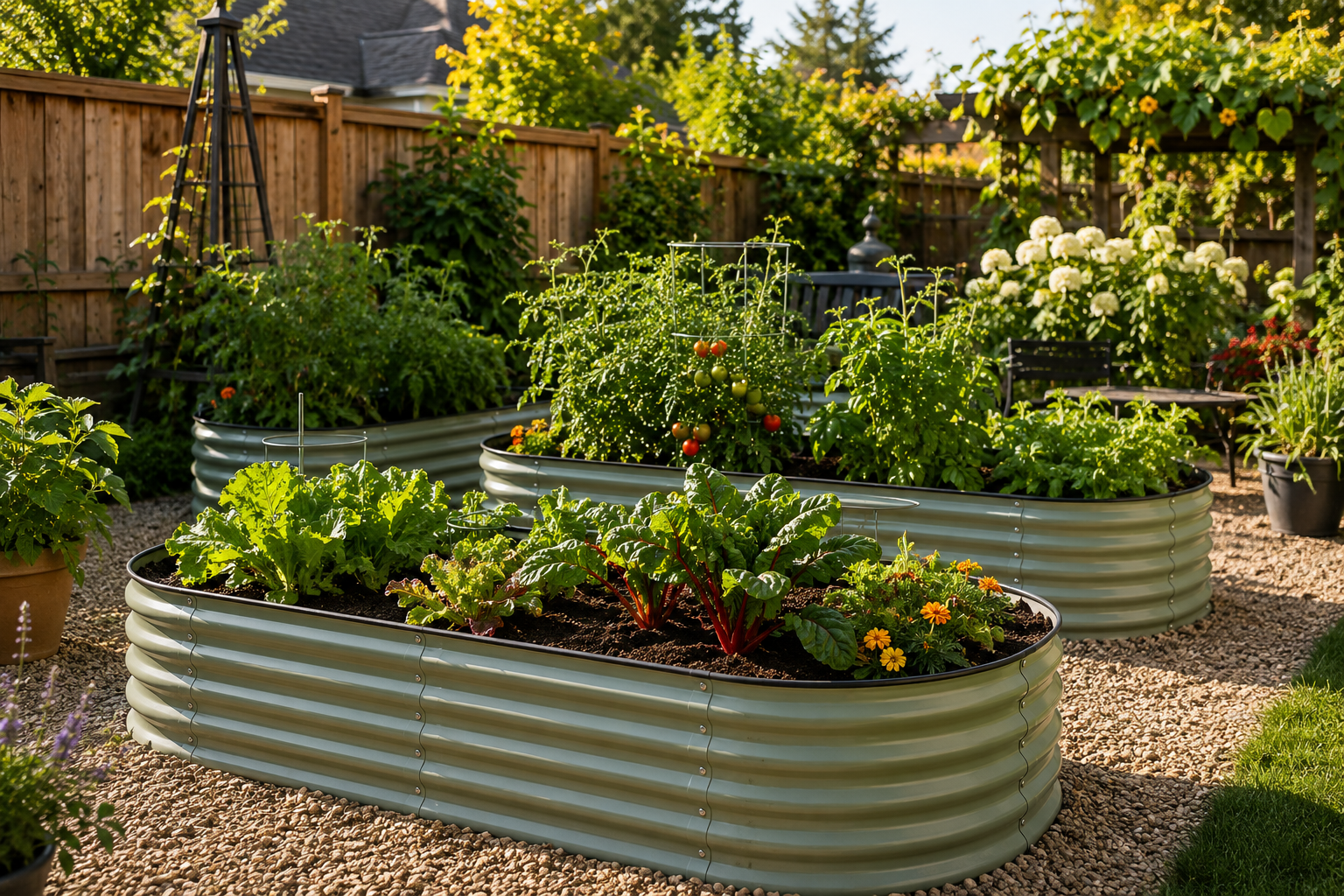
Category: Raised Bed Reviews
Suggested URL: /best-metal-raised-garden-beds/
SEO Title: Best Metal Raised Garden Beds for 2026 | BedRoot
Meta Description: Looking for the best metal raised garden beds in 2026? Learn what to look for, which sizes work best, and how to choose a durable metal garden bed for vegetables, herbs, and backyard gardens.
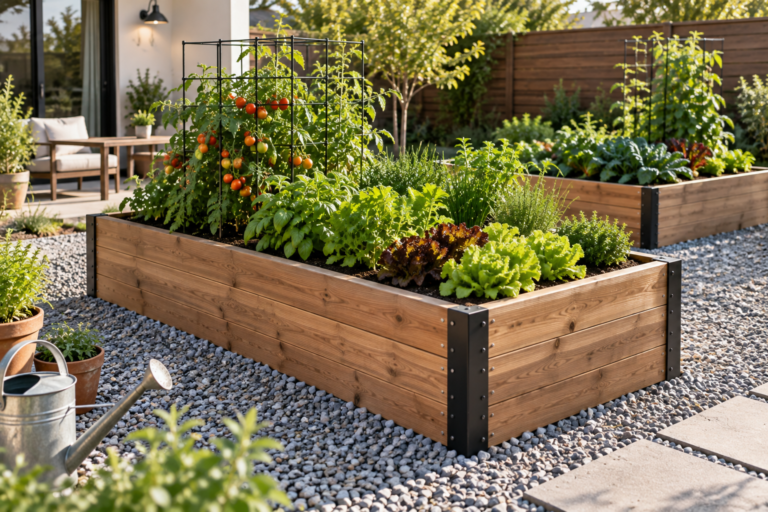
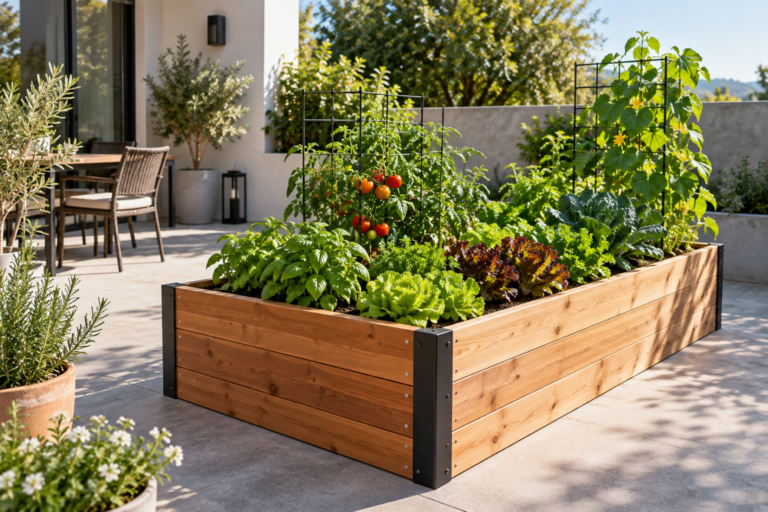
Metal raised garden beds have become a popular choice for backyard vegetable gardens, and it is easy to see why. They offer a clean, modern appearance, require relatively little maintenance, and eliminate many of the durability concerns associated with untreated wooden beds.
But not every metal garden bed is built the same.
Differences in metal construction, protective coating, panel strength, bed depth, shape, modularity, and assembly design can have a major impact on how well a raised bed works in your garden.
If you’re planning a new vegetable garden in 2026, this guide will help you understand what makes a good metal raised garden bed and which type is right for your growing space.
| Garden Need | Our Recommendation |
|---|---|
| Best Overall | Modular galvanized steel raised bed |
| Best for Beginners | 6 × 3 ft metal raised bed |
| Best for Vegetables | 12–18 inch deep galvanized bed |
| Best for Tomatoes | 17–24 inch deep raised bed |
| Best for Small Gardens | 4 × 2 ft compact metal bed |
| Best for Large Gardens | 8 × 4 ft modular bed |
| Best for Accessibility | 24–32 inch tall raised bed |
| Best Budget Choice | Basic galvanized steel bed |
The best choice ultimately depends on what you want to grow, available space, soil requirements and how much bending you are comfortable with while gardening.
Traditional wooden raised beds remain an excellent option, but metal beds offer several advantages that make them particularly attractive for modern backyard gardens.
One of the biggest reasons gardeners choose metal is durability.
Galvanized steel uses a protective zinc coating to help protect the underlying steel against corrosion. Higher-quality garden beds may combine galvanized steel with additional protective finishes.
Unlike wood, metal panels won’t rot from prolonged contact with moist garden soil.
That can make metal especially attractive for gardeners who don’t want to rebuild their raised beds every few seasons.
Wooden garden beds may eventually require repairs or replacement as the material ages.
Metal raised beds generally require much less maintenance.
Once assembled and filled, most of your attention can go toward:
instead of maintaining the bed itself.
Raised beds provide an opportunity to control the growing medium rather than relying entirely on existing backyard soil.
University of Maryland Extension notes that raised beds can be filled with compost and soilless growing media and recommends choosing bed depth according to the crops being grown.
That makes them particularly useful for growing vegetables such as:
Tomatoes
Peppers
Cucumbers
Lettuce
Carrots
Radishes
Beans
Herbs
There are hundreds of metal garden beds available online.
Instead of choosing one based entirely on appearance or price, pay attention to the following features.
For most backyard gardeners, galvanized steel is one of the most practical choices.
When comparing beds, check whether the manufacturer clearly explains:
Be cautious when a listing simply says “metal” without providing additional information.
Depth is one of the most overlooked features when buying a raised garden bed.
There isn’t one perfect depth for every plant.
The University of Maryland Extension recommends at least about 8 inches for leafy greens, beans and cucumbers when beds are positioned over hard surfaces, while peppers, tomatoes and squash can benefit from approximately 12–24 inches.
For BedRoot readers, we’d simplify that into:
| Depth | Good For |
|---|---|
| 6–8 inches | Lettuce, herbs, radishes |
| 10–12 inches | General vegetable gardening |
| 12–18 inches | Carrots, peppers and larger vegetables |
| 17–24 inches | Tomatoes and deeper-rooted crops |
| 24+ inches | Tall accessible gardens and deep beds |
If your bed is installed directly over healthy native soil, roots may eventually extend into the ground beneath it.
A bed sitting on concrete, paving or another hard surface is different because the plants are completely dependent on the soil contained inside the bed.
For a first garden, bigger isn’t automatically better.
A bed approximately:
6 ft × 3 ft
or
8 ft × 4 ft
provides plenty of useful growing space without becoming unnecessarily difficult to manage.
Width is particularly important.
You should ideally be able to reach the middle of the bed without stepping onto the growing soil.
UC Agriculture and Natural Resources recommends beds accessible from both sides be no more than about 4 feet wide; beds accessible from only one side should be narrower.
This is why the classic 4-foot-wide raised bed remains so practical.
One of our favorite developments in modern metal raised beds is modular construction.
Instead of locking you into one rectangular shape, modular kits use multiple panels that can be rearranged.
Depending on the kit, you might be able to build:
Long rectangle
Compact rectangle
Square
L-shaped bed
Narrow garden bed
This can be particularly useful if you move homes or redesign your backyard later.
For most homeowners, we’d choose a modular galvanized steel raised garden bed over a permanently fixed configuration.
The flexibility is worth having.
This is probably the biggest question buyers have.
Neither material is automatically better.
They simply serve slightly different priorities.
| Feature | Metal | Wood |
|---|---|---|
| Modern Appearance | ★★★★★ | ★★★★☆ |
| Natural Appearance | ★★★☆☆ | ★★★★★ |
| Rot Resistance | ★★★★★ | ★★★☆☆ |
| Maintenance | ★★★★★ | ★★★☆☆ |
| DIY Customization | ★★★☆☆ | ★★★★★ |
| Modular Options | ★★★★★ | ★★★☆☆ |
| Traditional Garden Style | ★★★☆☆ | ★★★★★ |
Choose metal if you prioritize durability, low maintenance and a clean contemporary appearance.
Choose wood if you prioritize natural aesthetics and DIY customization.
Yes.
Metal raised beds can work extremely well for vegetable gardening when they’re properly sized and filled with an appropriate growing medium.
Raised beds also have several broader gardening advantages.
NC State Extension notes that raised beds can offer good drainage and earlier soil warming in spring, although they can also require more frequent irrigation than traditional in-ground gardens.
That last point is important.
Raised beds are not maintenance-free.
Because the soil is elevated and exposed to more air, you should monitor moisture carefully during hot weather.
You can grow almost any common backyard vegetable provided the bed offers sufficient depth and space.
For beginners, we especially like:
Give tomatoes plenty of root space and add a cage or trellis.
For deeper-rooted plants such as tomatoes, choosing a deeper bed gives you considerably more flexibility.
An excellent beginner crop.
Lettuce has relatively modest depth requirements and works particularly well for intensive planting.
Peppers fit nicely into raised-bed layouts because they don’t spread as aggressively as crops such as squash.
Use a trellis and grow them vertically.
This keeps vines from occupying valuable horizontal growing space.
Loose raised-bed soil can be excellent for root vegetables because roots have fewer obstacles to grow around.
Prices vary enormously depending on:
Size
Steel construction
Panel thickness
Coating
Brand
Height
Modular design
Included accessories
Rather than automatically purchasing the cheapest bed available, compare cost per square foot of growing area.
For example, an inexpensive small garden bed isn’t necessarily better value than a larger modular bed that gives you considerably more growing space.
Also remember that the garden bed itself isn’t always the largest expense.
For deep beds, soil and compost can become a significant part of your total project cost.
Imagine buying a large 8 × 4 × 2 ft raised bed.
That is:
64 cubic feet of volume.
You probably don’t want to fill the entire thing with small bags of premium potting mix.
For particularly deep beds, gardeners sometimes use different filling strategies to reduce the volume of expensive growing medium required.
However, the upper root zone should still contain a high-quality growing mix suitable for your plants.
University of Maryland Extension suggests a 1:1 compost and soilless growing mix, with topsoil making up to 20% of the volume in sufficiently deep beds.
This question comes up frequently.
Metal exposed to direct sunlight can certainly become warm.
But the temperature of the outside panel isn’t necessarily the same as the temperature throughout the soil mass.
The bigger practical issue during hot weather is usually maintaining adequate soil moisture.
You can help by:
A layer of mulch can also reduce evaporation from the soil surface.
If we were building a general-purpose BedRoot vegetable garden in 2026, our ideal specification would look something like this:
Material: Galvanized steel
Design: Modular
Width: 3–4 ft
Length: 6–8 ft
Depth: 17–24 inches
Bottom: Open
Edges: Rounded or protected
Trellis Compatibility: Yes
Irrigation Compatibility: Yes
That configuration provides enough versatility for everything from lettuce and herbs to peppers, cucumbers and tomatoes.
Metal raised beds make the most sense for gardeners who want something that is:
Durable
Low maintenance
Easy to assemble
Visually clean
Flexible
Suitable for vegetables
They are particularly attractive for modern suburban backyards where appearance matters almost as much as growing performance.
Metal isn’t necessarily the best solution for everyone.
Consider wooden beds if you want a more traditional garden appearance or plan to build unusual custom dimensions yourself.
Consider elevated planter boxes if bending and kneeling are difficult.
And if you already have excellent native soil and plenty of gardening space, a conventional in-ground vegetable garden may be cheaper.
For gardeners who value durability and low maintenance, they can be an excellent long-term alternative to wooden raised beds.
Galvanized steel is one of the most common and practical options because its zinc coating helps protect the steel against corrosion.
It depends on what you’re growing and what surface is beneath the bed. Shallow-rooted crops can use relatively shallow beds, while tomatoes, peppers and other larger plants benefit from more soil depth. On hard surfaces, adequate depth becomes especially important.
Not necessarily. For beds installed over soil, an open bottom allows drainage and gives roots the opportunity to extend into the native soil.
A 6 × 3 ft or 8 × 4 ft bed is a practical starting point. Keep the width narrow enough that you can comfortably reach the center without walking on the soil.
There isn’t one metal raised garden bed that is perfect for every backyard.
For most gardeners, however, our preferred starting point is a modular galvanized steel raised bed approximately 3–4 feet wide and 12–24 inches deep.
Choose the final depth based on what you intend to grow.
For lettuce, herbs and smaller vegetables, a shallower bed can work well. For tomatoes, peppers and larger crops—or when gardening over a hard surface—additional soil depth gives roots more room and makes moisture management easier.
More importantly, don’t choose a raised bed based on appearance alone.
Good soil, appropriate depth, adequate sunlight and consistent watering will ultimately have a much greater impact on your harvest.