Newsletter Subscribe
Enter your email address below and subscribe to our newsletter

Raised Bed Gardening Made Simple
Category: Buying Guides
Suggested URL: /how-to-choose-a-raised-garden-bed/
Primary Keyword: How to Choose a Raised Garden Bed
SEO Title: How to Choose a Raised Garden Bed: Complete Buying Guide
Meta Description: Learn how to choose the right raised garden bed for your backyard. Compare materials, sizes, depths, shapes and features for vegetables, herbs and flowers.
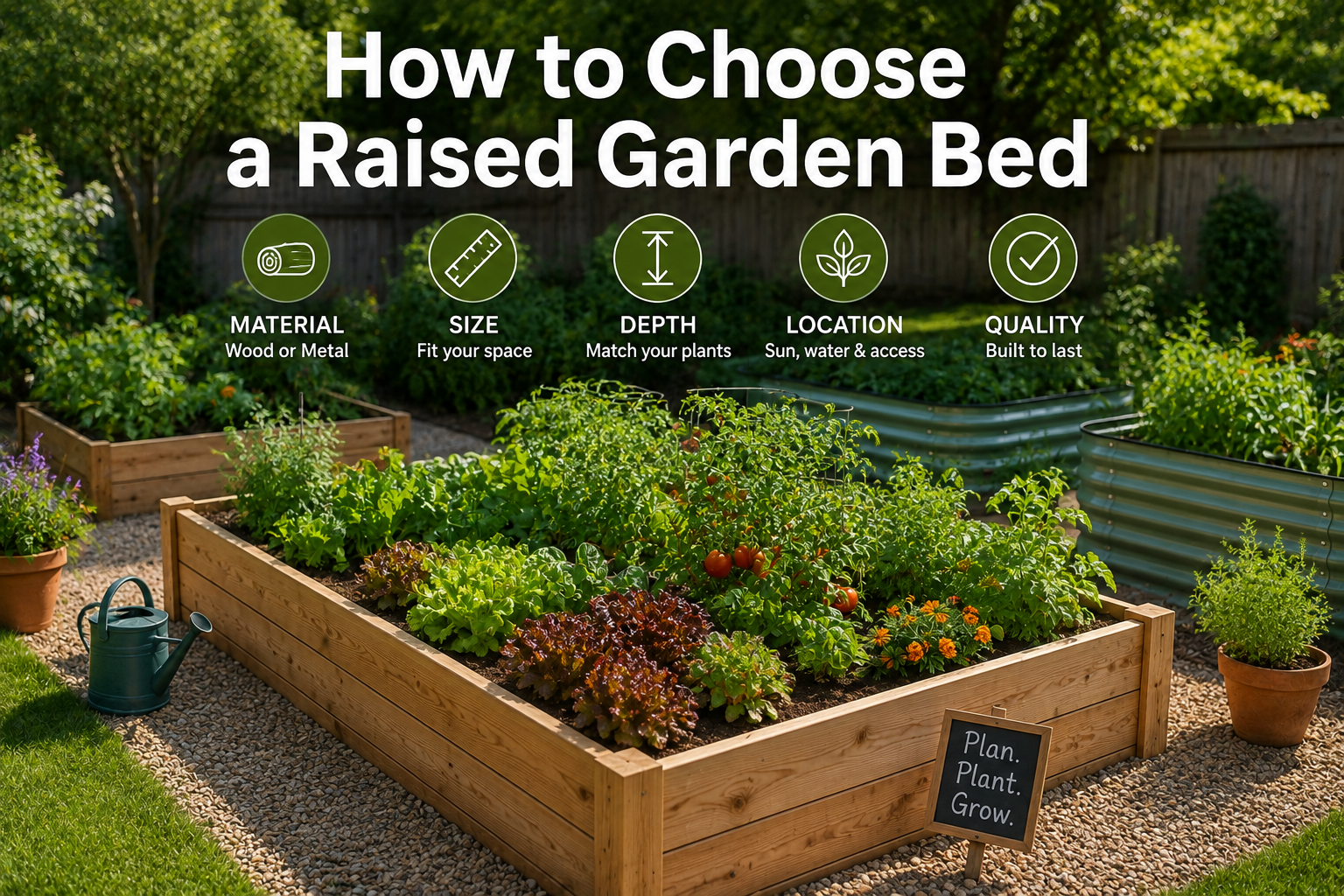
Raised garden beds are one of the easiest ways to create an organized and productive backyard garden. They give you better control over soil quality, drainage, planting layout and growing conditions while making your garden look clean and well planned.
But choosing a raised garden bed can be surprisingly complicated. Should you buy metal or wood? How deep should it be? Is an 8-foot bed too large? And which design works best for vegetables?
This buying guide covers the most important factors to consider before choosing your first—or next—raised garden bed.
The first decision is usually the material. The most common options are metal and wood, and both can work very well.
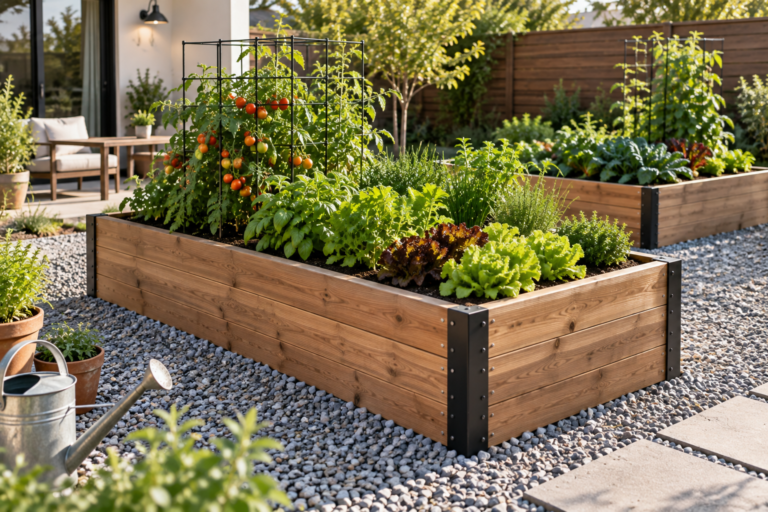
Galvanized steel raised beds have become increasingly popular for modern backyard gardens. They are durable, don’t rot like wood and usually require very little maintenance.
Metal beds are a good choice if you want:
Many metal beds are available in different shapes, allowing you to adjust the layout as your garden changes.
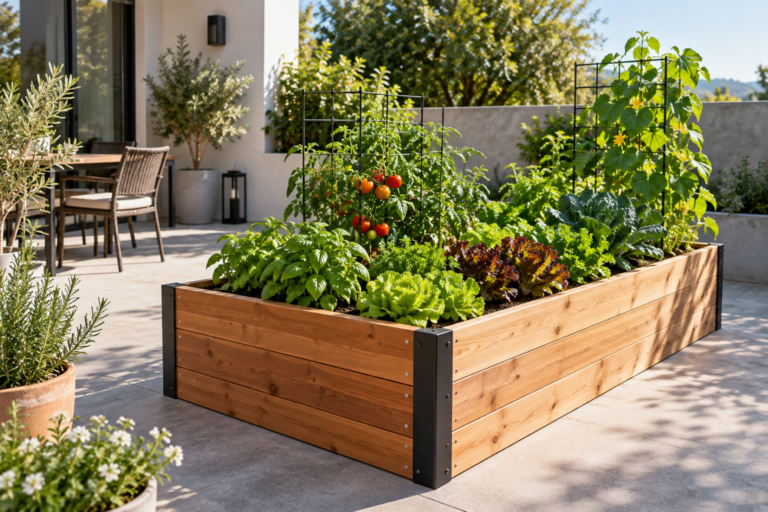
Wood offers a warmer and more traditional garden appearance. Cedar is particularly popular because of its attractive color and natural resistance to decay.
Wood is ideal if you prefer:
Cedar can be more expensive, while fir and pine are usually more budget-friendly.
Don’t automatically buy the largest raised bed you can fit in your backyard.
Accessibility matters.
For beds you can reach from both sides, 3 to 4 feet wide is usually practical. This allows you to reach the center without stepping onto the soil.
Common sizes include:
4 × 2 ft: Great for herbs and small gardens.
6 × 3 ft: An excellent beginner size.
8 × 4 ft: Ideal for larger vegetable gardens.
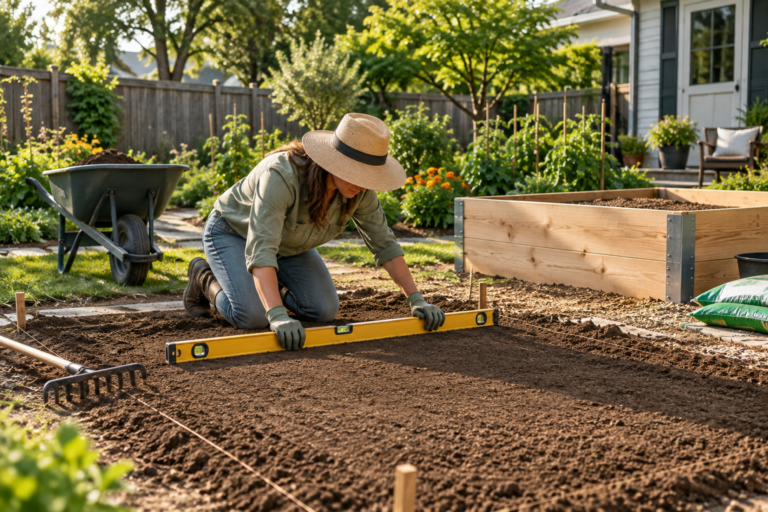
Before buying, mark the dimensions on the ground so you can see how much space the bed will actually occupy.
Remember to leave enough room around it for walking, watering and gardening.
Depth is one of the most important factors when choosing a raised bed.
Different plants require different amounts of root space.
As a general guide:
| Depth | Suitable Plants |
|---|---|
| 6–8 inches | Lettuce, herbs, radishes |
| 10–12 inches | General vegetables |
| 12–18 inches | Peppers, carrots, cucumbers |
| 17–24 inches | Tomatoes and larger plants |
| 24+ inches | Tall accessible gardens |
For a general backyard vegetable garden, 12–18 inches provides plenty of flexibility.
Keep in mind that deeper beds require significantly more soil, which can increase your total gardening budget.
Choose the bed around your plants—not the other way around.
If you’re mainly growing herbs and salad greens, you probably don’t need a huge 24-inch-deep bed.
For tomatoes, peppers, carrots and larger vegetables, additional soil depth can provide more room for root development.
If you want to grow climbing plants such as cucumbers, peas or pole beans, consider a raised bed that can easily accommodate a trellis.
Vertical growing is especially useful in smaller gardens.
Before ordering your garden bed, decide exactly where it will go.
Most common vegetables perform best with plenty of direct sunlight, so avoid placing the bed in a heavily shaded corner simply because the space is available.
Also consider:
Water access: Is your hose nearby?
Drainage: Does water collect in this area after rain?
Accessibility: Can you comfortably walk around the bed?
Trees: Large nearby roots may compete for water and nutrients.
Slope: A relatively level location makes installation easier.
Choosing the right location can be more important than choosing the perfect raised bed.
Modular raised garden beds are particularly useful if you expect your garden to change.
Instead of having one fixed configuration, modular systems use individual panels that can often be arranged into different shapes.
You might start with a compact rectangular bed and later reconfigure it into a longer garden.
This flexibility makes modular beds especially attractive for homeowners who expect to expand their gardens.
This is something many first-time gardeners forget.
The price of the raised bed isn’t the entire project cost.
You also need soil and compost.
To estimate soil volume, use:
Length × Width × Depth = Cubic Feet
For example:
An 8 × 4 ft bed that is 1 foot deep requires approximately:
8 × 4 × 1 = 32 cubic feet
A 2-foot-deep version requires approximately 64 cubic feet.
The deeper the bed, the more expensive it can be to fill.
Calculate this before purchasing.
Whether you’re buying metal or wood, check the construction carefully.
For metal beds, look for:
For wooden beds, look for:
A cheap raised bed isn’t necessarily good value if the structure starts failing after a short period outdoors.
For most gardeners, this comes down to personal preference.
Choose metal if you prioritize durability, low maintenance and a clean modern appearance.
Choose wood if you prefer natural materials, traditional garden aesthetics and easy customization.
Both materials can produce an excellent vegetable garden when combined with good soil and proper care.
The best raised garden bed isn’t necessarily the biggest or most expensive one.
For most backyard gardeners, a 6 × 3 ft or 8 × 4 ft bed with approximately 12–18 inches of growing depth is a versatile starting point.
Choose a material that fits your backyard style, make sure you can comfortably reach the center, and select enough depth for the vegetables you plan to grow.
Most importantly, think beyond the garden bed itself. Good soil, adequate sunlight, reliable watering and proper plant spacing will ultimately have a greater impact on your harvest.
Choose a bed that fits your space and gardening goals, fill it with healthy soil, and you’ll have a strong foundation for years of backyard growing.