Newsletter Subscribe
Enter your email address below and subscribe to our newsletter


Raised Bed Gardening Made Simple
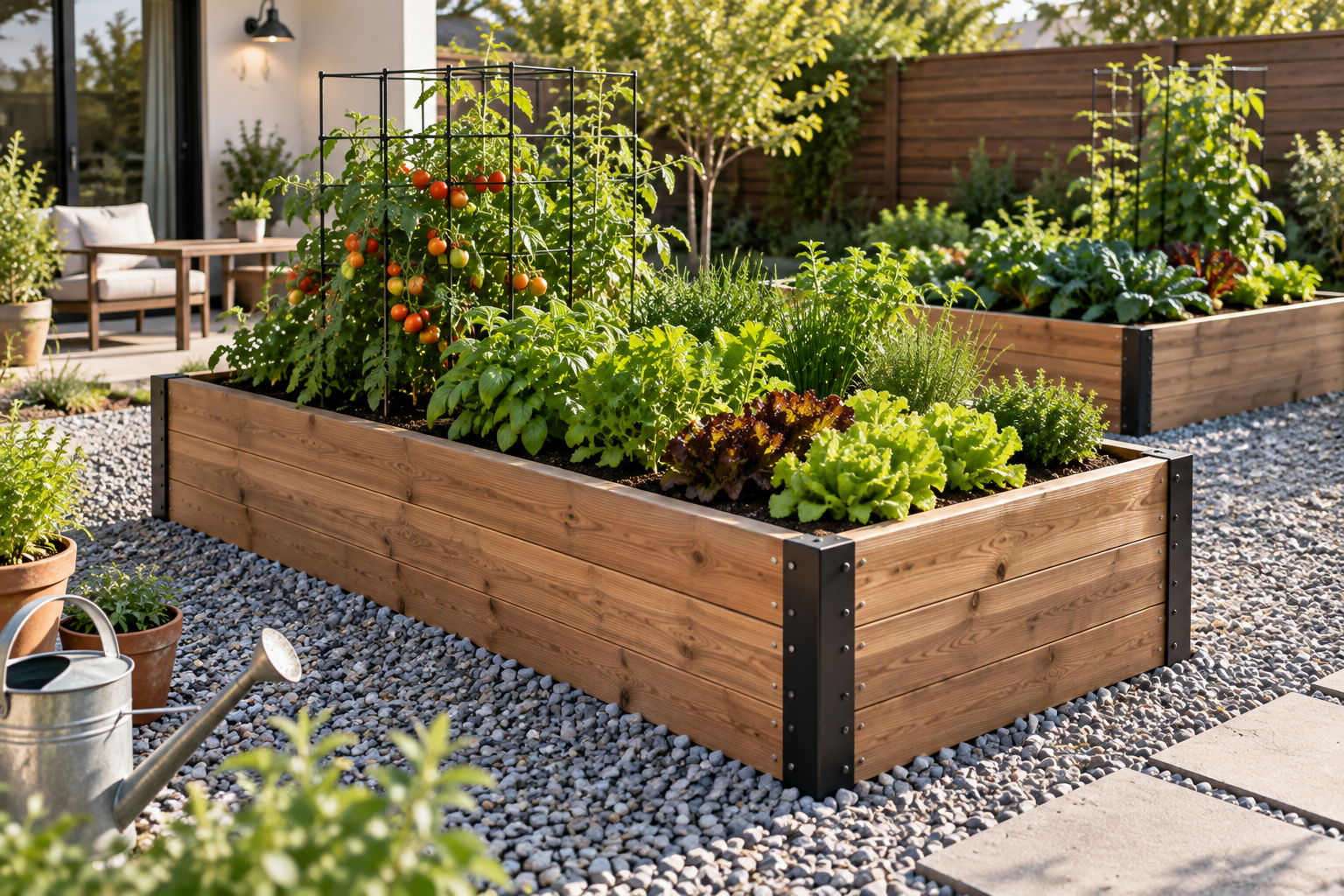
Yes, you can put a raised garden bed on gravel. In many backyards, gravel can actually provide a practical, clean base for a raised-bed garden. It keeps surrounding paths relatively mud-free and can work well where an existing patio, side yard, or landscaped area is already covered with stone.
However, not every gravel surface behaves the same way. A thin layer of gravel over permeable soil is very different from deep compacted gravel installed over landscape fabric or an impermeable base. Before setting up your raised bed, you should understand what lies beneath the gravel and how water will leave the root zone.
University extension guidance consistently emphasizes that successful raised beds need a location with good drainage and a growing medium that retains moisture while allowing excess water to move away.
Before placing the bed, move aside a small section of gravel and inspect the layers underneath.
You may find ordinary garden soil, compacted subsoil, landscape fabric, a thick crushed-stone base, or even concrete.
This distinction matters because an open-bottom raised bed over gravel and natural soil can potentially allow roots and water to move farther downward. A bed sitting over an impermeable surface behaves more like a large container.
University of Maryland Extension notes that raised beds placed directly over soil allow roots to grow into the ground below, whereas beds over hard surfaces depend much more heavily on the soil contained inside the bed.
Potentially—but gravel alone does not guarantee good drainage.
A well-installed gravel surface may allow water to move away from the bed, but drainage ultimately depends on the entire profile beneath it. If the gravel sits over heavily compacted clay, clogged landscape fabric, or concrete without an outlet, water may still accumulate.
Utah State University Extension recommends ensuring that irrigation water can drain freely through raised-bed soil and away from the plant root zone.
So after rain, inspect the area. If puddles remain around the proposed bed location for long periods, solve that drainage problem before filling the bed.
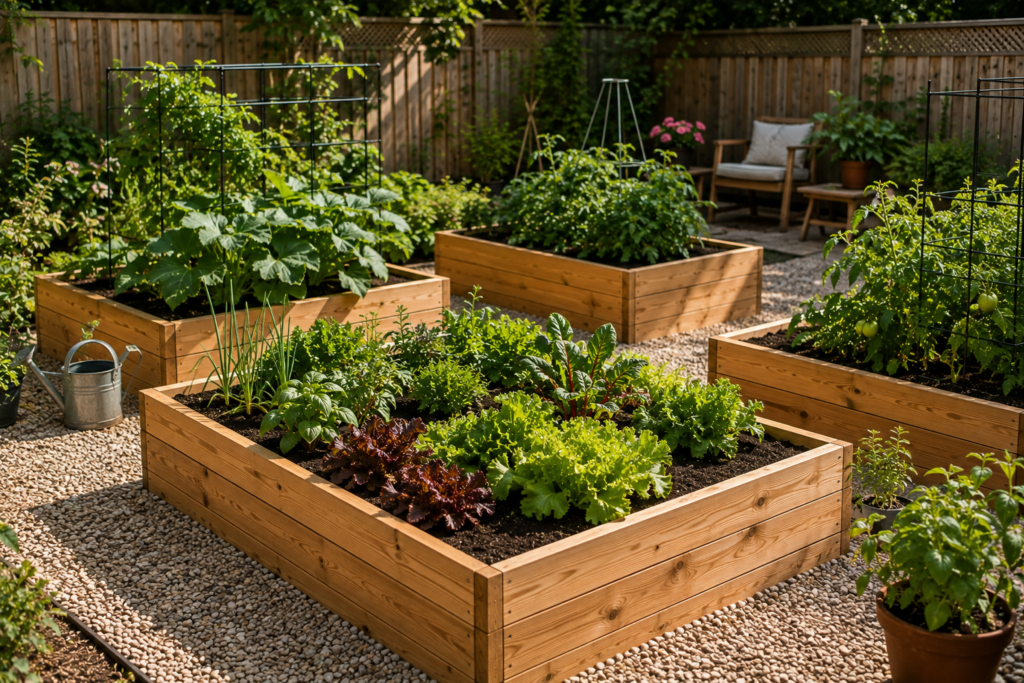
Bed depth should depend partly on what lies underneath.
If you have only a shallow gravel layer over healthy, permeable soil, a conventional open-bottom bed can work well. If there is a deep compacted base or hard surface underneath, provide more growing depth.
For hard, impermeable surfaces, University of Maryland Extension recommends at least 8 inches for crops such as leafy greens, beans, and cucumbers, while peppers, tomatoes, and squash generally need 12–24 inches.
Here is a practical planning guide:
| Gravel Base Condition | Suggested Approach | Practical Bed Depth | Key Concern |
|---|---|---|---|
| Thin gravel over good soil | Open-bottom bed | 8–12+ in | Roots may access soil below |
| Gravel over compacted soil | Improve drainage first | 12–18 in | Slow water movement |
| Deep crushed-stone base | Treat as restricted root zone | 12–18+ in | Limited access to native soil |
| Gravel over concrete | Treat like hard-surface bed | 12–24 in | Root depth and irrigation |
| Gravel with landscape fabric | Inspect fabric and drainage | 12–18+ in | Water/root restriction |
These depths are planning ranges, not universal requirements. Crop type, climate, soil composition, and the actual material below the gravel all matter.
Not necessarily.
If the gravel is shallow, clean, level, and drains well, removing every stone may create unnecessary work. You can often level the area and install the frame directly on top.
However, removing some gravel can be worthwhile if the bed is sitting above usable native soil. Exposing the soil gives you an opportunity to inspect compaction and improve the connection between the raised-bed soil and the ground below.
University of Maryland Extension recommends loosening compacted soil beneath a conventional raised bed to improve drainage and aeration.
Many gravel yards have landscape fabric underneath.
Do not automatically assume it needs to remain directly under the growing area.
Fabric may reduce interaction between the raised-bed soil and native soil and can affect how water and roots move through the bottom. If you want an open-bottom bed connected to the soil below, consider cutting away the fabric within the bed footprint while leaving surrounding fabric undisturbed.
If the gravel system is intentionally engineered for drainage or the bed is on a hard base, changing it may not be necessary.
The correct decision depends on the existing site construction.
One common misconception is that adding several inches of gravel to the bottom of the raised bed will automatically improve drainage.
Usually, this is unnecessary.
University of Maryland Extension specifically advises against adding gravel or rocks to the bottom of containers to improve drainage, because a coarse layer can actually reduce usable root space and create unfavorable water behavior rather than solving the drainage problem.
Instead, focus on a well-draining soil mix and a clear route for excess water to leave the bed.
Good soil matters more than the gravel underneath.
The soil should provide a balance of drainage, moisture retention, nutrients, and air space. University of Maryland Extension recommends compost mixed with topsoil for many soil-connected raised beds, commonly at approximately 1:2 or 1:1 compost-to-topsoil ratios.
Avoid filling the entire bed with pure compost. Likewise, dense native clay or poor-quality fill dirt may compact and interfere with drainage.
After filling, avoid walking inside the bed. One of the advantages of raised-bed gardening is that the growing area remains relatively uncompacted.
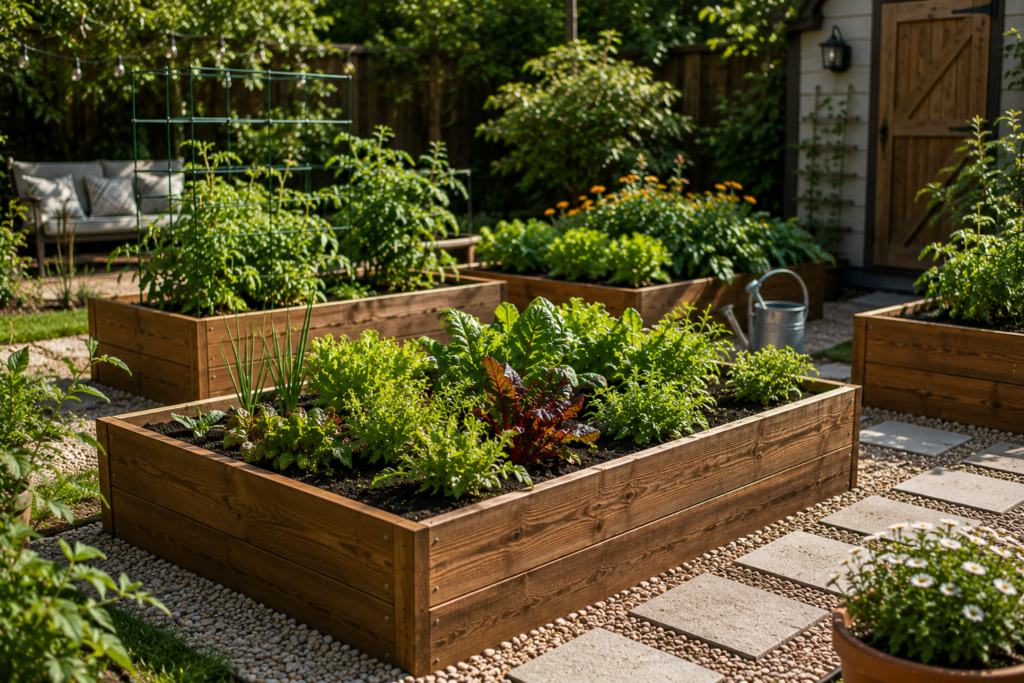
Gravel surroundings can make a garden look dry even when the soil inside the raised bed is still moist, so don’t judge watering needs only by appearance.
Check moisture in the root zone.
Raised beds can dry faster than traditional in-ground gardens, particularly during hot weather. Utah State University Extension recommends drip or trickle irrigation as an efficient approach because water can be delivered directly to the growing area.
Mulching the soil surface can also help reduce evaporation and moderate soil temperature.
Over time, gravel from pathways may get kicked or washed into the bed.
A frame that rises clearly above the surrounding gravel helps prevent this. Maintaining a defined border also makes it easier to replenish gravel paths without contaminating your growing medium.
Gravel around—not inside—the growing area can actually be useful. Oregon State University Extension notes that stone, brick, sod, or mulch walkways can provide mud-free access around raised beds.
So, can you put a raised garden bed on gravel? Absolutely.
The key is not the gravel itself but what is underneath it. A shallow gravel layer over permeable soil can be an excellent location for an open-bottom raised bed. Deep compacted gravel, landscape fabric, or an impermeable surface requires more attention to drainage, rooting depth, and irrigation.
Before building, inspect the gravel base, watch how the area handles heavy rain, and determine whether roots will eventually reach native soil.
Most importantly, don’t add gravel to the bottom simply because you want better drainage. A healthy raised bed depends primarily on good soil structure, sufficient root depth, and a reliable route for excess water to leave the root zone. Those fundamentals matter far more than adding another layer of stone.